
Postman’s Park
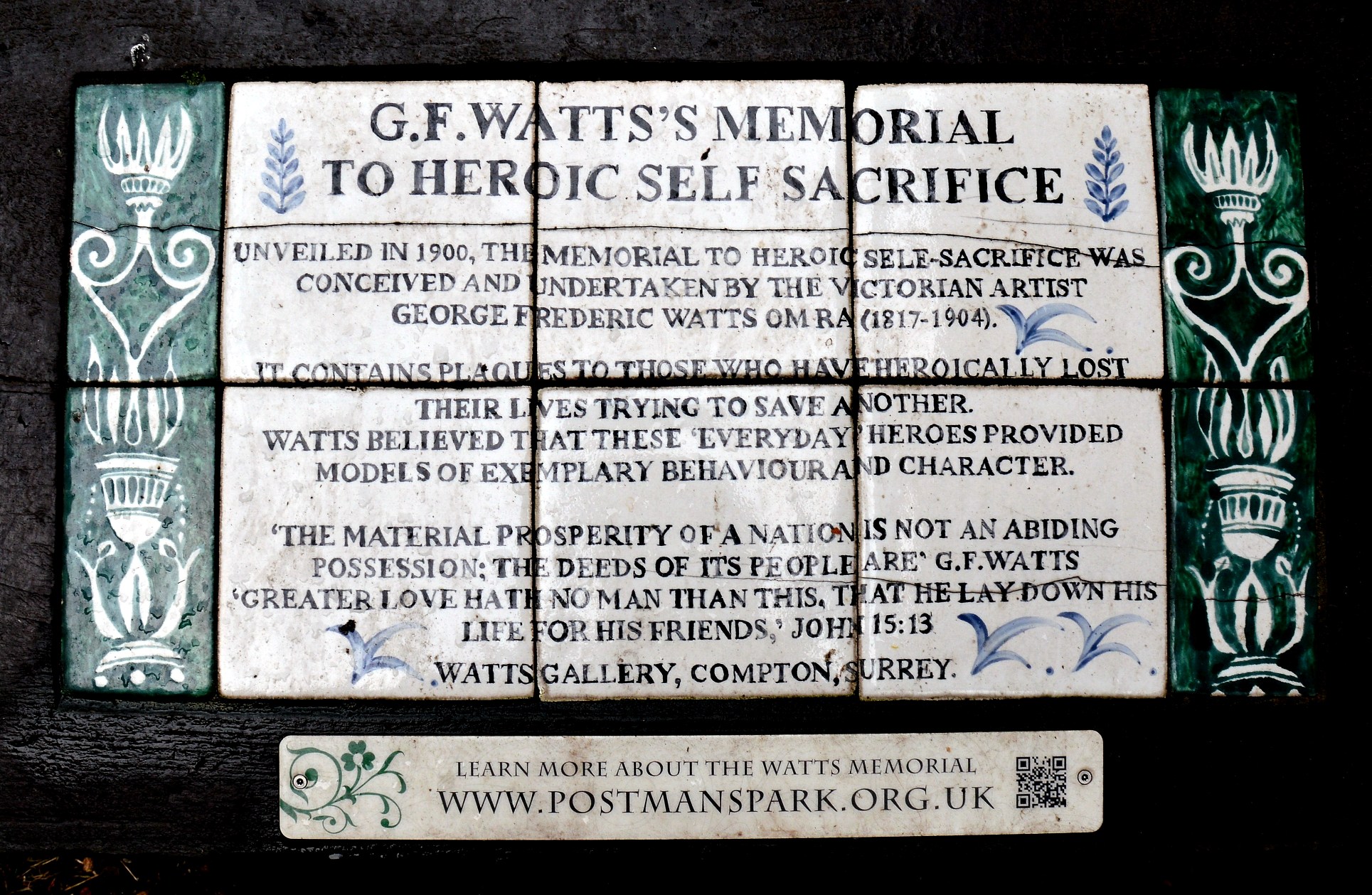
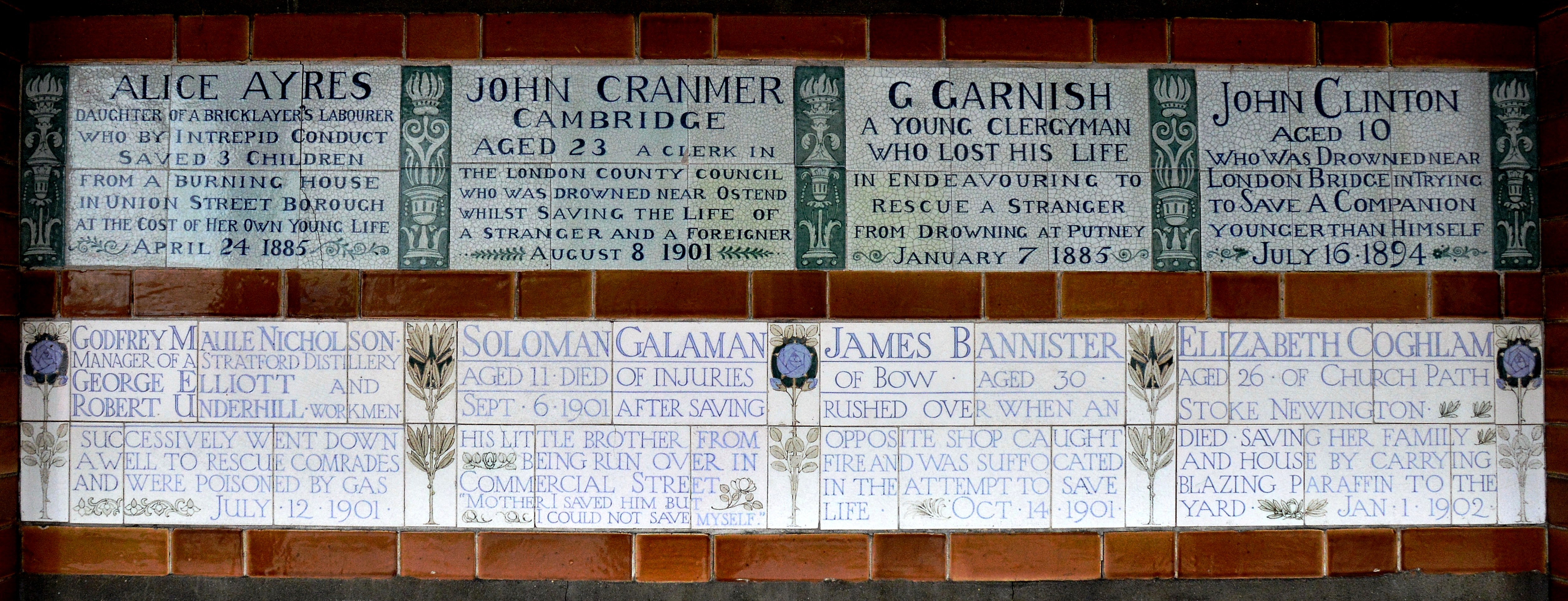
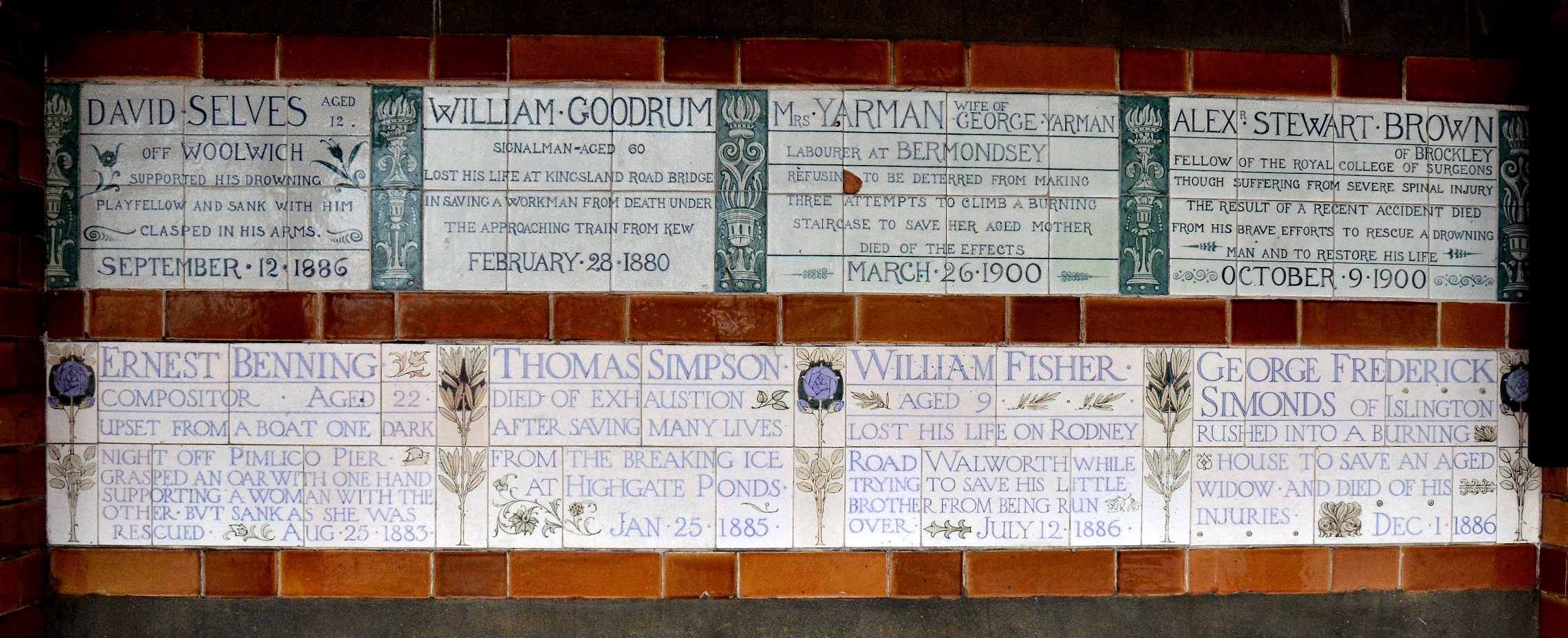
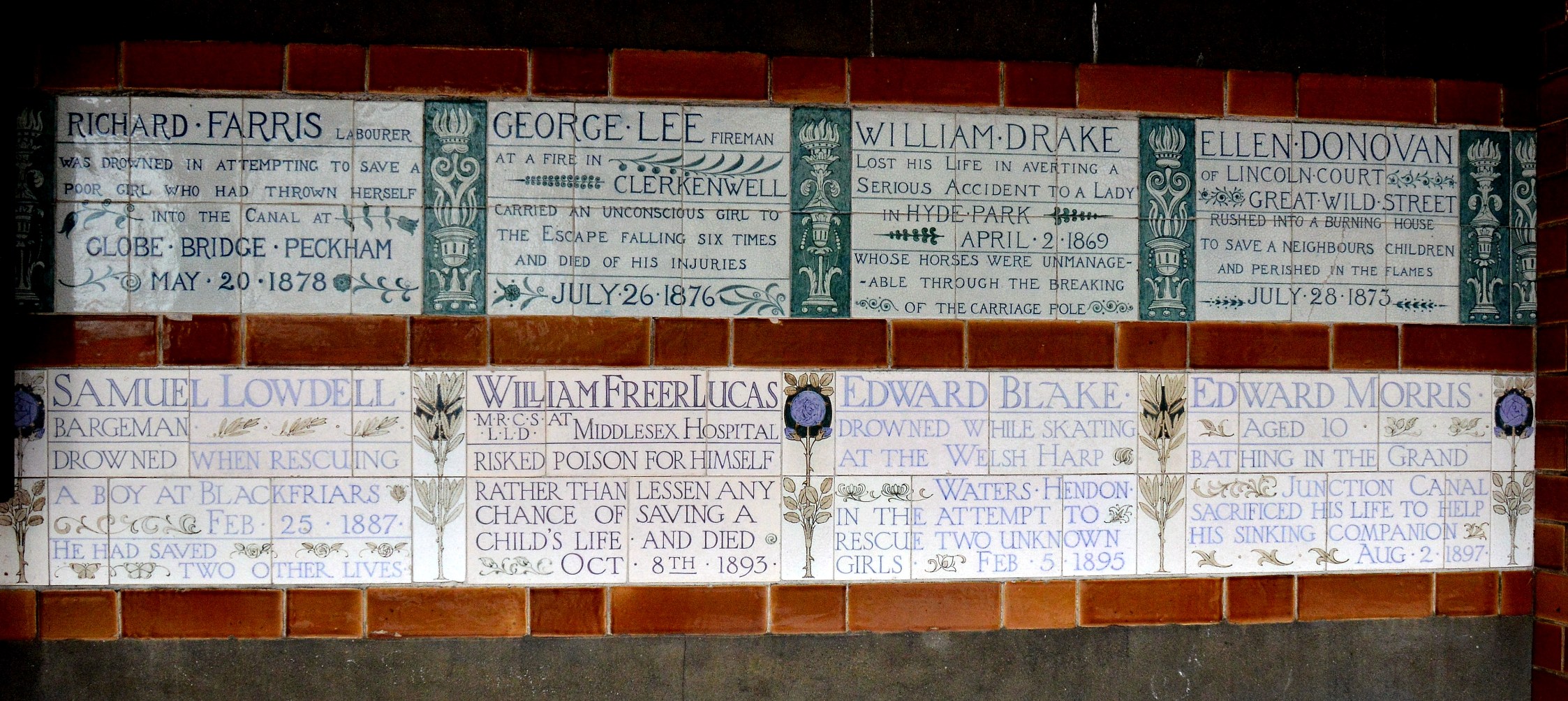
Postman’s Park contains a wonder. “The Material Prosperity Of A Nation Is Not An Abiding Possession: The Deeds of Its People Are”. There are many plaques, each tell a story.
The park is opposite the entrance to London’s St Bartholomew’s Hospital on King Edward Street. It is small but has many benches and is very pretty in summer (this is a dank day in February). About Postman’s Park ⇒.

For a closer view please right-click on an image, choose “Open Link in New Tab” then left click on the image to magnify. Close the new tab to return here..

They weren’t famous people and could easily have been forgotten. George Watts made sure that they were not.
.

.
.
.

.


Museum of London Docklands

14 pics. The Museum of London Docklands ⇒ is in the Docklands region (nearest rail being West India Quay on the Docklands Light Railway) and is all about the history of the Docklands as distinct from the more extensive history of London at the Museum of London ⇐ at 150 London Wall.
The Museum of London Docklands is full of historical information, is free to enter and non-commercial photography is allowed.
There is a lift that goes to the top floor, which is a good place to start. I do prefer stairs that go down.
The Sailors Walk

.

.

.

More Exhibits

.

In Commemoration of the Great Strike Sept 1889 ⇒.
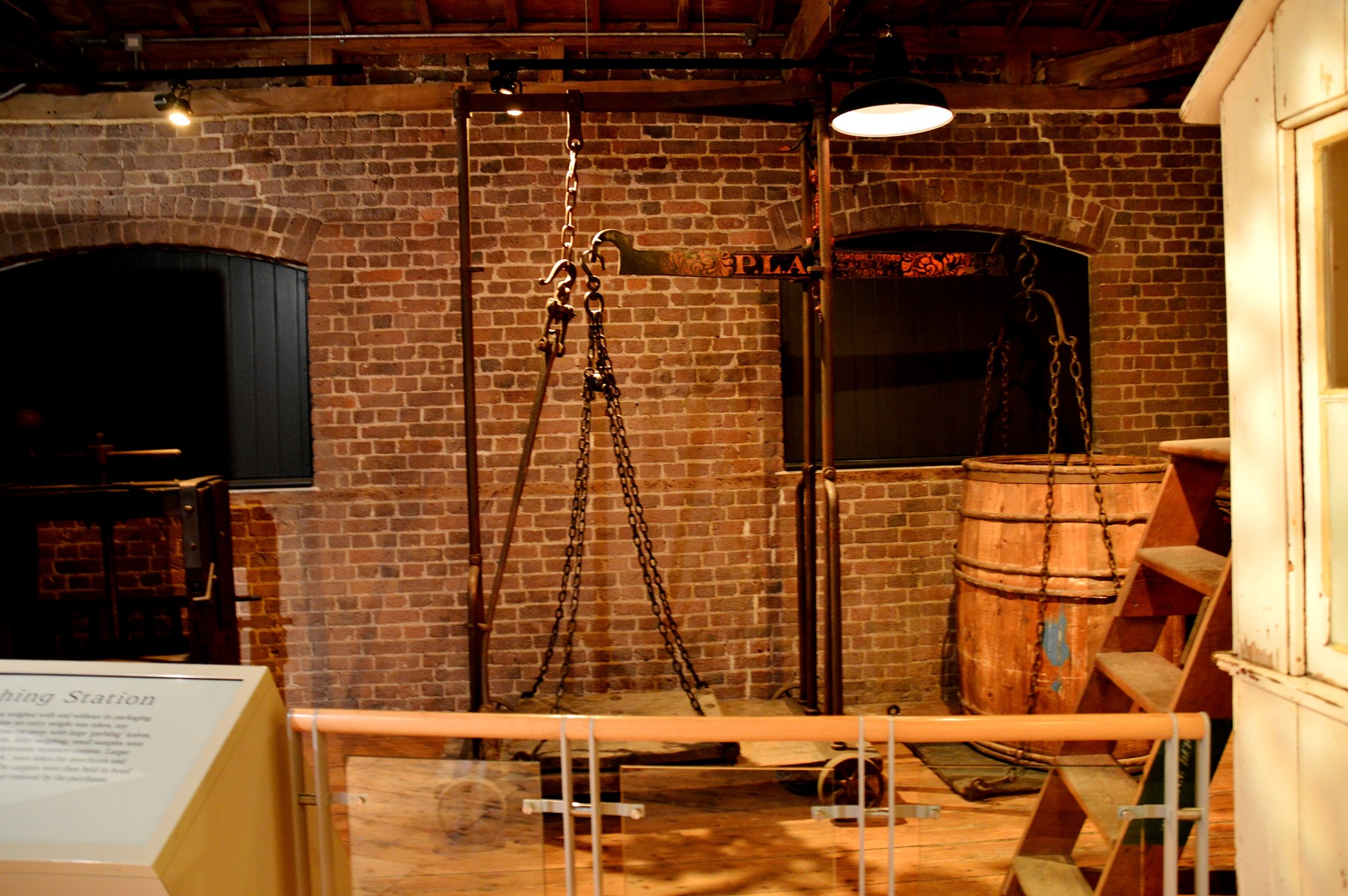
Tobacco Weighing Station
.

The First Bantamweight Lonsdale Belt
For a closer look of the history please click on the image and then again to enlarge.

Steel Consul Shelter
There is an extensive area covering the war years during which the docks were a prime target..
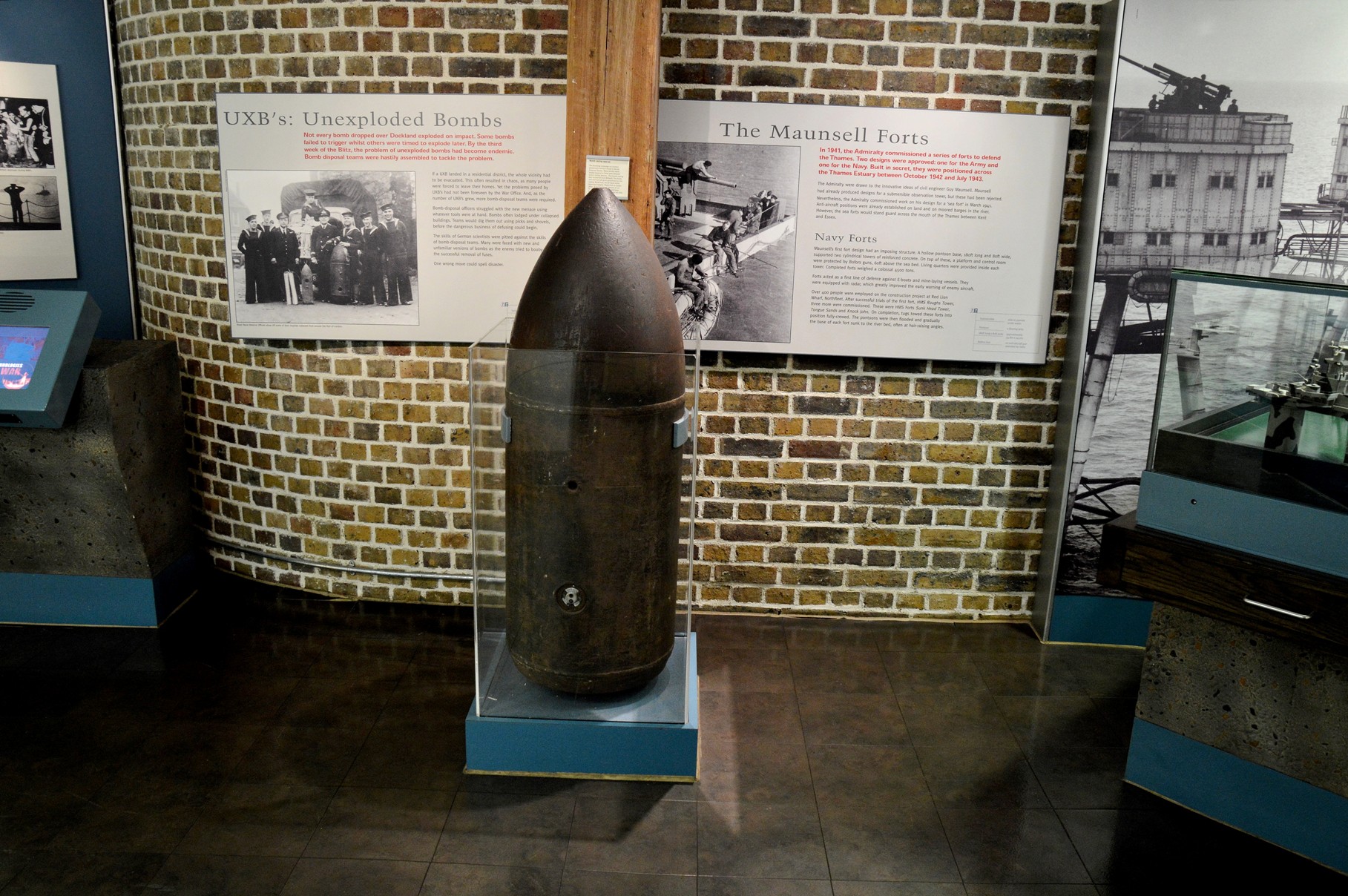
.
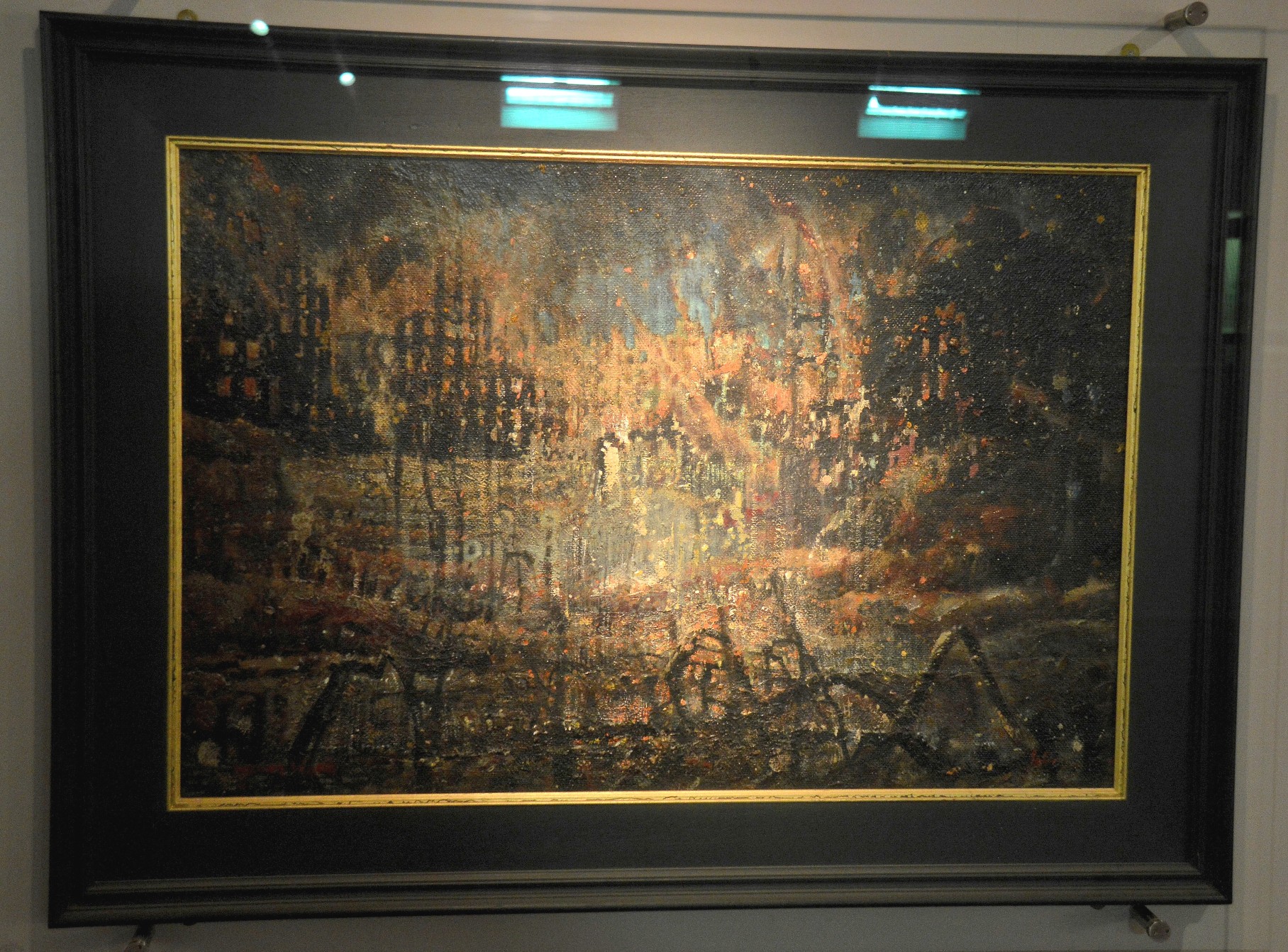
Incendiary Attack by William Ware 1940
London Docklands Now
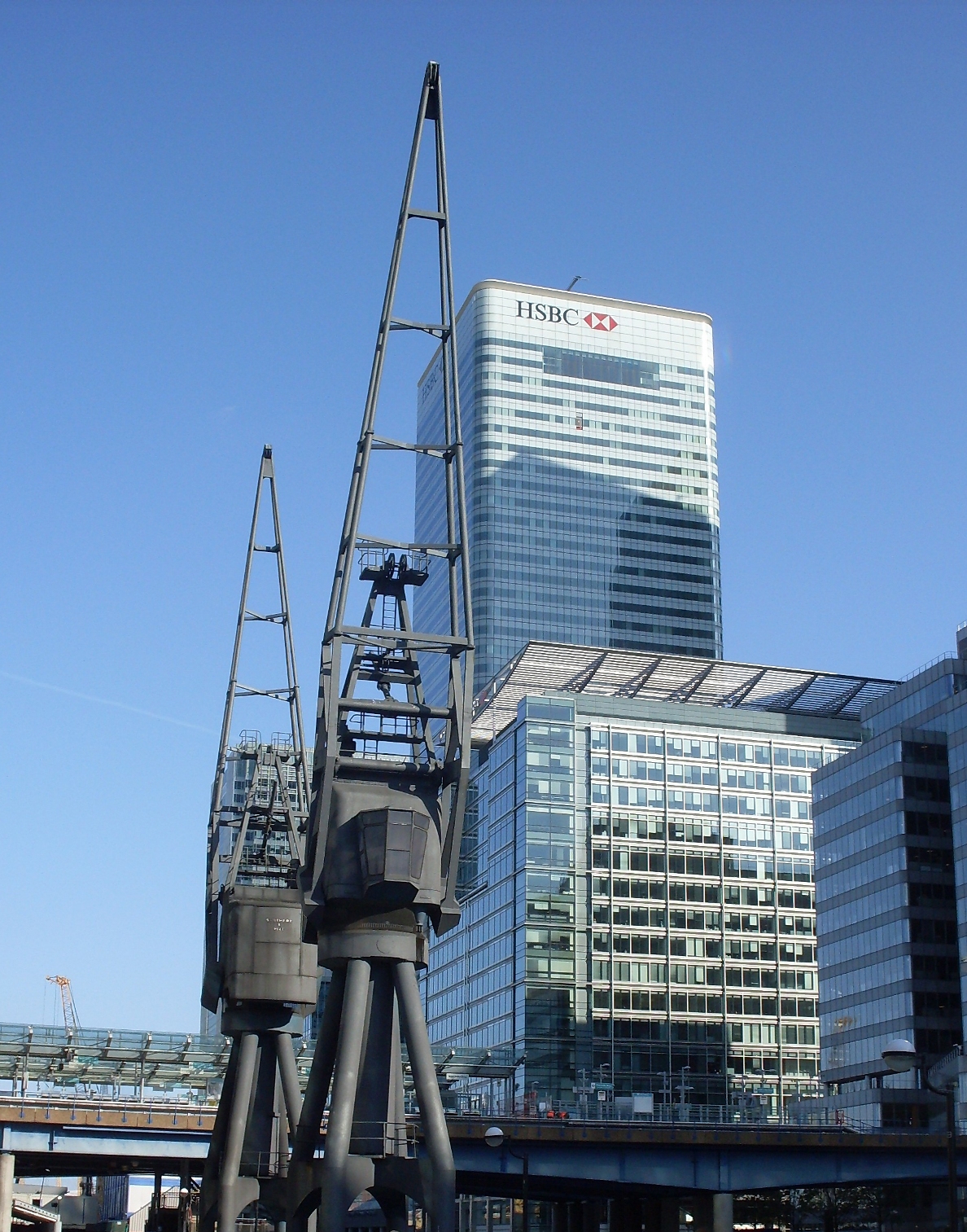
.

For more of the Past That Made the Present there is Wheels on Fire ⇐, a timeline at the Science Museum ⇐ and the History of Navigation ⇐.

Museum of London

An Extinct form of Wild Ox – The Aurochs 245,000 to 186,000 BC The 2012 London Olympics
34 pics. The Museum of London ⇒ is at 150 London Wall (as distinct from the Museum of: London Docklands ⇐). Inside is a quite extensive and interesting museum with a timeline that begins on the top floor, from prehistoric times to present day. The museum is free to enter and non-commercial photography is allowed.
The museum is a short walk along St Martin’s Le Grand from St Paul’s underground rail station (central Line) .
Educational sessions, including those for young students, are available.
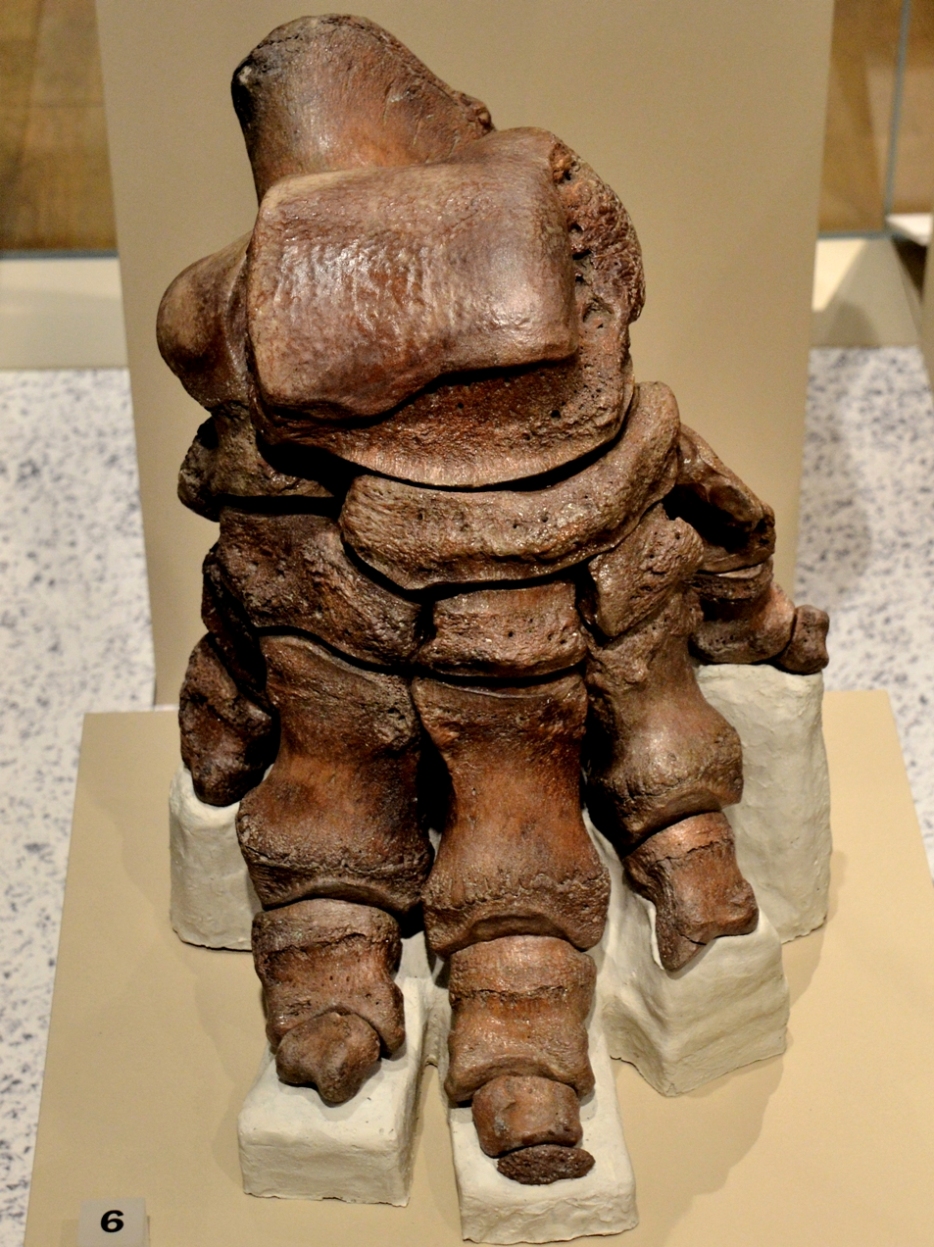
Back Foot of the Straight Tusked Elephant 781,000 to 50,00 years before present.
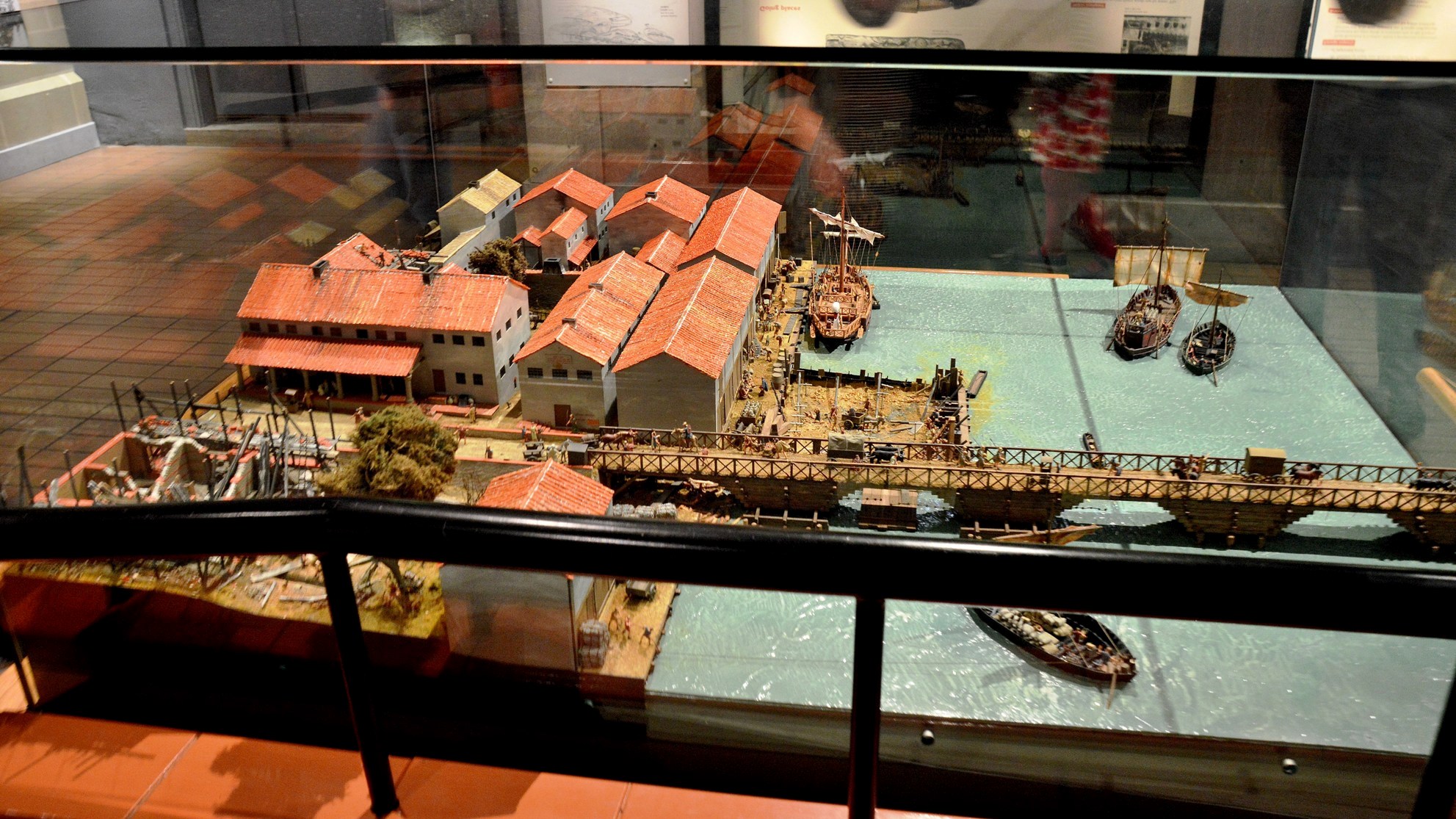
There are a large number of prehistoric, bronze age, pre-Roman, Roman, post-Roman (Saxon) and Norman exhibits. Alongside are a number of educational placards and films. Too many items to show here and get to the exhibitions of later London. So, here is just a taste of early times.

.

.
.
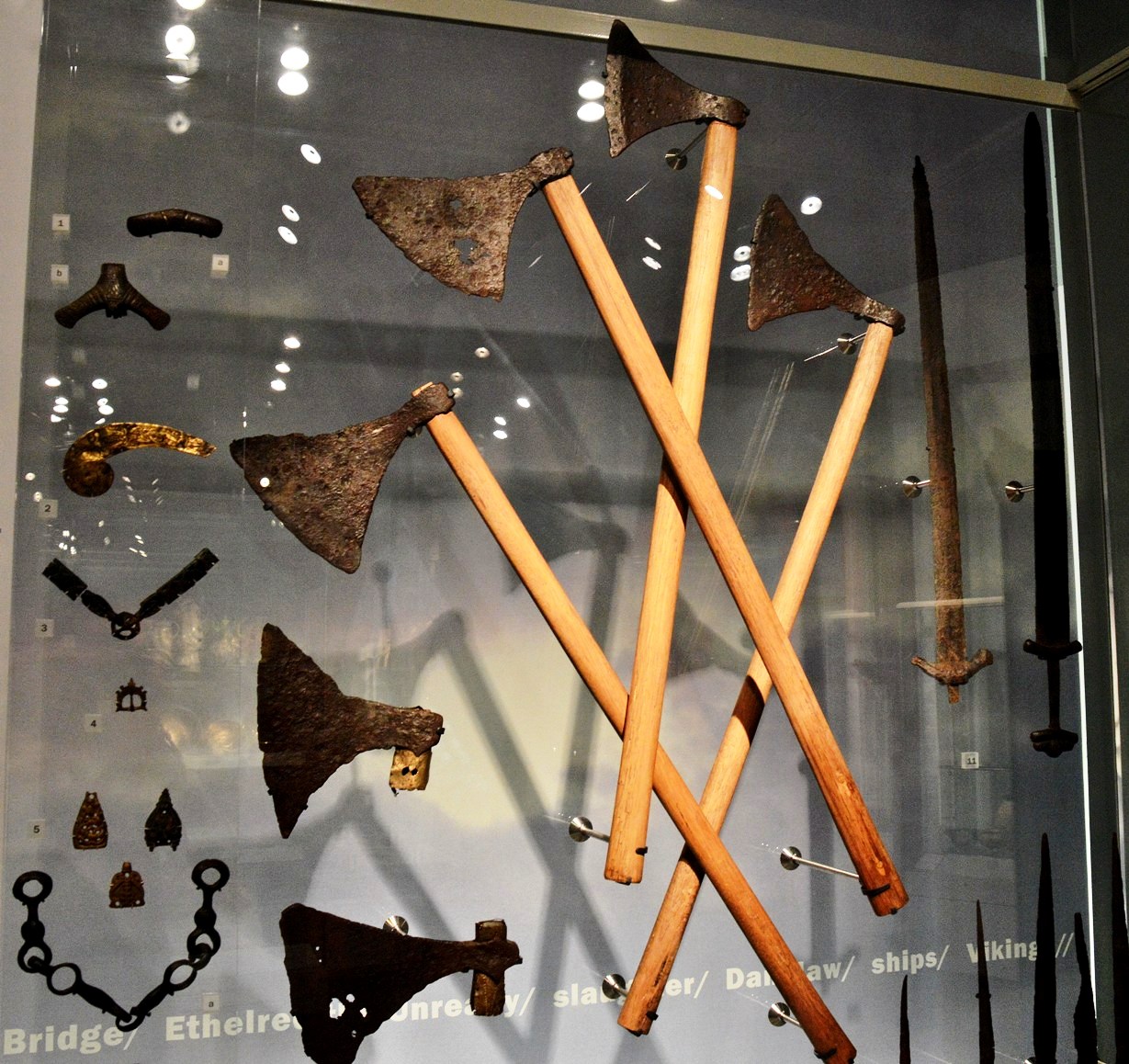 When the Romans finally left, about 400 AD, England was mostly populated by Saxon settlers and invading Norseman/Danes (Vikings) in the north. The Saxons were weren’t necessarily all that war-like but spent most of their time farming. The Norseman were commonly seafaring traders, it is just that some of them were a bit cantankerous.
On the other hand (imported from Waltham Abbey and King Harold’s Day ⇐ ) :-

 In 954 Alfred (the Great) became the first King of All England. By 6th January 1066 the position was taken up by Harold Goodwinson (Harold II). On 25th September 1066 Harold Goodwinson defeated the viking forces of Harald Hadrada and Tostig at Stamford Bridge in the north. Harold was then faced with a forced march of 241 miles to fend of the Norman invader, William (the Conqueror), in the south. By October 14th the Saxon forces were defeated and Harold killed. Thus began the Norman era and thence the reign of the Plantagenets and then the Tudors.

The London City Wall
Within the old city walls, William the Conqueror should only be referred to as William. This is because he did not conquer London but instead gave it a charter.
To see the timeline click-on and then again to magnify. It surprised me to note that our Magna Carta (in 1215 a limited Bill of Rights) was signed at roughly the same time as Genghis Khan conquered Persia.

.
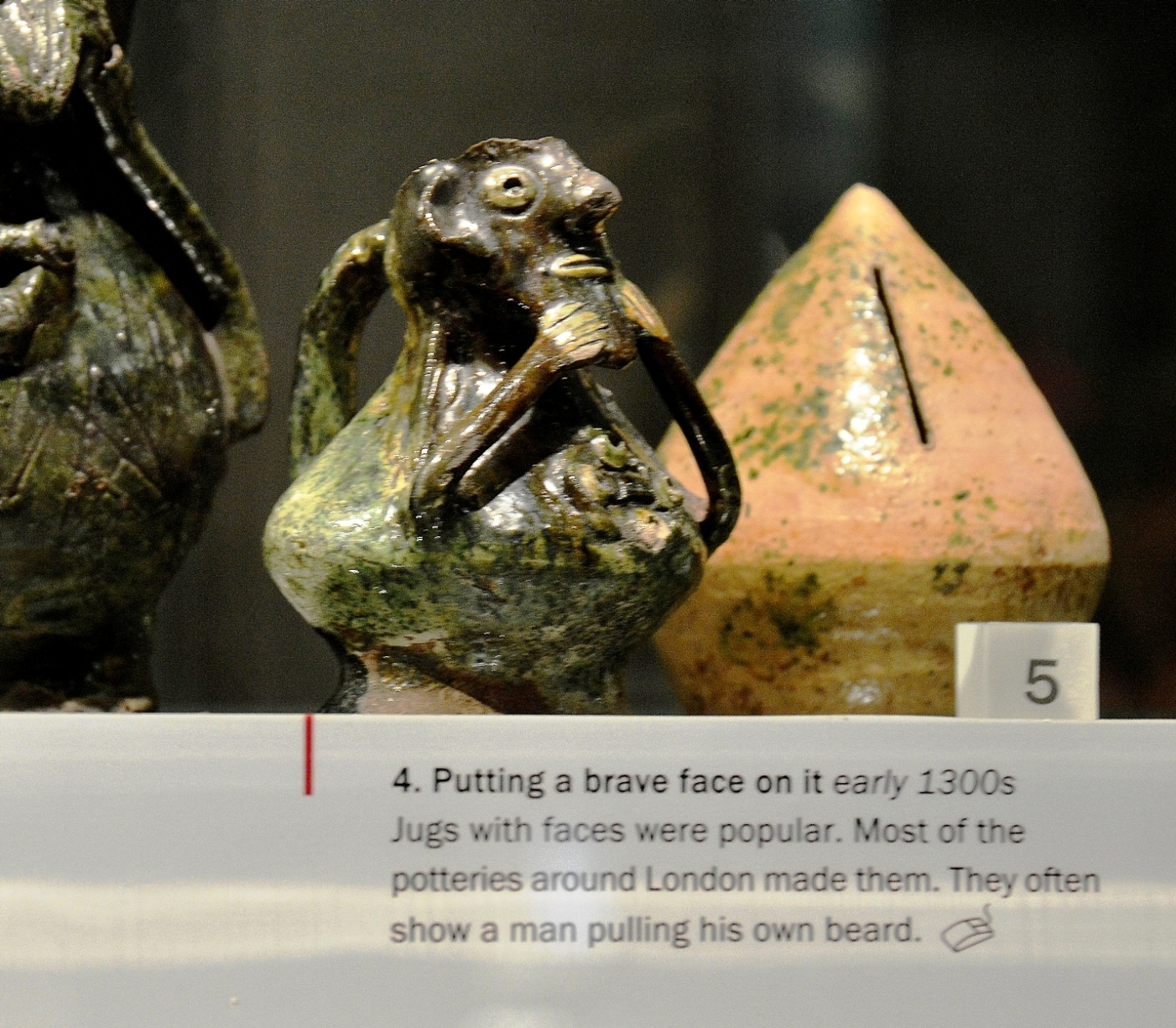
Between 1558 and 1603 was the great boom of wealth, culture and global influence of the Elizabethan era. The effect continued for some time after.

A silk dress for Anne Fanshawe (1625-1680) the daughter of the Lord Mayor of London
Sorry about the glare, I couldn’t find a way around it.

An Eighteenth Century Pleasure Garden
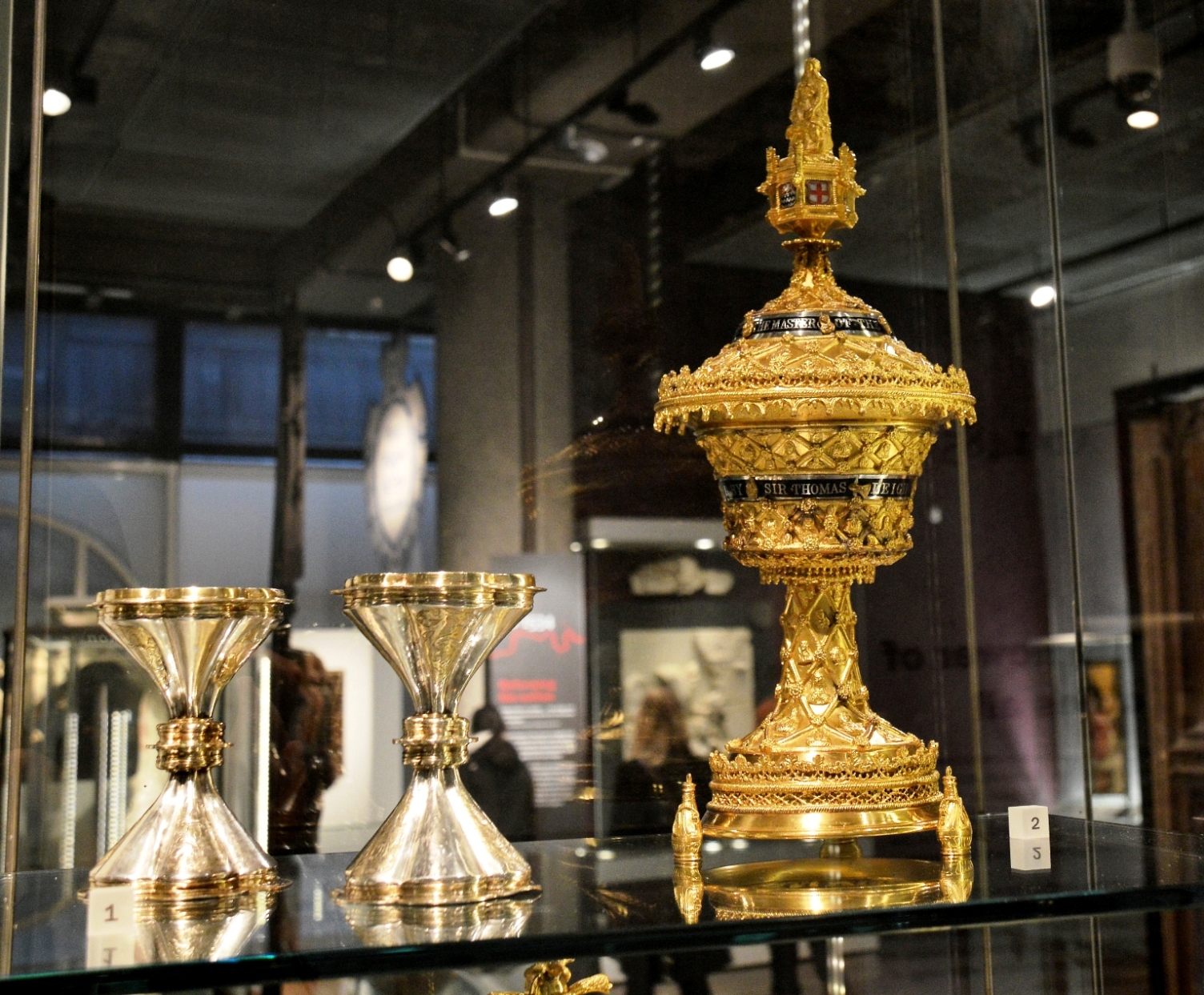
Britain and particularly London continued to advance in wealth and prestige :-

.

.
– although not for all:-
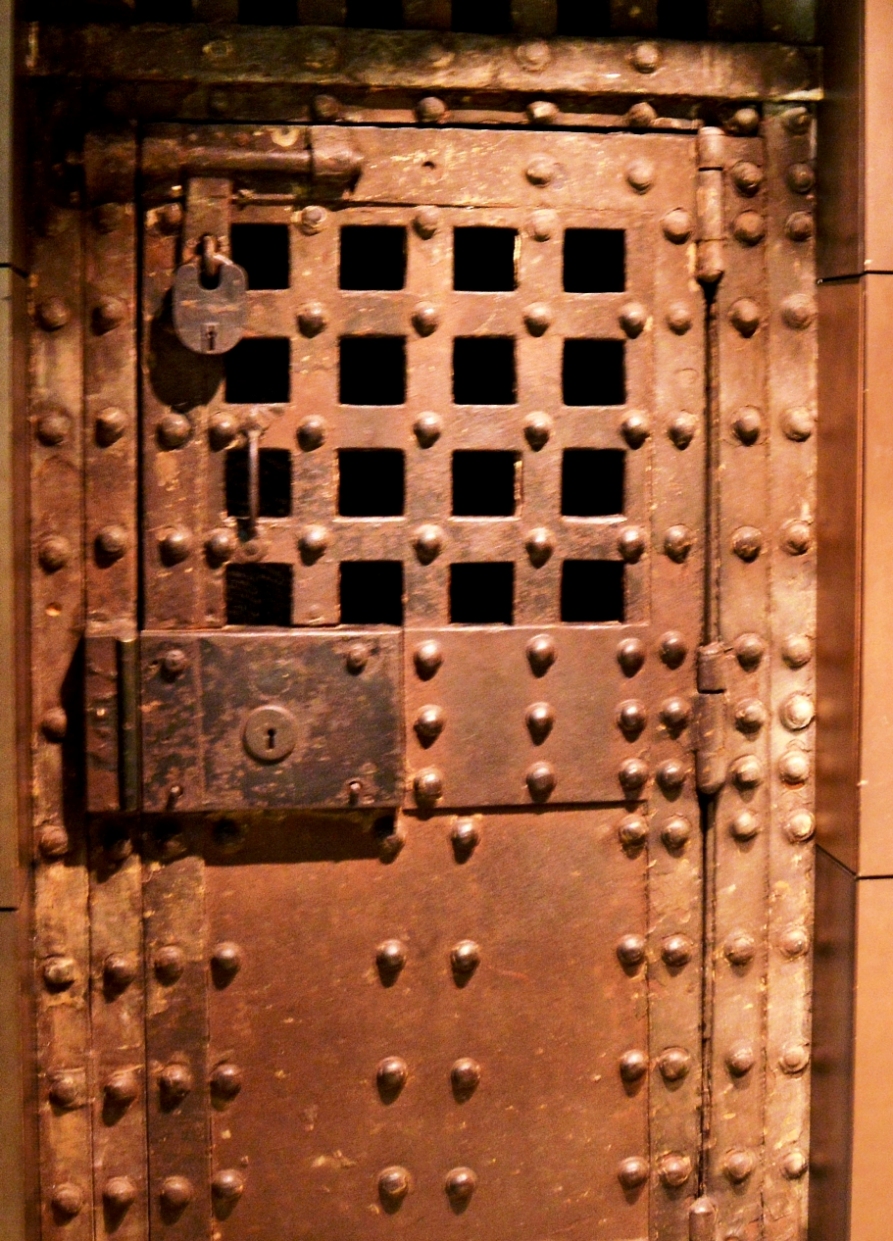
– for some there was debtor’s prison. For others there was stark poverty, starvation, disease with the work house as the only relief in later times. There is the Industrial Revolution and it’s long term impact at the London Science Museum⇐ and Wheels on Fire ⇐ (the struggle for fair play).
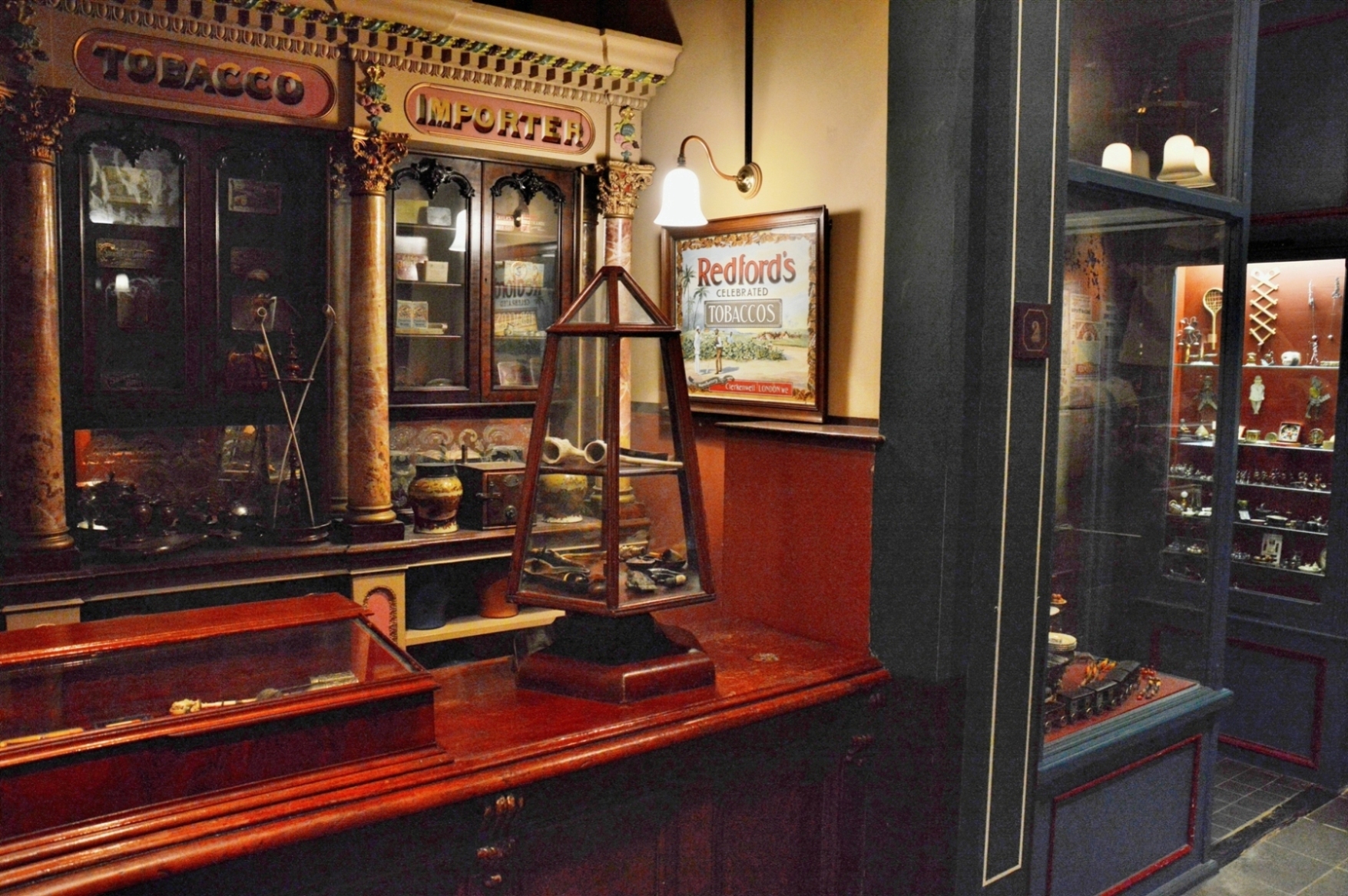
The Victorian Walk

This is a fascinating walk into the past, complete with atmospheric background sounds.
.

.

.

.
The 1920’s boom

A lift at the Savoy Grill

.

.

At the mini cinema you can take a seat and watch an old newsreel.
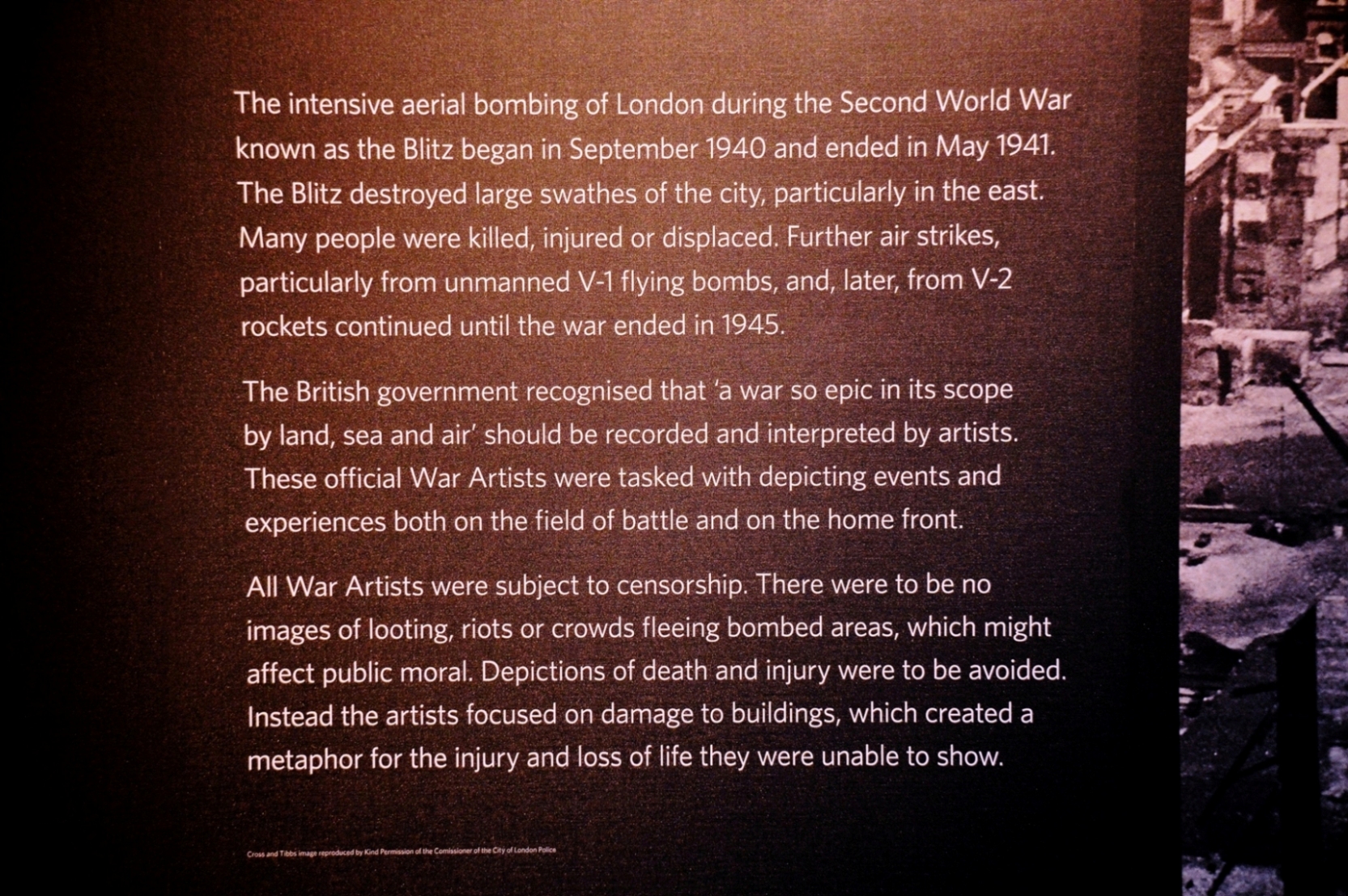
But then there was the 1930’s depression, and then :-.
.

.

London and Britain itself were almost destroyed. It needed the backing (and loss) of Britain’s entire empire, with considerable determination and sacrifice to hold on. That effort stopped Hitler’s progress and provided a foot-hold for the USA to join us in the liberation of Europe. If Britain had not been able to provide that foot-hold, the consequences could have been very different
At the end of WWII, Britain was in dire straits. Rationing continued until 1953, eight years after the wars end. Austerity continued until the early 1960’s
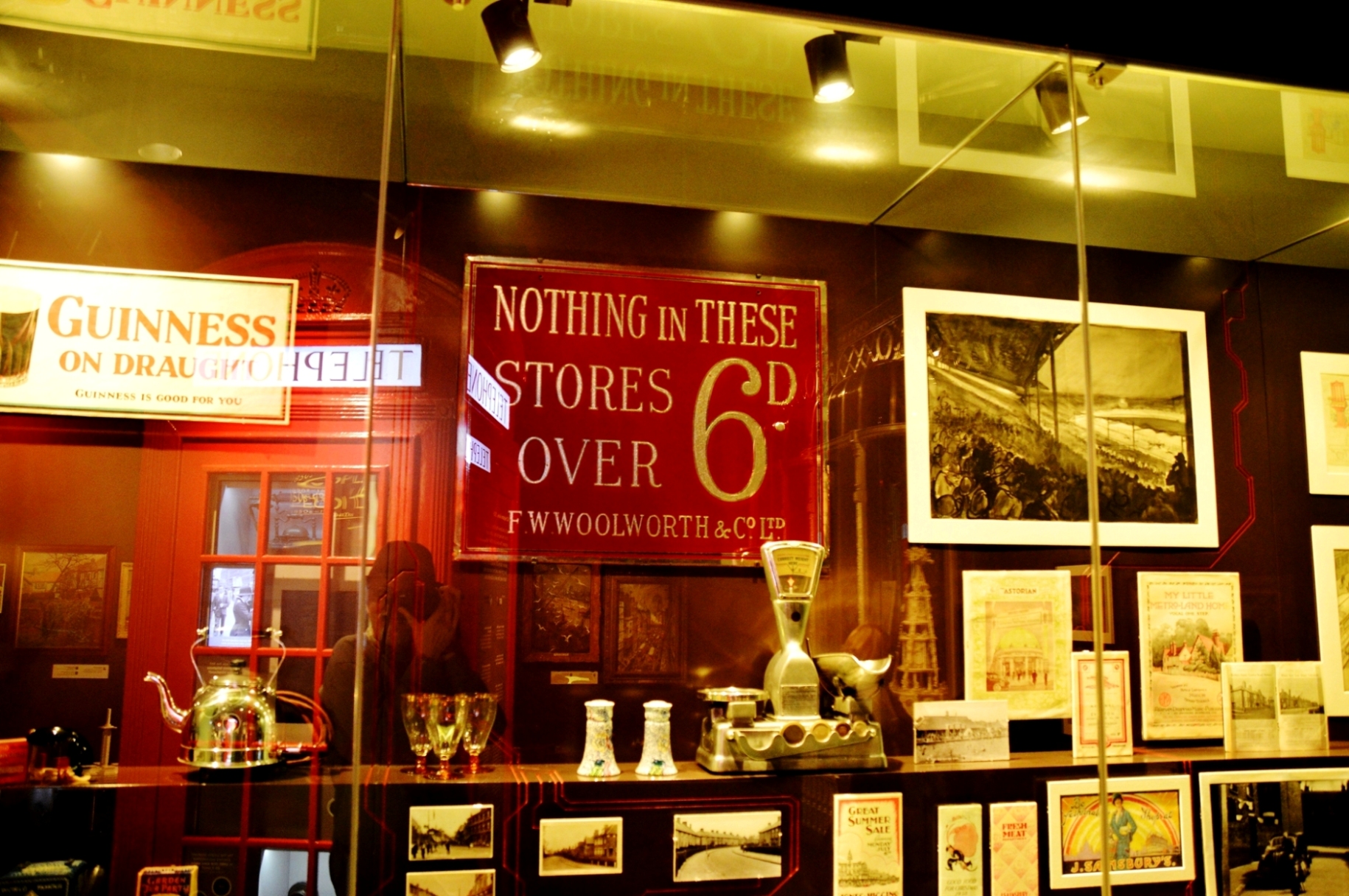
Then things began to pick up. 6D is six old pence (when they were 240 to a UK pound).

Then London began to swing again with a great burst of original art, music and cultural evolution. Not just in London but all over Britain. We may not be so bright at the present but:-.

For more of the Past That Made the Present there is Wheels on Fire ⇐, a timeline at the Science Museum ⇐ and the History of Navigation ⇐.
Guildhall Art gallery and Roman Amphitheater in London

The Guildhall Art Gallery ⇒ is free to enter and is right beside Guildhall ⇐ . Beneath are the remains of a Roman Amphitheater (AD 70) made more atmospheric by illuminated competitors. The gallery houses a moderate size collection of quite impressive art including some pre-Raphaelite works.

Lord Mayor Sir Francis Wyatt Truscot by Charles Bell Birch
.

The Wounded Cavalier by William Shakespeare Burton
.

La Ghirlandata by Dante Gabriel Rossetti
.

Fair St George by John Gilbert
.

The Defeat of the Floating Batteries at Gibraltar (painted) by John Singleton Copley
The painting is so large that it occupies two floors. I’m sure that’s Stephen Fry on the horse.
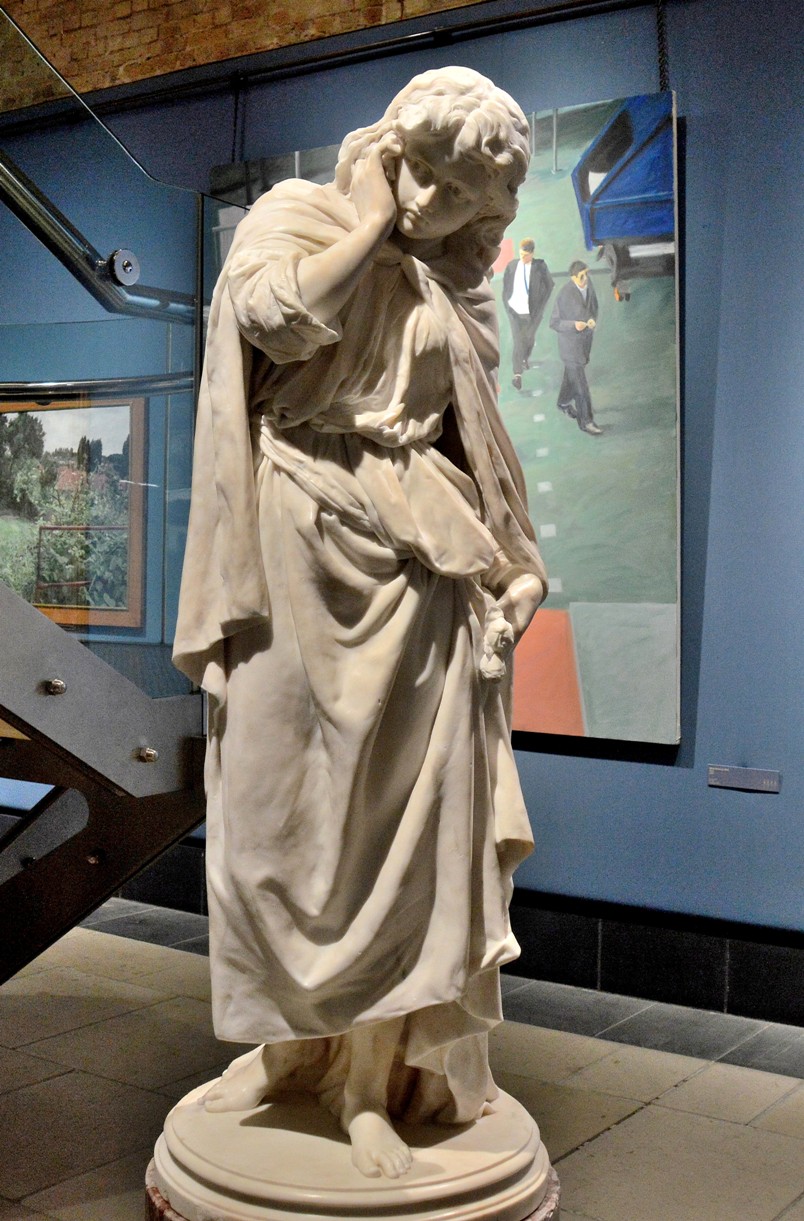
.

Demolition of London Bridge by J.W.S
.

Music Lesson by Frederic Leighton
.
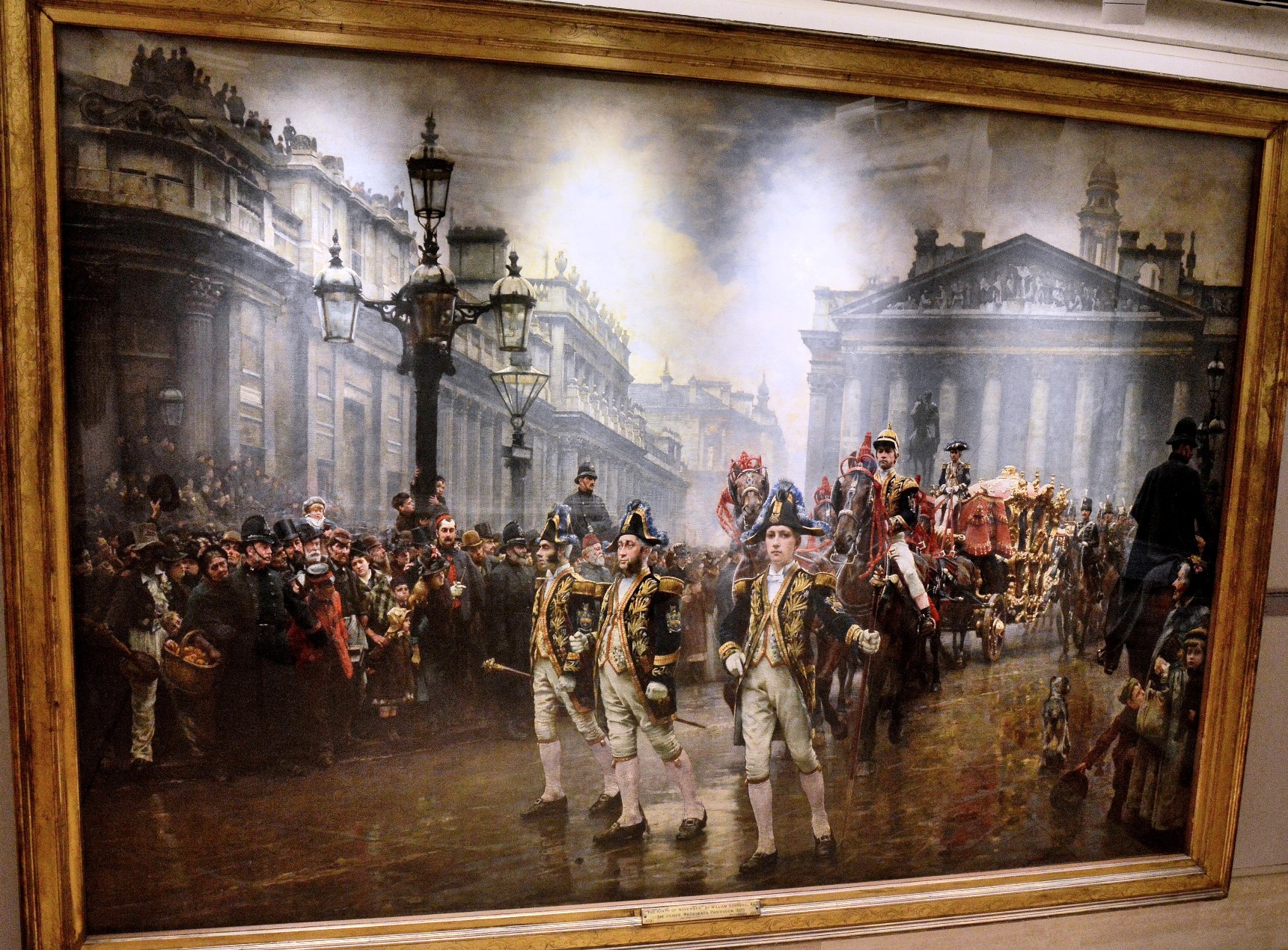
Ninth of November by William Logsdail
.

The Woodmans Daughter by John Everett Millais
Inspired by a tragic poem with the same title by Coventry Patmore.
Guildhall in London

The Great Hall
12 pics. London’s Guildhall was built between 1411 and 1440. It can be found near Bank Underground Rail station, just off Gresham Street. History ⇒. Right beside Guildhall is the Guildhall Art Gallery ⇐ which includes the remains of a Roman amphitheater.

The entrance is just to the left of this picture and the art gallery to the right (another post). The building is mainly used for social functions but members of the public can view the Great Hall, when not in use. Please see the website ⇒.
In the Great Hall their are a number of statues and stone tableaus. Here are just three.

Sir Winston Churchill
.

Trafalgar and Nelson
.
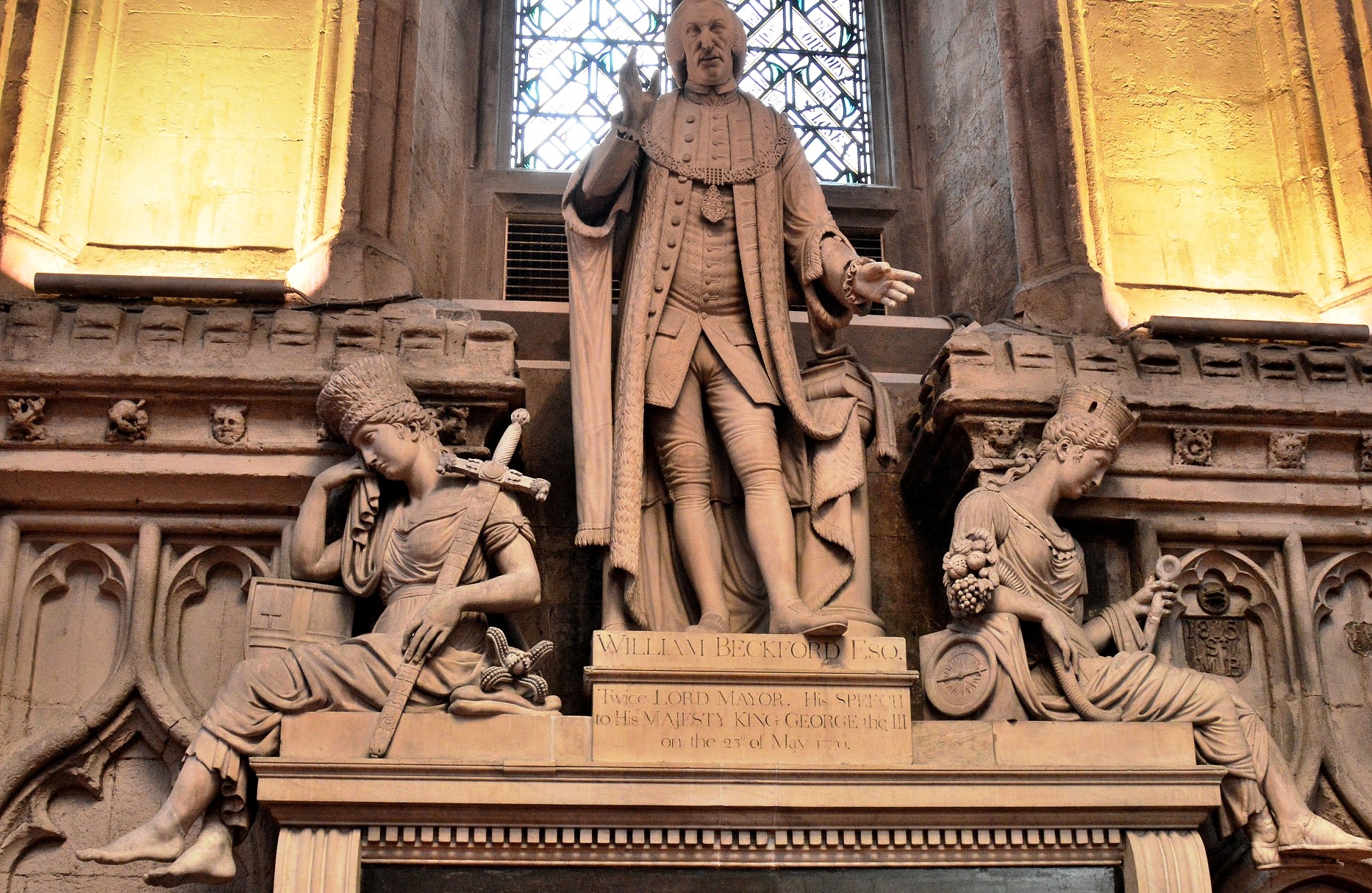
Lord Mayor William Beckton
And, at the far end.

Great Hall Stained Glass
I found a small unlocked side door ( I do love an unlocked side door) and some steps leading upwards. I found myself in the Old Library.

Old Library
.

.

There were a number of old paintings and some tapestries.
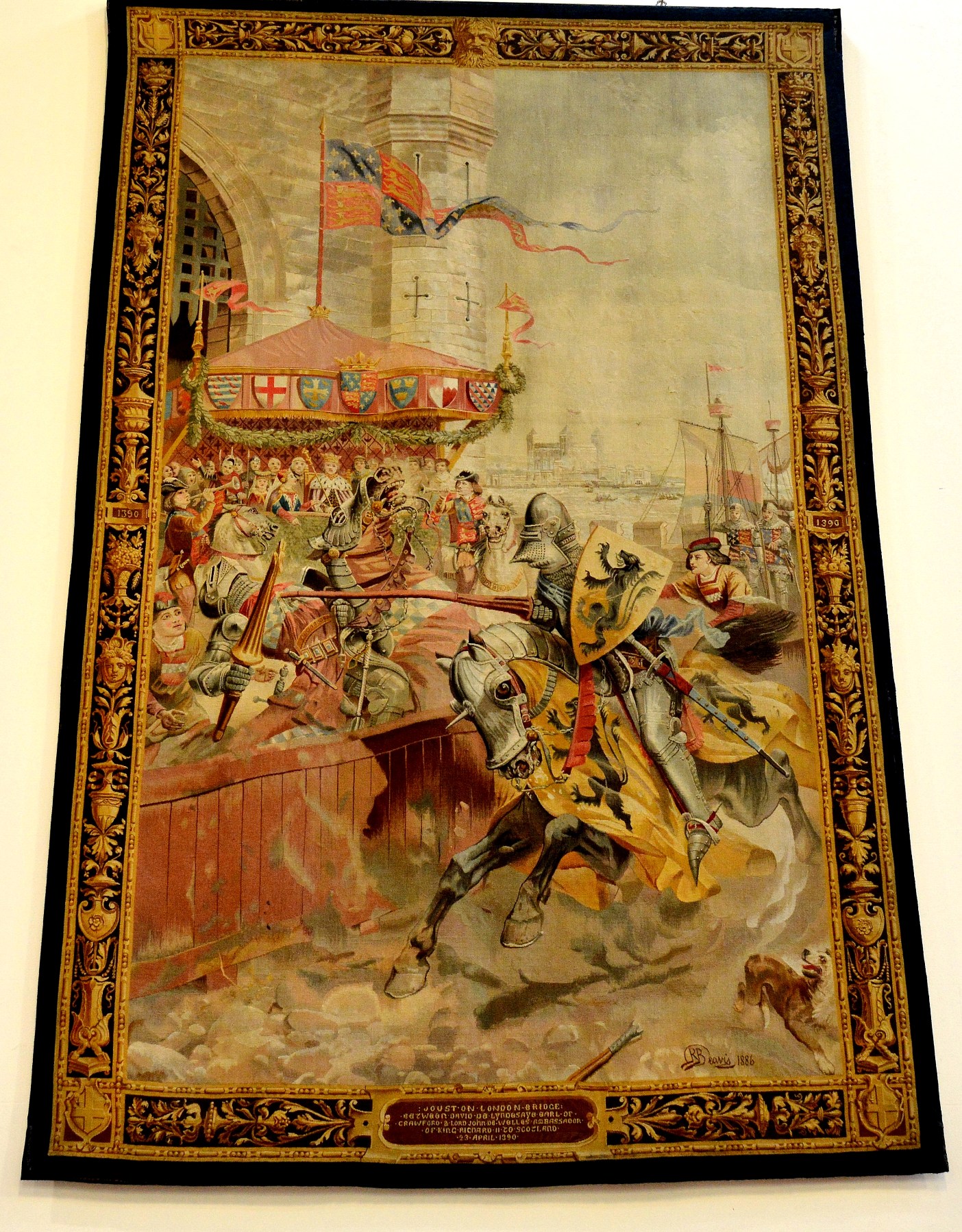
Joust on London Bridge 1390
Another side door and some steps down ~

Charles I, Edward VI and Elizabeth I
Leading to a a small hall.
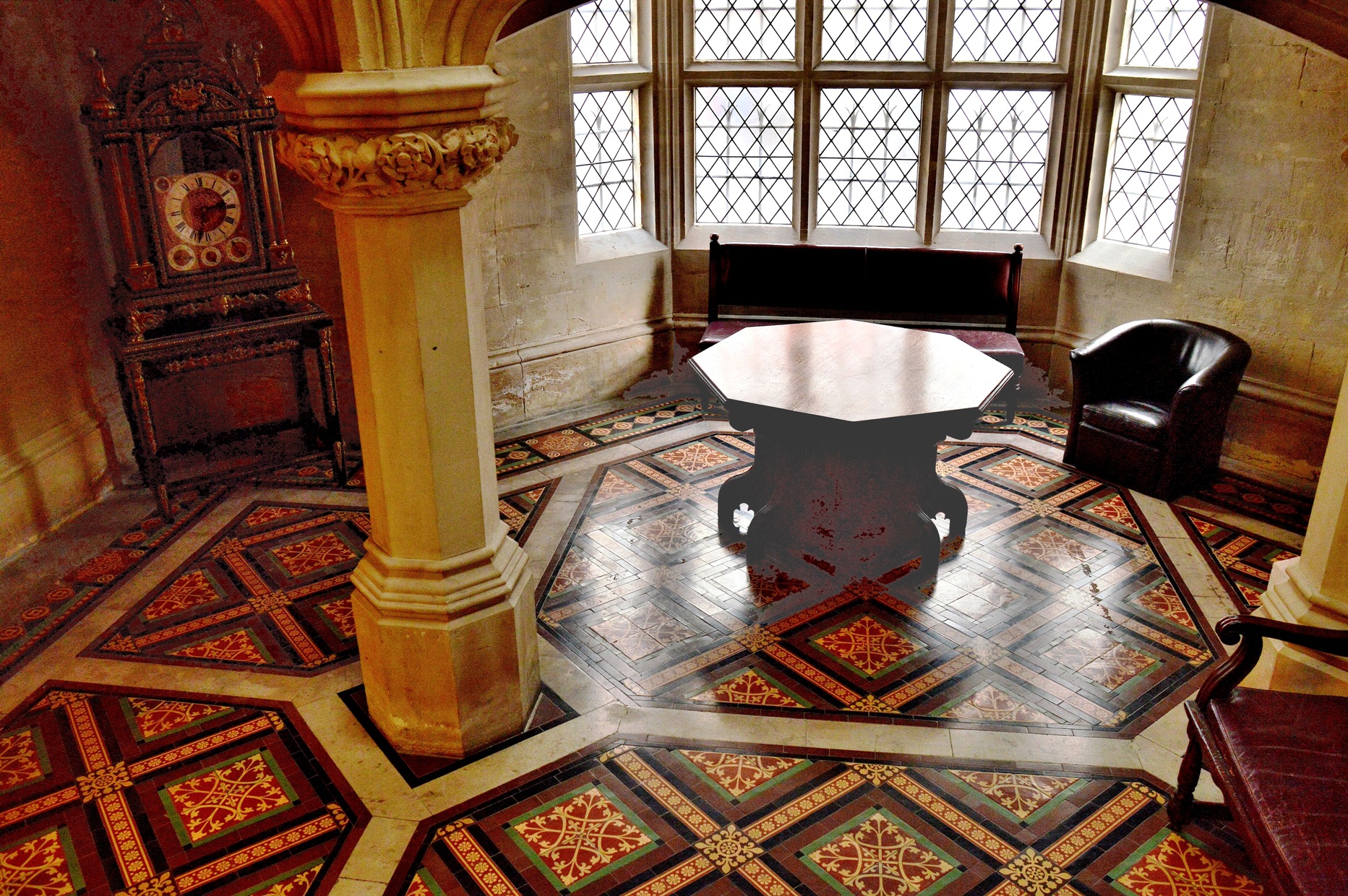
It was here I got nabbed by security, who were confused as to how I got into the members area. I agreed with them and was politely escorted out with my badly behaved camera (well, if they will leave old libraries just lying about).
Thank you for the visit and may all your side doors be rabbit holes.
The Queen’s House Interior at Greenwich

The Great Hall Floor
14 pictures. The house has been refurbished and is free to visit. It can be found adjacent to the National Maritime Museum⇐ in Wonderful Greenwich ⇐. Check the Queen’s House opening times ⇒. Non-commercial photography is allowed now (since early 2016). .
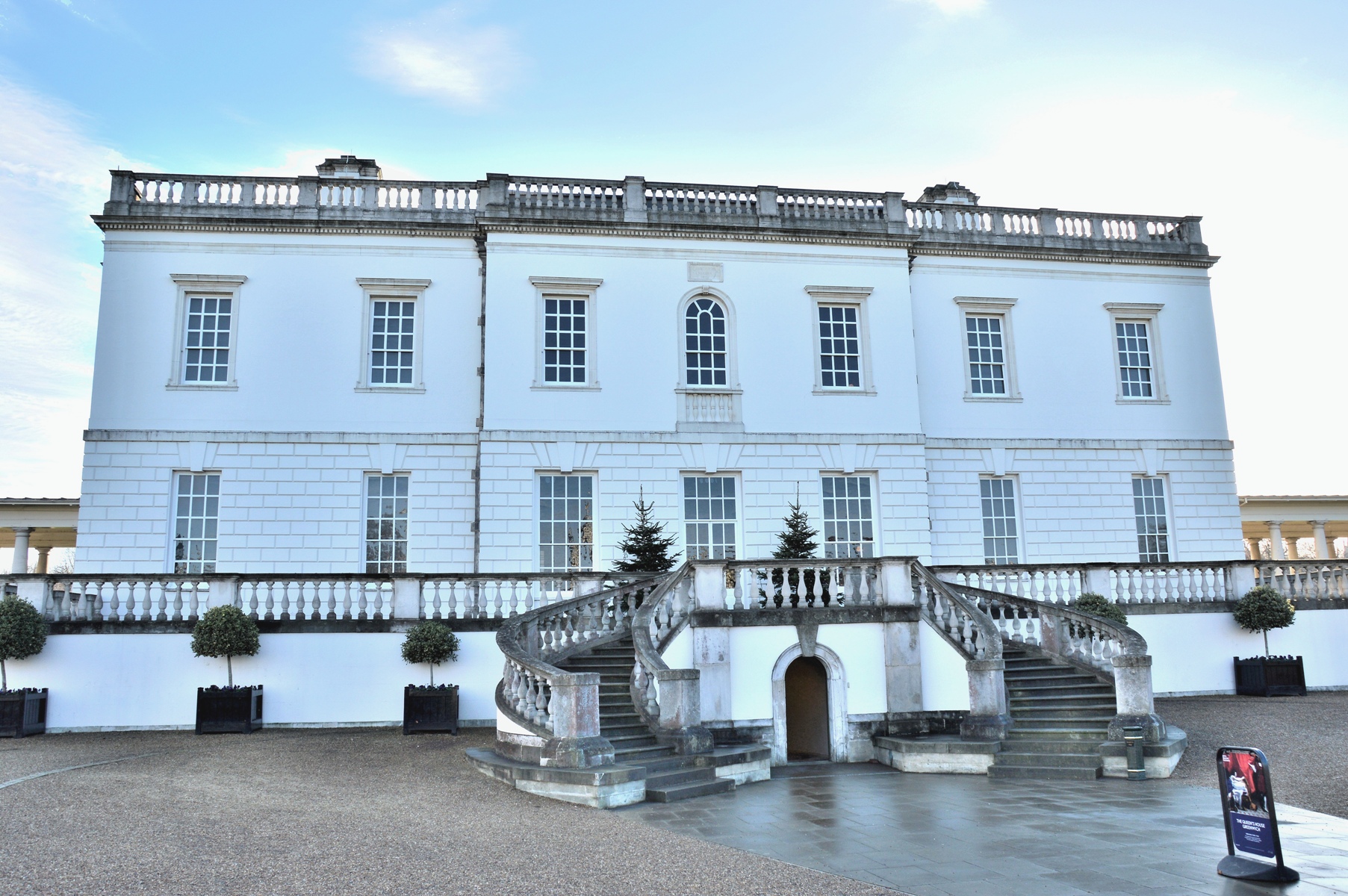
The house, formerly known as Queen Anne’s house, was built between 1616 and 1635 for Queen Anne (of Denmark) wife of James I of England. Unfortunately Queen Anne died in 1619 and the house lay abandoned until work restarted in 1629 for Charles I’s consort, Henrietta Maria.
The Queens House is now full of artwork including works by William Hodges, George Stubbs, Hans Holbein, William Hogarth, Thomas Gainsborough, the Tulip Staircase by Inigo Jones and one of the famous Elizabeth I Armada portraits.
The architect was Inigo Jones and the style is said to have influenced the architecture of the USA White House.
The Architecture
.

The Great Hall Ceiling
.

The Tulip Spiral Staircase by Inigo Jones at the Queen’s House in Greenwich
.

.
The Artwork
This is just a small sample.

One of the three famous Elizabeth I Armada portraits that still exist. This one cost £1.5 million. There is another at Woburn Abbey and another at the National Portrait Gallery ⇐ (although I did not include the Armada Portrait) .
The Armada Portraits depict the destruction of the Spanish Armada whilst attempting to invade England. The armada was destroyed mostly by the British weather. Like many portraits of Elizabeth there are several symbols included. For instance the pearls indicate purity, the bow indicates virginity and her right hand over the America’s indicate her advancing dominion and colonisation.
Other portraits of Elizabeth I can be found at Hatfield House ⇐ and show an even more advanced use of symbolism.
.

.
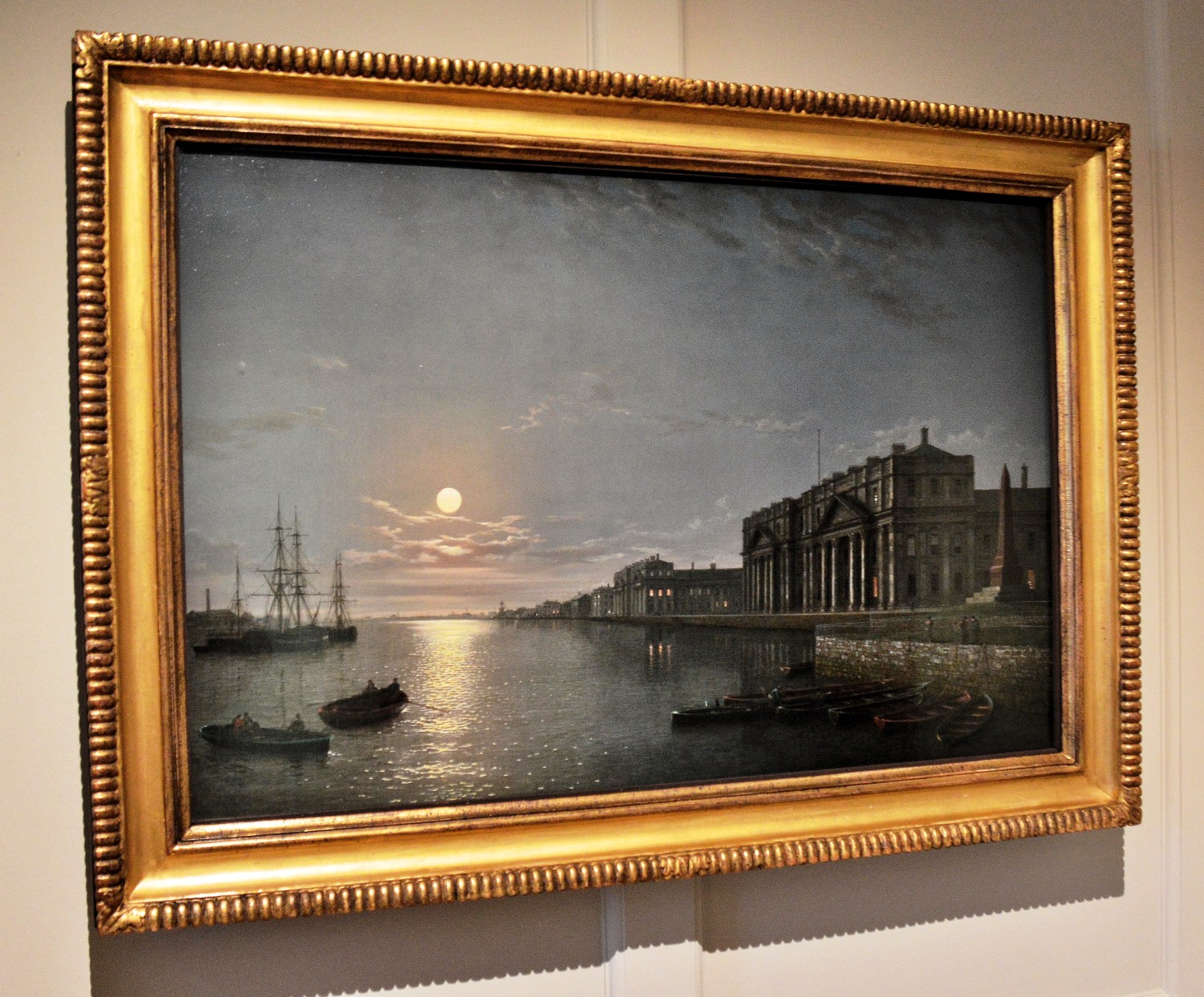
The Thames and Greenwich Hospital by Moonlight by Henry Pether
.
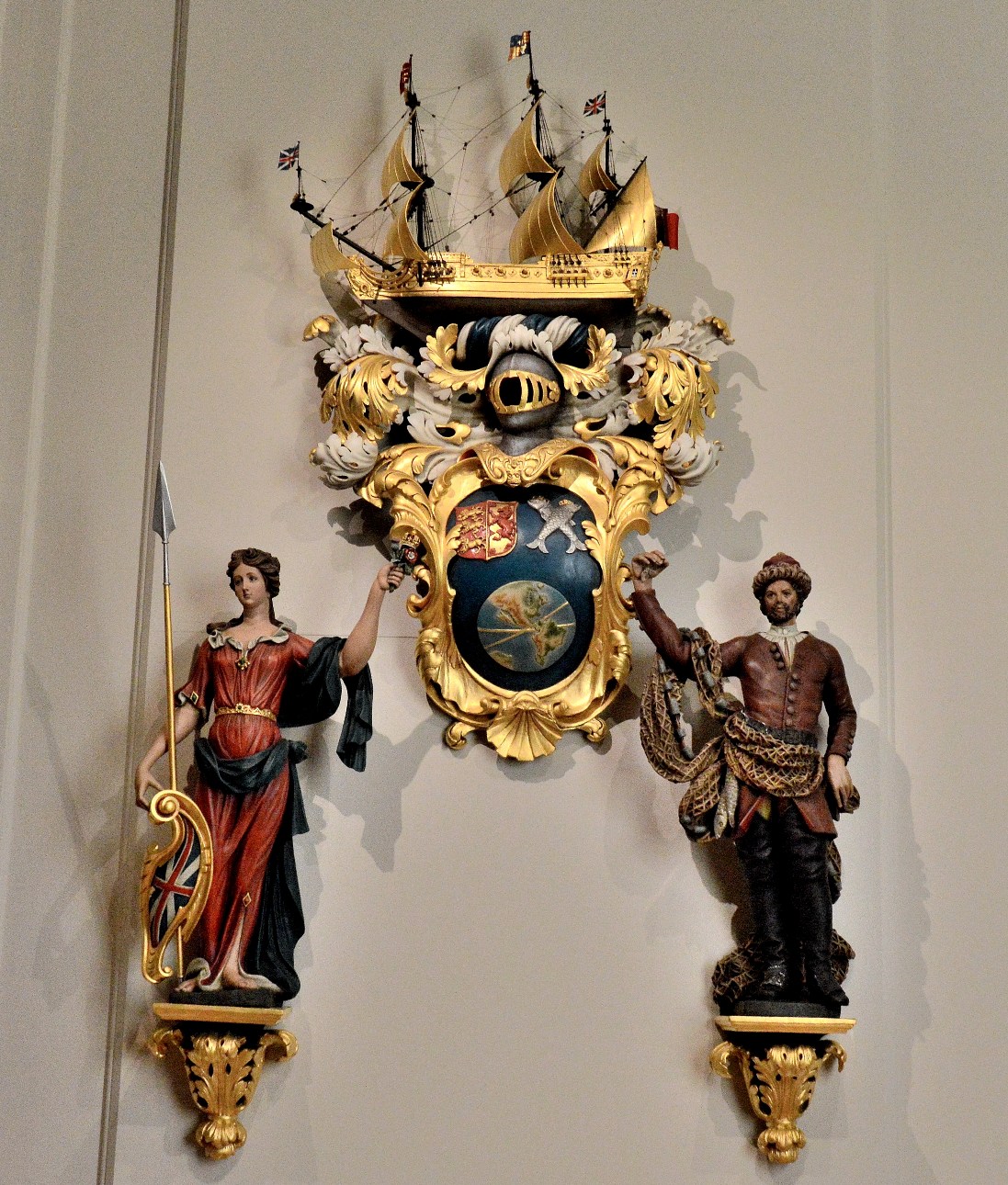
.
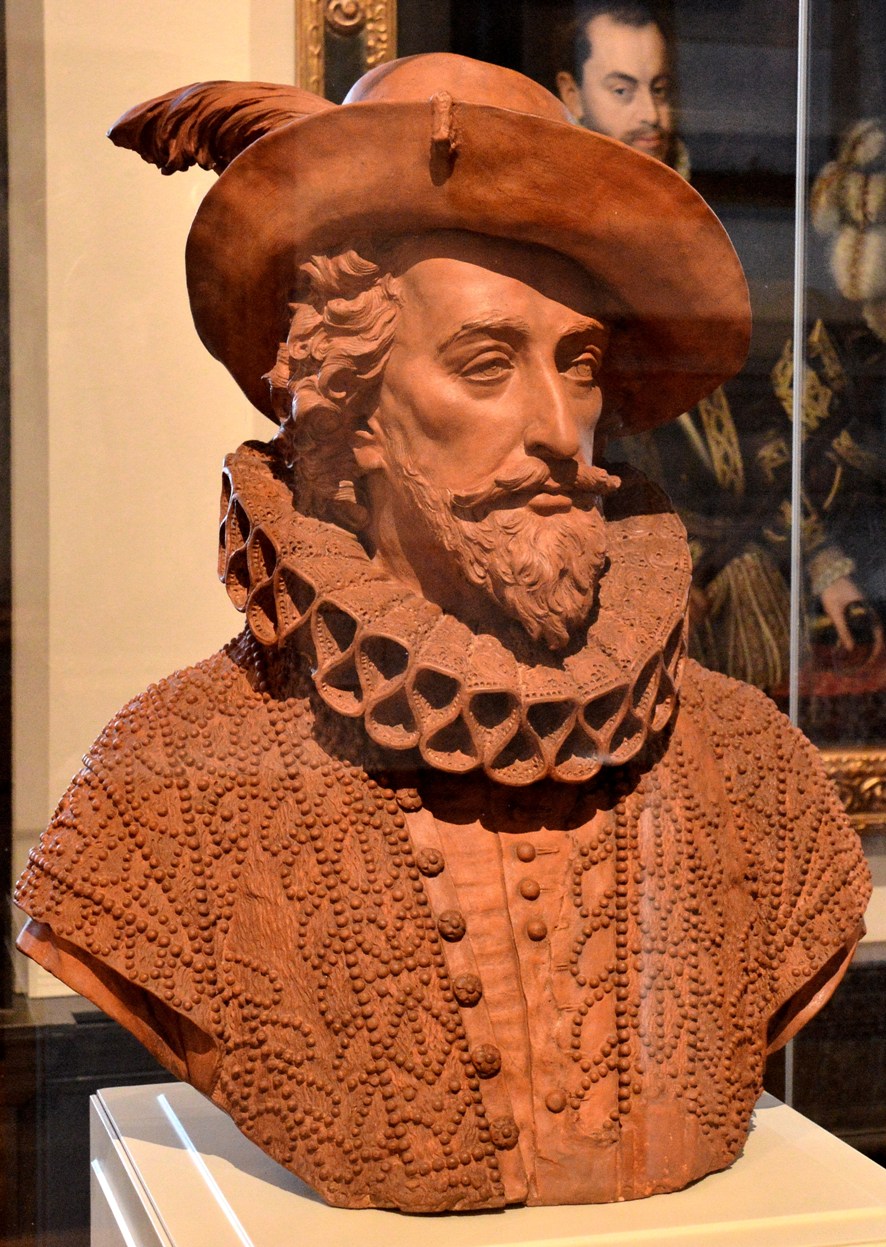
Sir Walter Raleigh
Sir Walt founded the state of Virginia in the Americas (after Elizabeth I the virgin Queen) and brought potatoes and tobacco to Europe.
This is why the Beatles sang in “I’m so Tired”, in reference to tobacco, ” And curse Sir Walter Raleigh, he was such a stupid git”.
He secretly married a Gentlewoman of the Queen’s Privy Chamber (Elizabeth “Bess” Throckmorton) which resulted in he and his wife being imprisoned for several months. Years later, he was executed for refusing to accept James I as Queen Elizabeth’s successor.
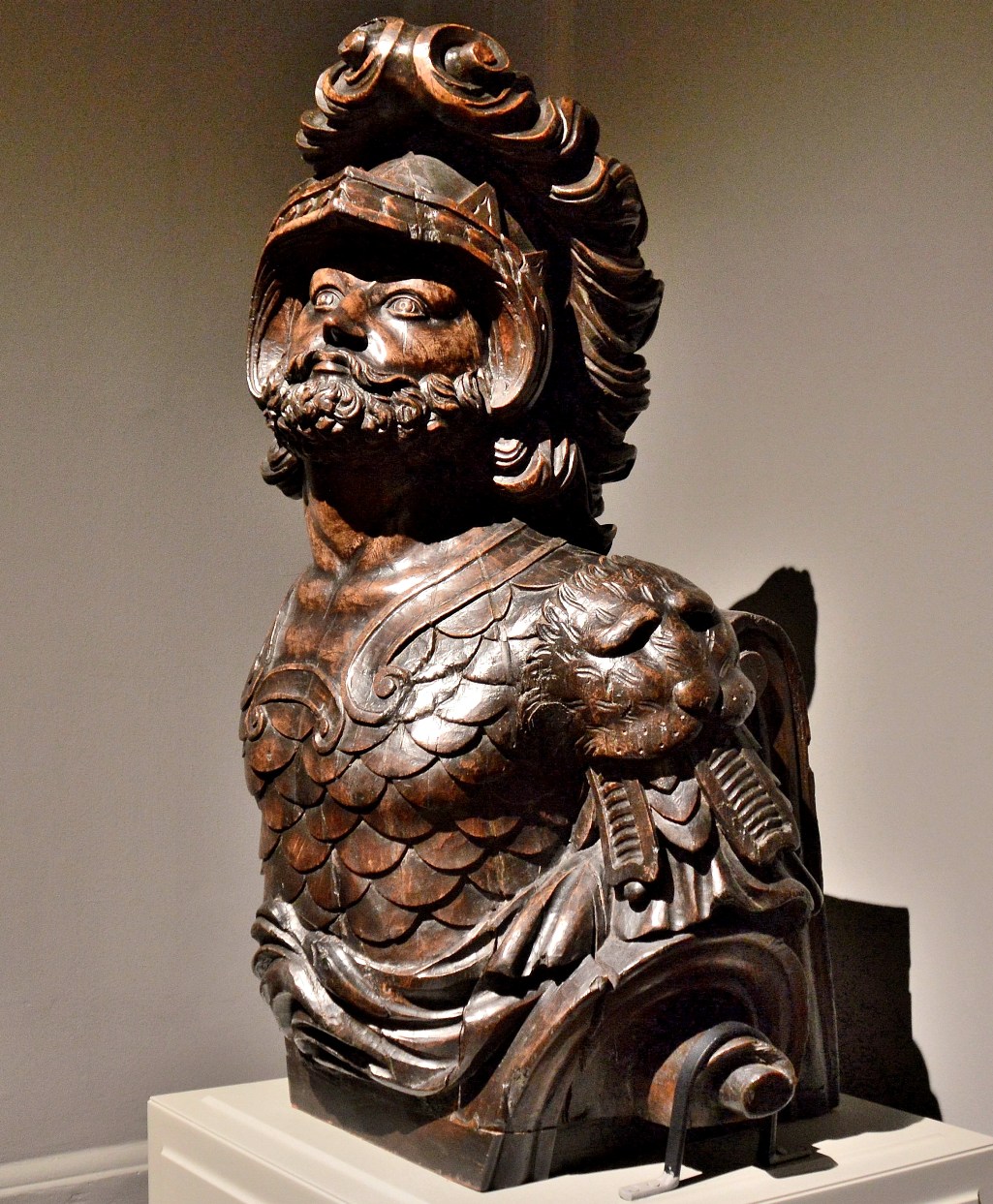
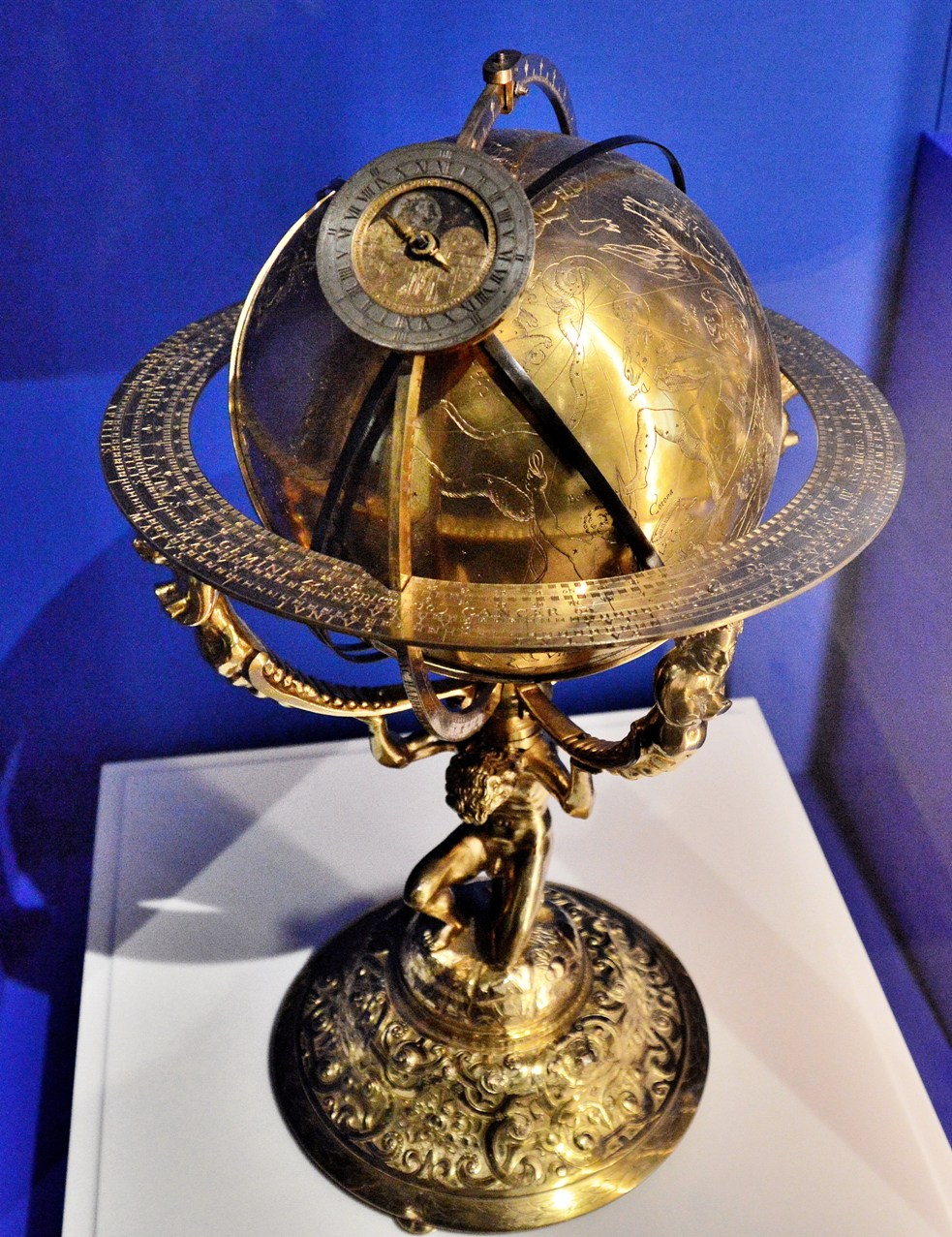
A Ships Figurehead
.
.
.
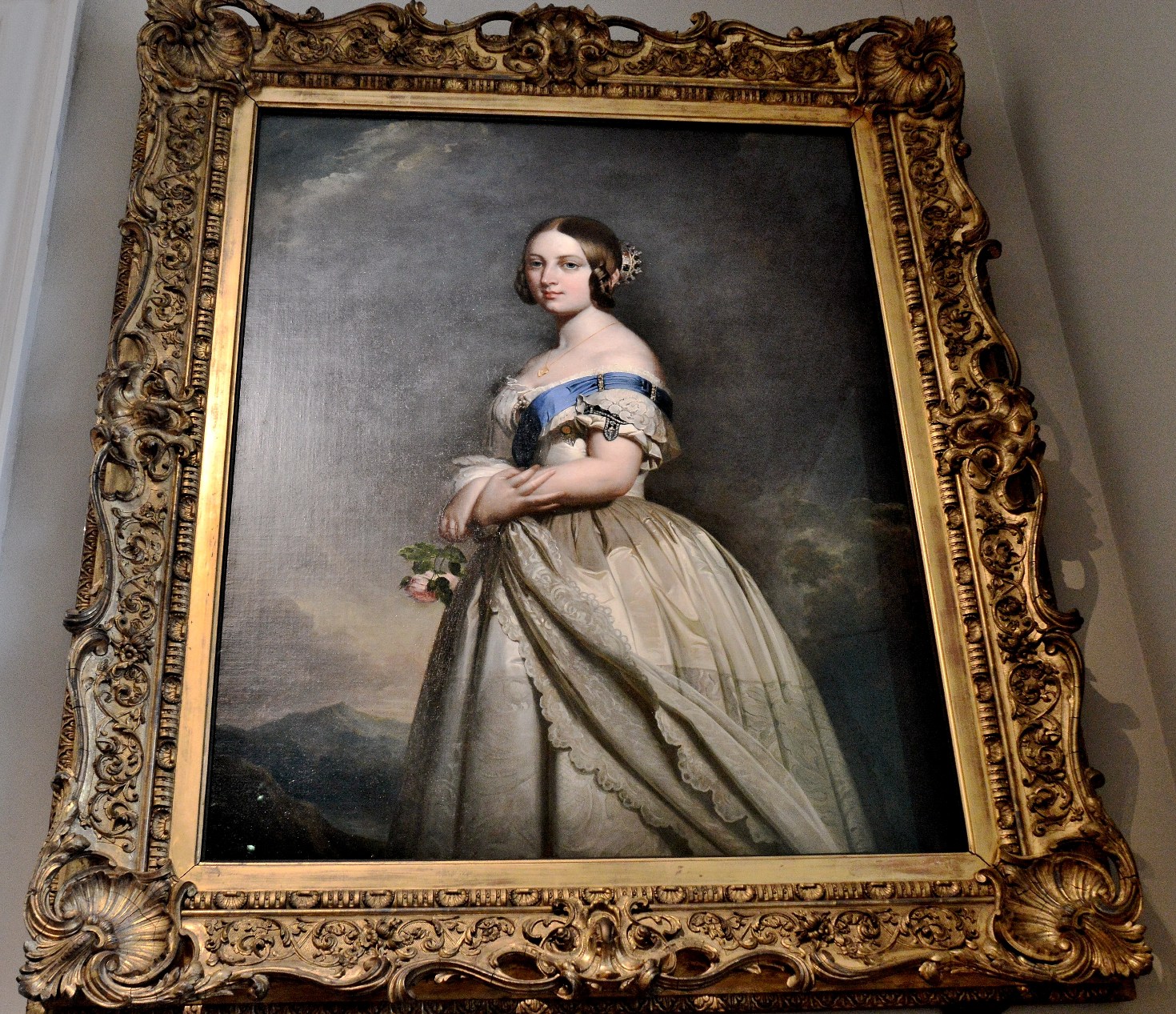
The Young Queen Victoria
Thanks for your visit and I hope that you found that interesting.
As an added note, the house does have a reputation for being haunted ⇐. To confess, it was probably me having a sick day. To be more serious, I found it a very calm place and caused no concern at all. Even the people, who took the photograph that started the rumour, refused to believe it was ghostly.
Camden Market, Camden Lock Market, Horse Tunnel Market and Stables Market

Upper Camden High Street
Imagine an Alladin’s cave within a cornucopia fed by a horn of plenty. In the Camden Markets one can find eatables, wearables, carryables, sparklies, wall and ceiling hangables, film cameras and magical hidden caves of delight.
If you intend any serious shopping then print a large Google map of the market area north of Camden Lock and another south of the lock. That way you can retrace your steps to the best bargains. There are some overpriced items and Camden is very busy at the weekends so buyer beware. On the other hand there are some unique craft items.
To get there use London Underground Rail to Camden Town on the Northern Line. There are two exits. Use the one onto Camden High St and walk up the road with the main intersection at your back.
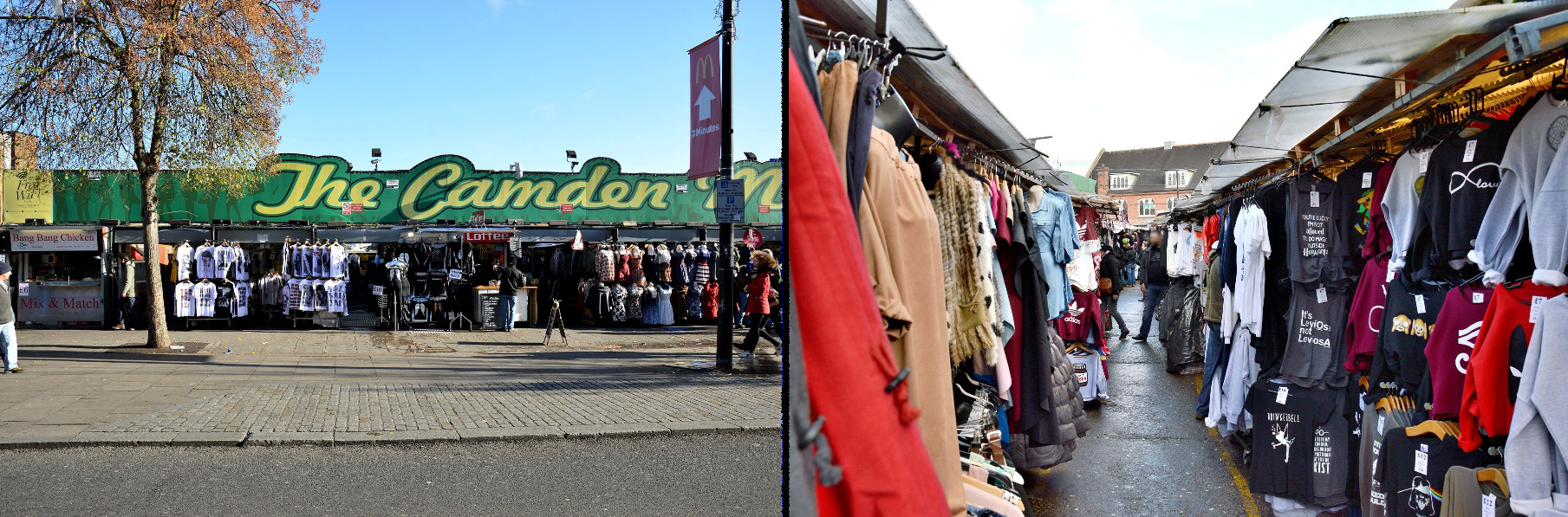
Camden Market is the smallest of the markets but is a bit bigger then it looks.

Camden Lock Market is a lot bigger than it looks.

The building on the right is the famous Dingwalls ⇒ music venue and the Comedy Loft ⇒. A little further on from the lock is the stop for the London Waterbus ⇐ to Little Venice.
.
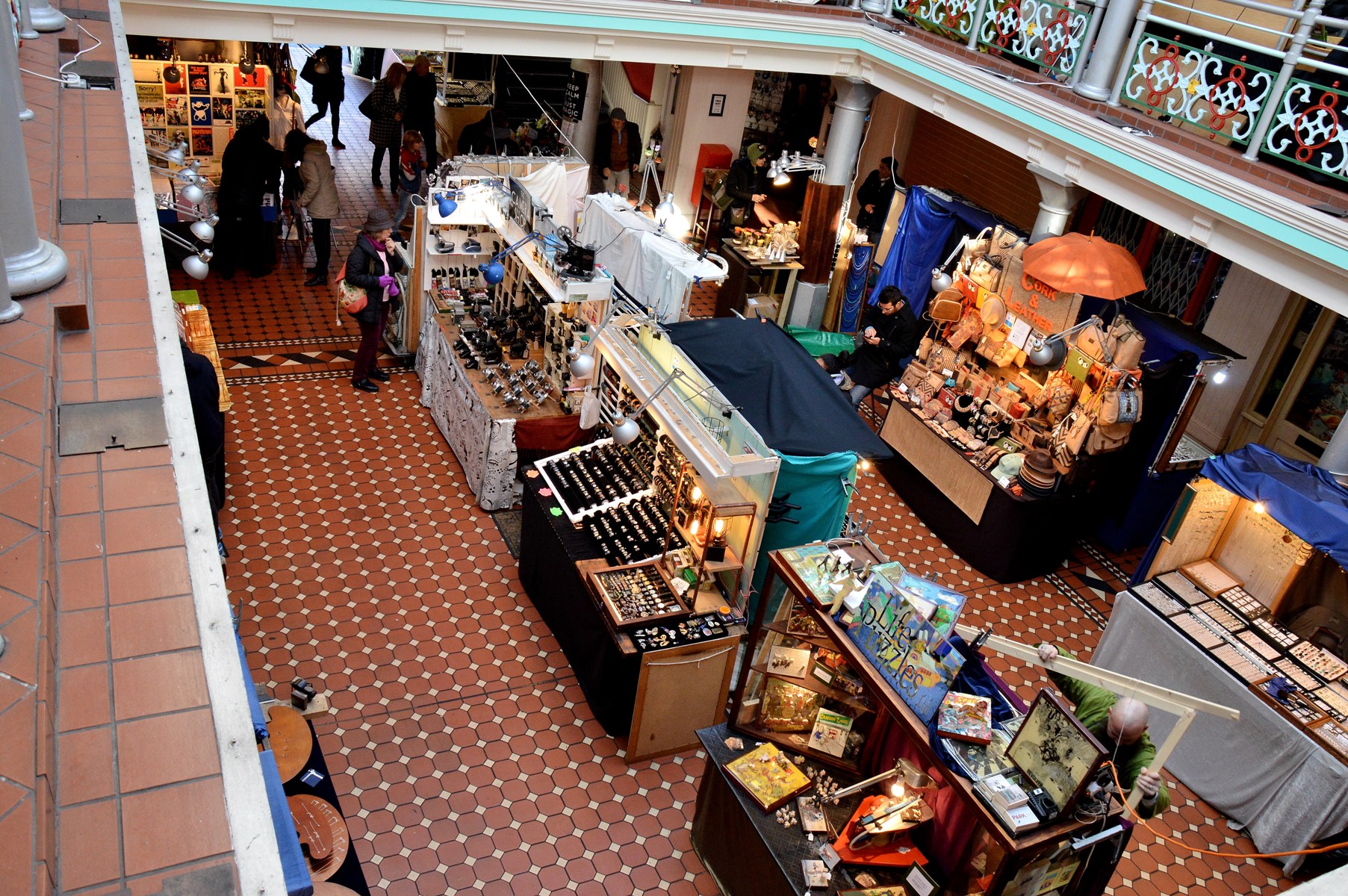
The market halls are quite fascinating and lead down to the canal side with a number of eateries.
.

.

On the side away from canal is Camden Lock Place and another market area. Turn right at the sight of Shaka Zulu and you will come back to the High Street.

This picture is with the High Street at my back and you will find Gilgamesh on your Google map. Don’t go back onto the High Street but venture down the little alley on the right of the picture.

The first thing that strikes one is a magic carpet of spiced aromas from all over the world. I got the impression that if I stayed too long I would be forever mesmerized and never leave.
But, if you continue then there is an Alladin’s cave with many side alleys to watch out for.

Camden Lock and the Regents Canal are part of a huge canal network stretching across Britain and the lock once provided stables and a hospital for the barge horses.

Hidden away, it is one of largest markets in Camden with a plethora of arts, crafts and fashion. I can only show a small part of it.

.

.

.

.

.
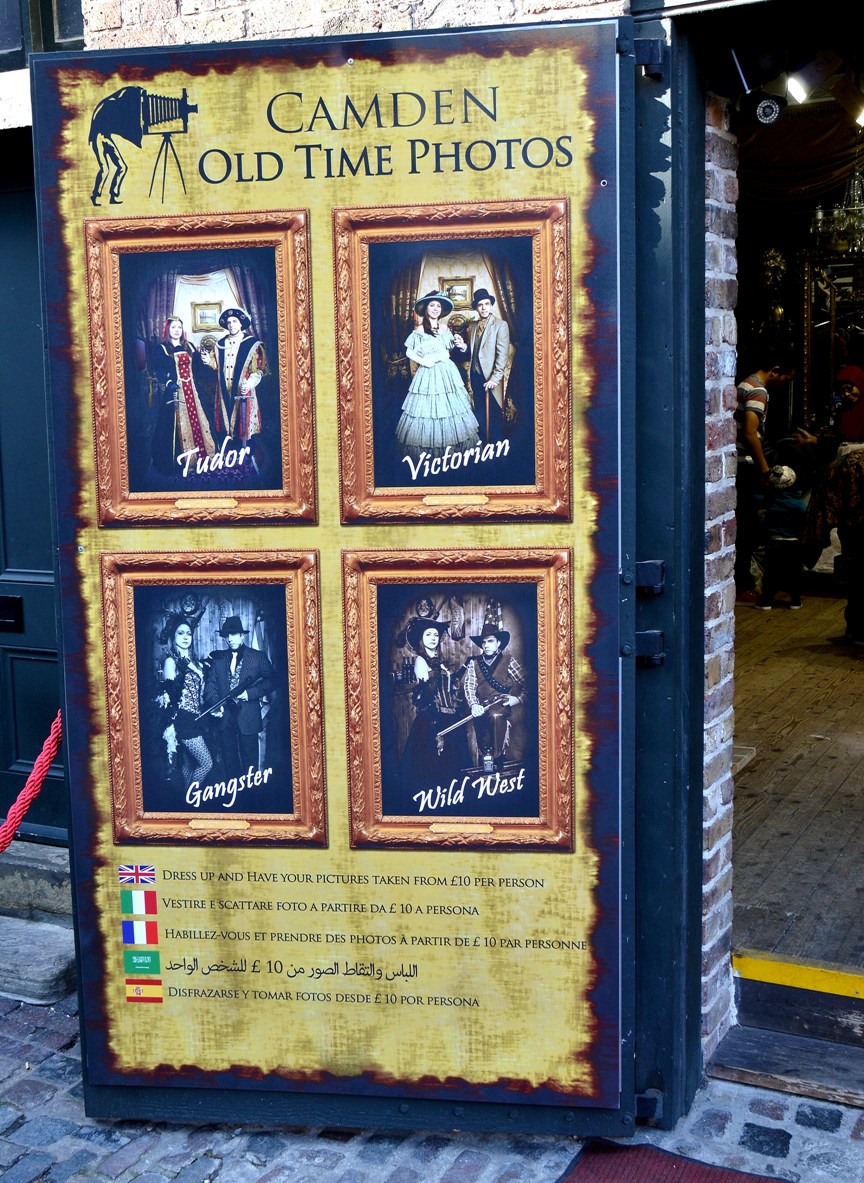
If you can find your way out, passing this sign, then there is yet another market area curving away into the distance but eventually returning to the canal.

.
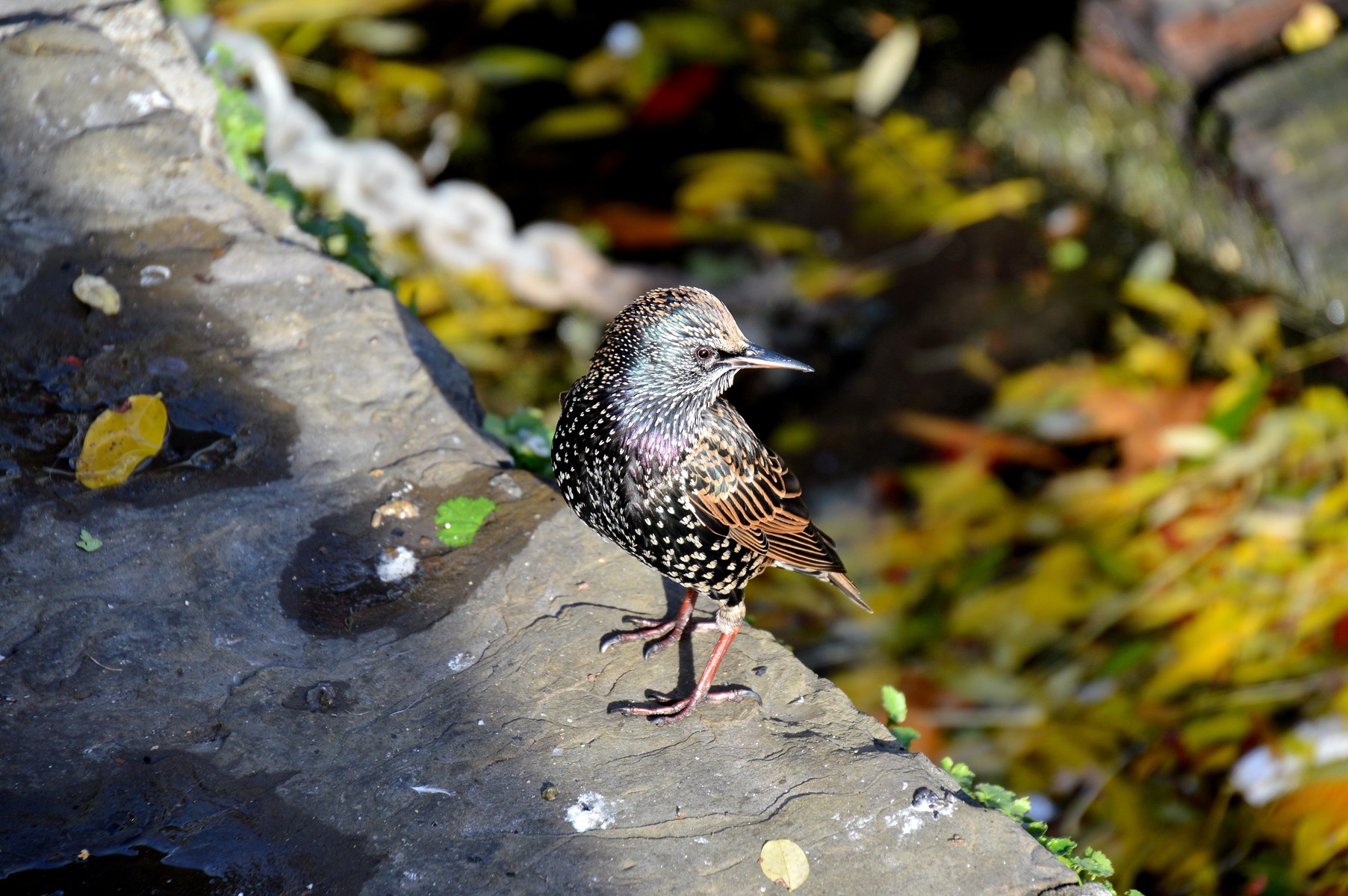
One of Camden’s Little Wizards
Returning to the canal one might take a coffee and watch some of the little wizards taking a bath. Then there is eating and drinking and making merry or the Dingwalls ⇒ music venue or the Comedy Loft ⇒ or a short walk up the road to The Roundhouse Theatre ⇒ at Chalk farm (where you booked a ticket) or, earlier in the day, the London Waterbus ⇐ to Little Venice and the Puppet Theatre Barge⇒ (October to July) .
One might happily contemplate any of these delights or the soft ghostly figures of a horse drawn canal barge with the mellow spirits of a bargee family taking tea in the quiet of the evening, or wake up in front of one’s computer screen having been spellbound by the little wizard. Well, one might. 🙂
About Canterbury
18 pics. Canterbury is famous for its antiquity, Canterbury Cathedral, numerous ancient buildings, the martyrdom of Thomas Becket, a destination for pilgrims, the oldest UK Church still in use (St Martins), Chaucer’s Canterbury Tales, Rupert the Bear by Mary Tourtel and Smallfilms (Clangers and Bagpus and many others) by Oliver Postgate and Peter Firmin.
Canterbury is well worth a visit particularly as there is so much to see within walking distance. My own favourites were the Heritage Museum, The Beaney House (free) and Canterbury Cathedral.
⇐ Pilgrims Way is a walking route stretching all the all the way from Winchester, which is over a hundred miles away. Chaucer’s Canterbury Tales refers to the fictional stories told by a group of pilgrims on their way to Canterbury.
A shorter route is from Canterbury West Station which leads onto St Dunstans Street (turn right out of the station) and thence to St Peter’s Street (turn left – and about 5 minutes walk altogether).
Canterbury’s Shepherd Neame Pub

On St Dunstans Street one passes one of these, which speaks for itself. The traveller might note that “Bishops Finger” refers to an ale not an ancient form of acupuncture. 😀
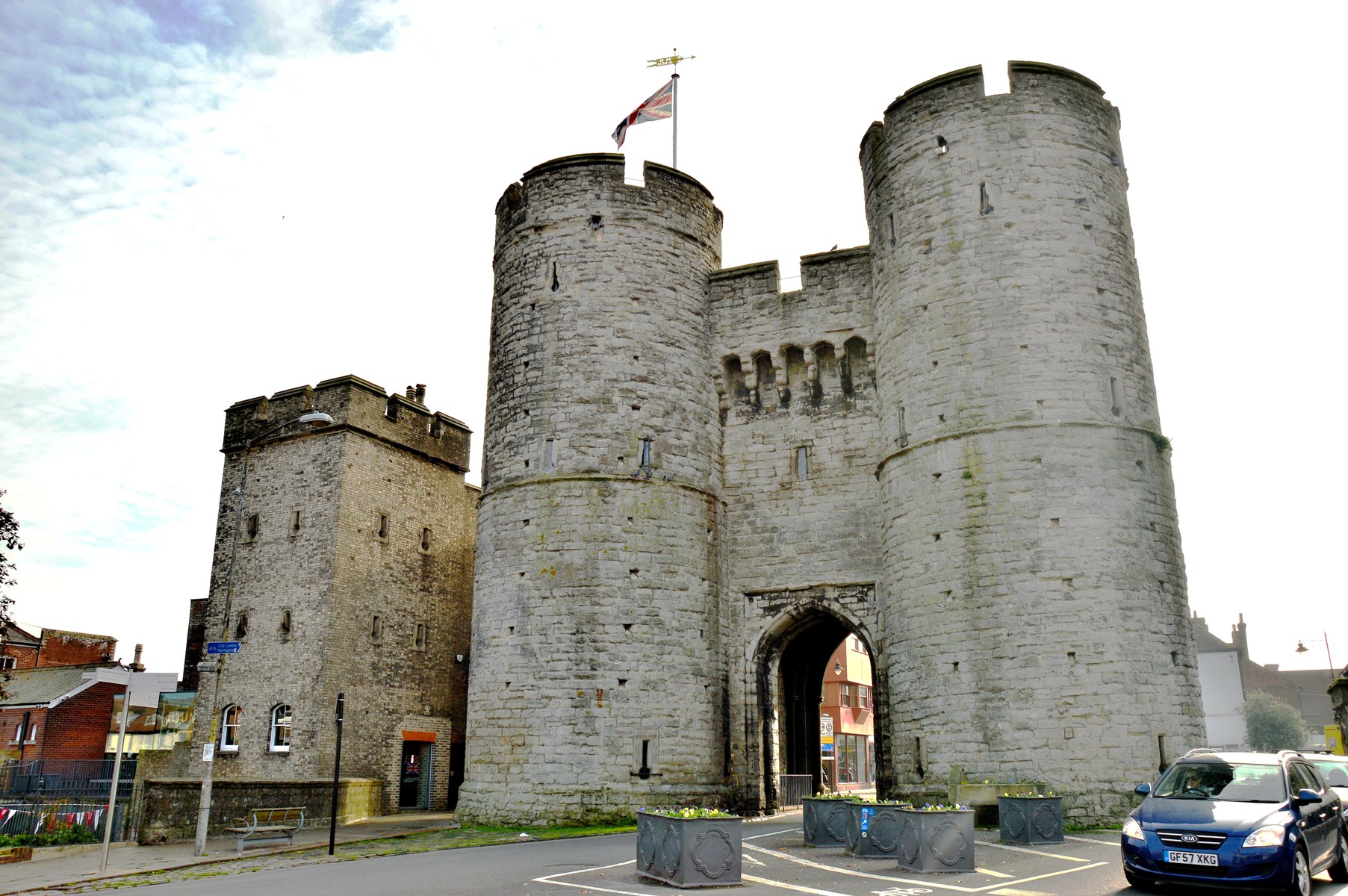
A little further on, is the old town’s Westgate which houses a small museum⇒ and access to the view from the battlements.
Canterbury’s Westgate
.

This is the northern of three branches of the River Stour running through Canterbury. This branch runs under the Westgate. There are chauffeur driven Canterbury Westgate Punts ⇒ during the summer .

We are now on the other side of the Westgate with the Guildhall on the left. Turning around and walking down St Peter’s Street the road becomes traffic free and on the left is St Peter’s Lane and the church.
Canterbury’s St Peter’s Anglican Church
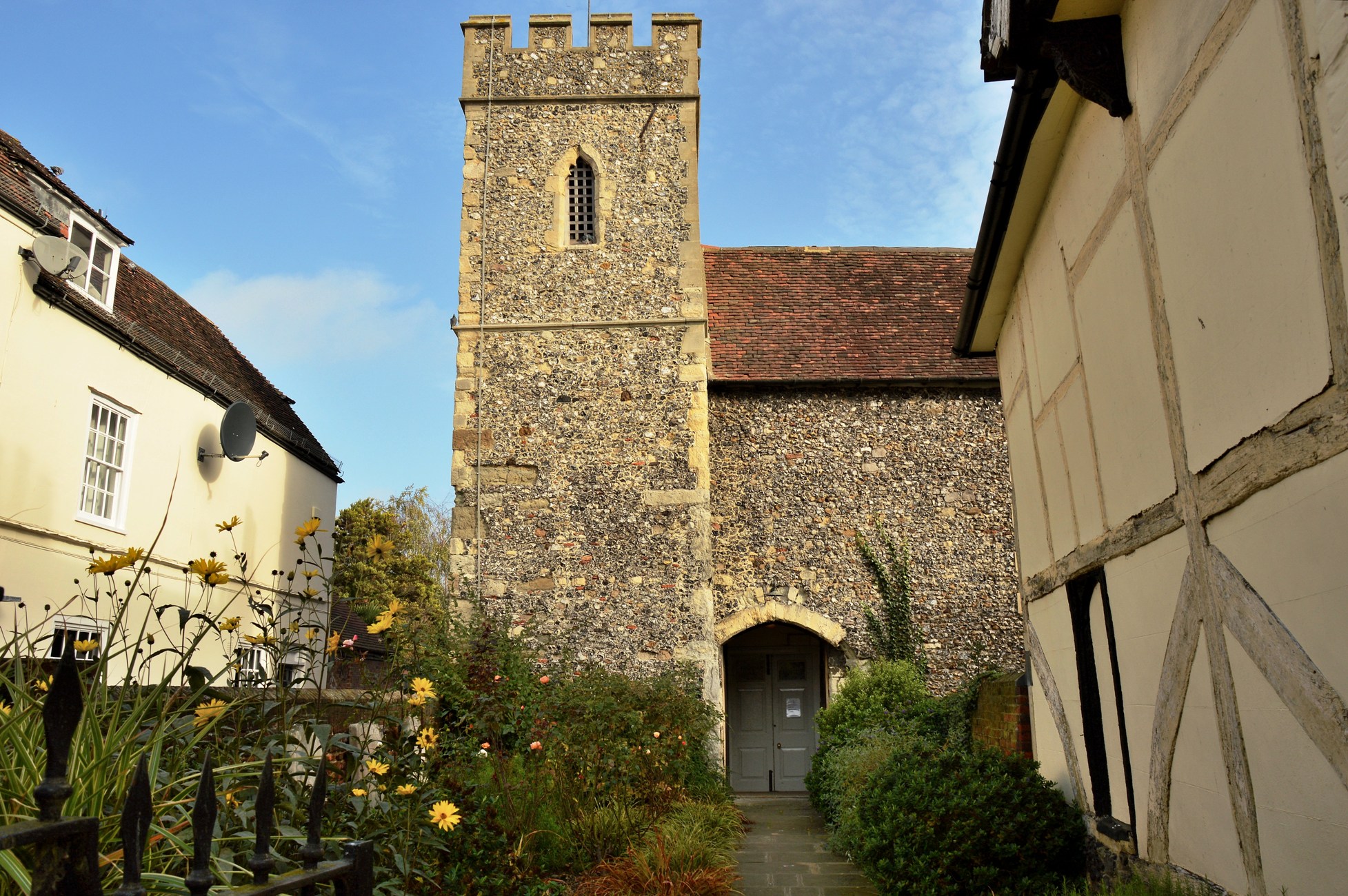
St Peter’s Anglican Church ⇒ has been in use for over 900 years and is open every day.
Canterbury’s Eastbridge Hospital of St Thomas

Inside the Hospital of St Thomas
Further along, the road then becomes the High Street and on the right is the Hospital of St Thomas (Eastbridge). More pictures and information ⇒.

Opposite St Thomas’s is the Wildwood and access to Canterbury Historic River Tours ⇒ (not available in winter) beside the mid branch of the River Stour.
A little further along, on one’s right, is Stour Street and after about 4 minutes walk is the marvelous Heritage Museum ⇐. It is not open all year round so do check the website.
Canterbury’s Heritage Museum
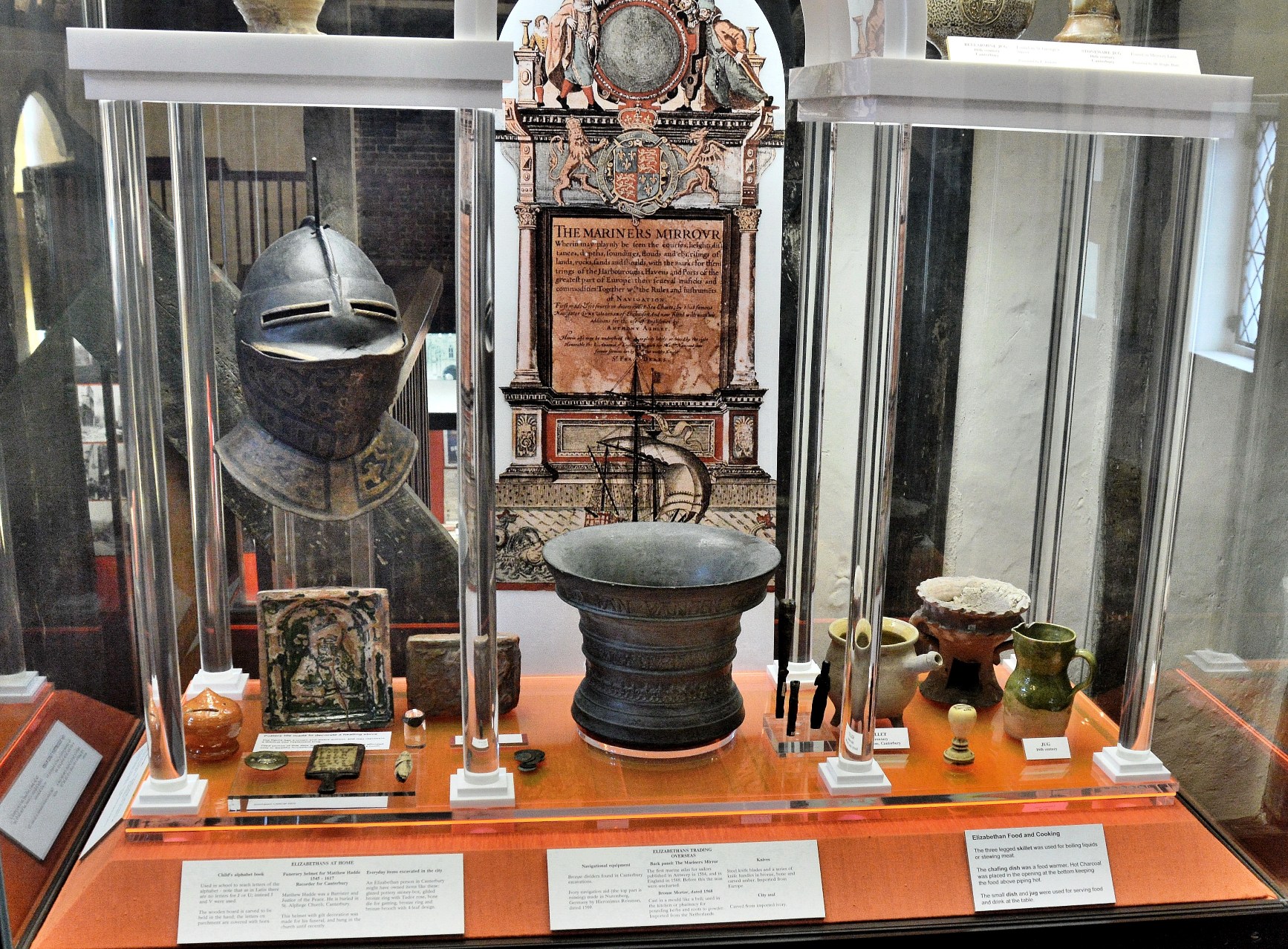
Inside Canterbury Heritage Museum
Beside the museum is Water Lane which leads to a small footbridge that crosses a branch of the River Stour and on to Greyfriars Gardens. The gardens are beautifully serene and include free access to Greyfriars Chapel ⇒ . Opening times for the chapel are limited so please check the link.
Canterbury Punting Co ⇒ operate along this stretch of the Stour during the summer.
Returning to the High Street, a short walk south is the Beaney Institute.
Canterbury’s Beaney Instiute
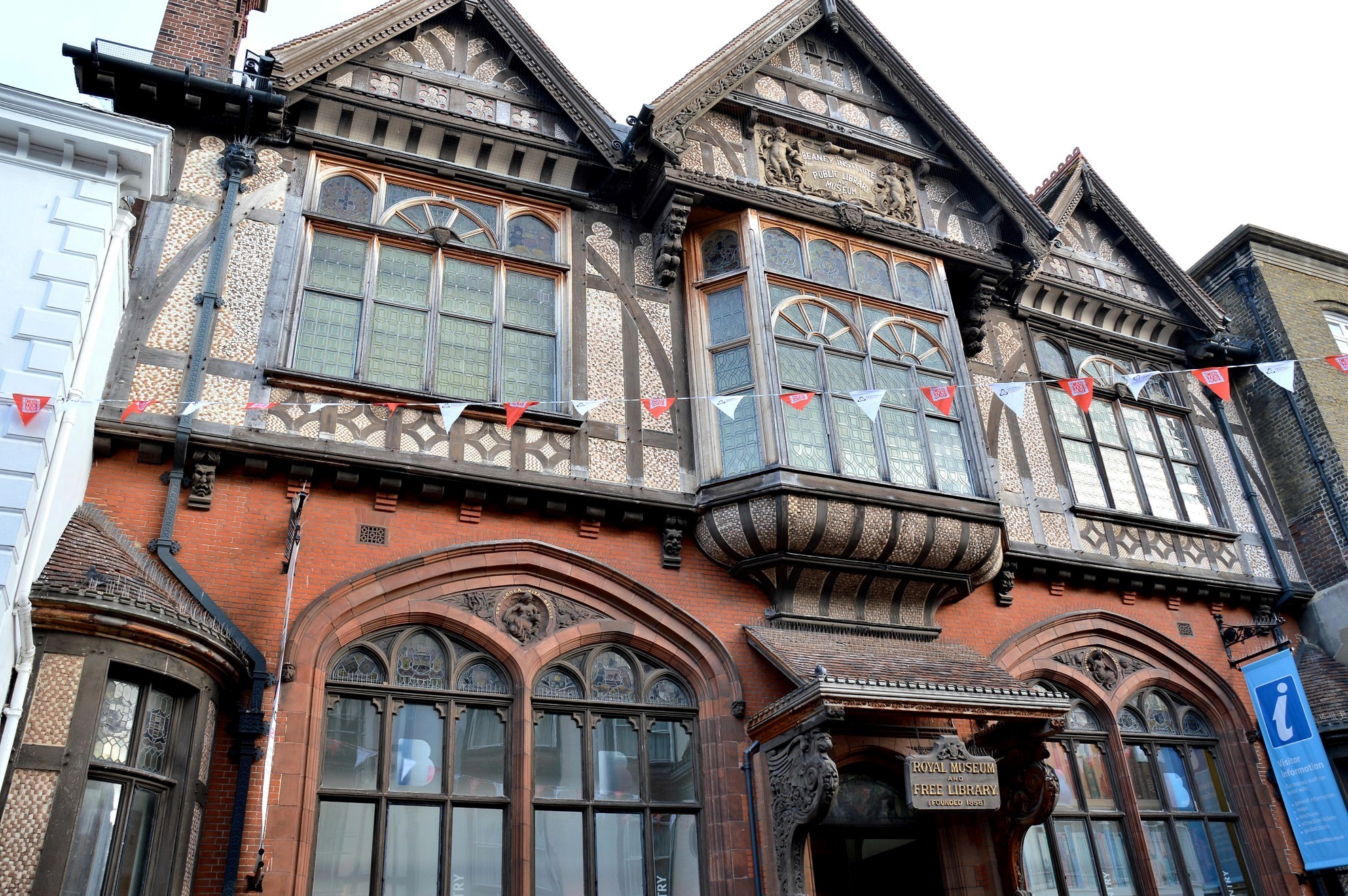
Beaney Institute
The Beaney Institute is free to enter and provides a number of exhibits/events. More with pictures of the exhibits ⇐ .
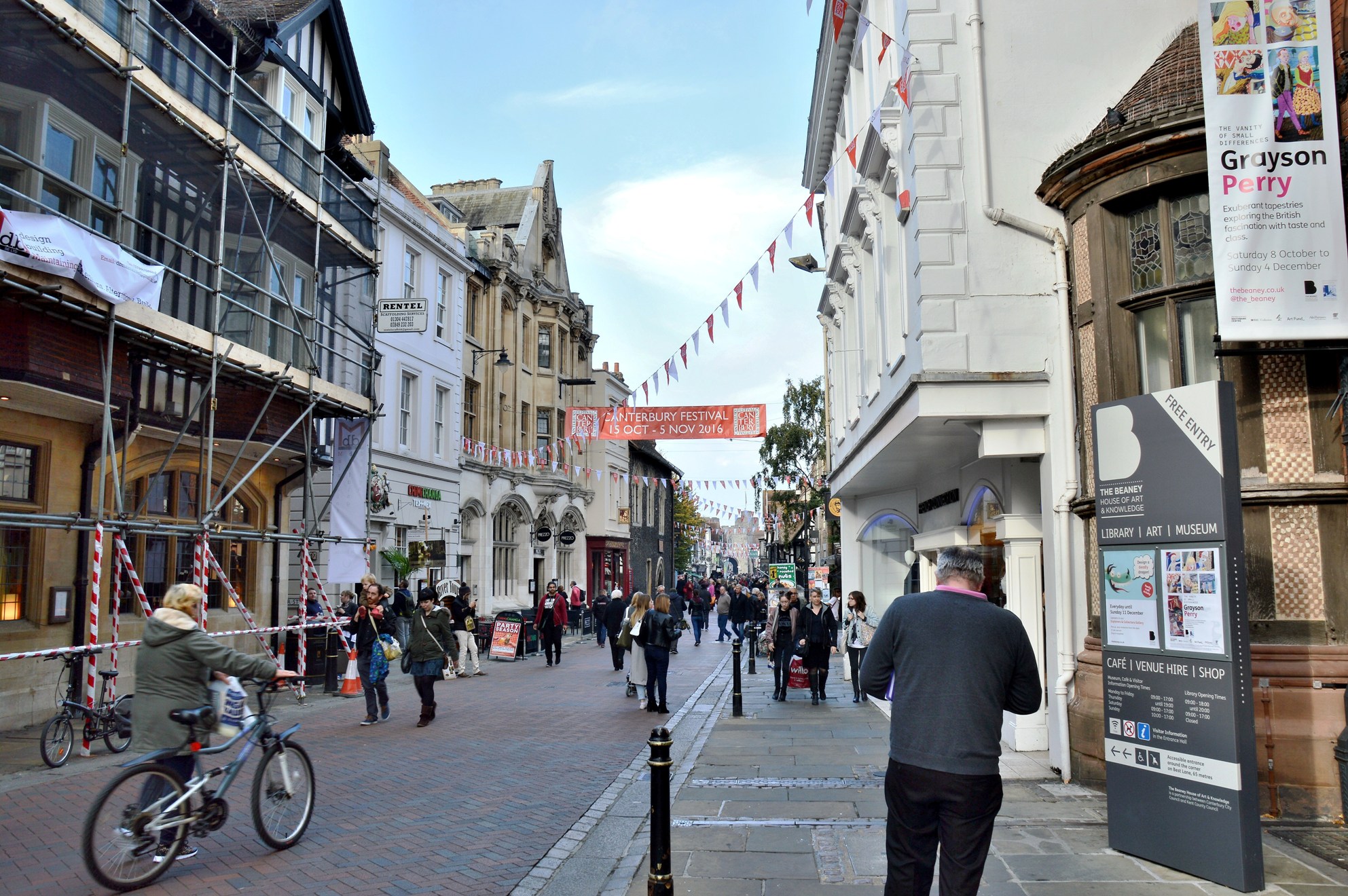
A quick look back along the High St to the Westgate. Turn around again, continue along the High St and on one’s left is Mercery Lane which leads to the cathedral. On the opposite side of the High St is St Margarets Street and The Canterbury Tales Museum ⇐ where you can immerse yourselves in the sights, sounds and smells of medieval Britain. A little further along St Margaret’s Street one might catch an evenings Ghost Tour ⇒ (usually on a Friday or Saturday).
Alternatively, walk a little further along the High St and there is Butchery Lane with the Roman Museum on the right hand side.
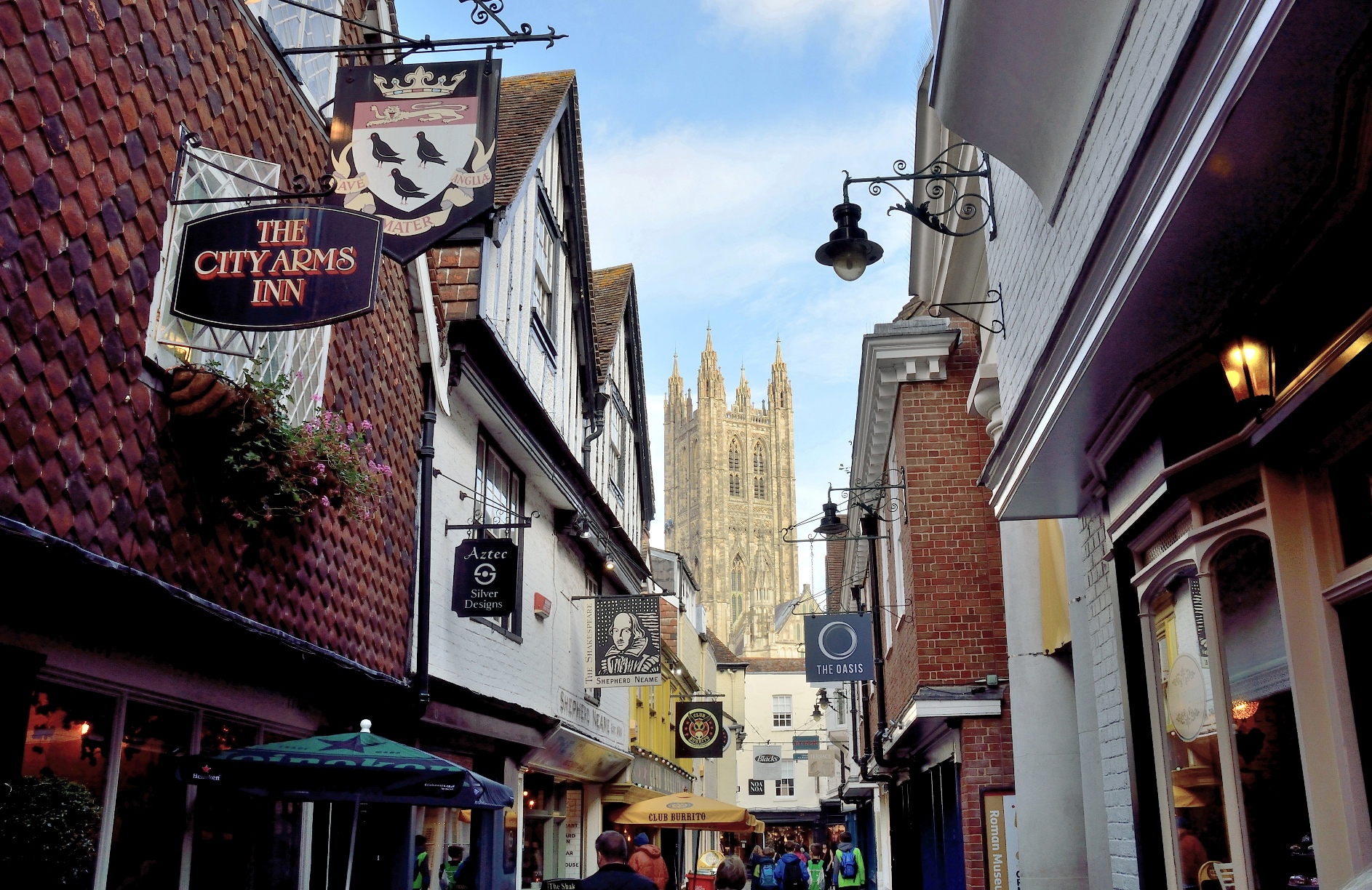
The view along Butchery Street.
.
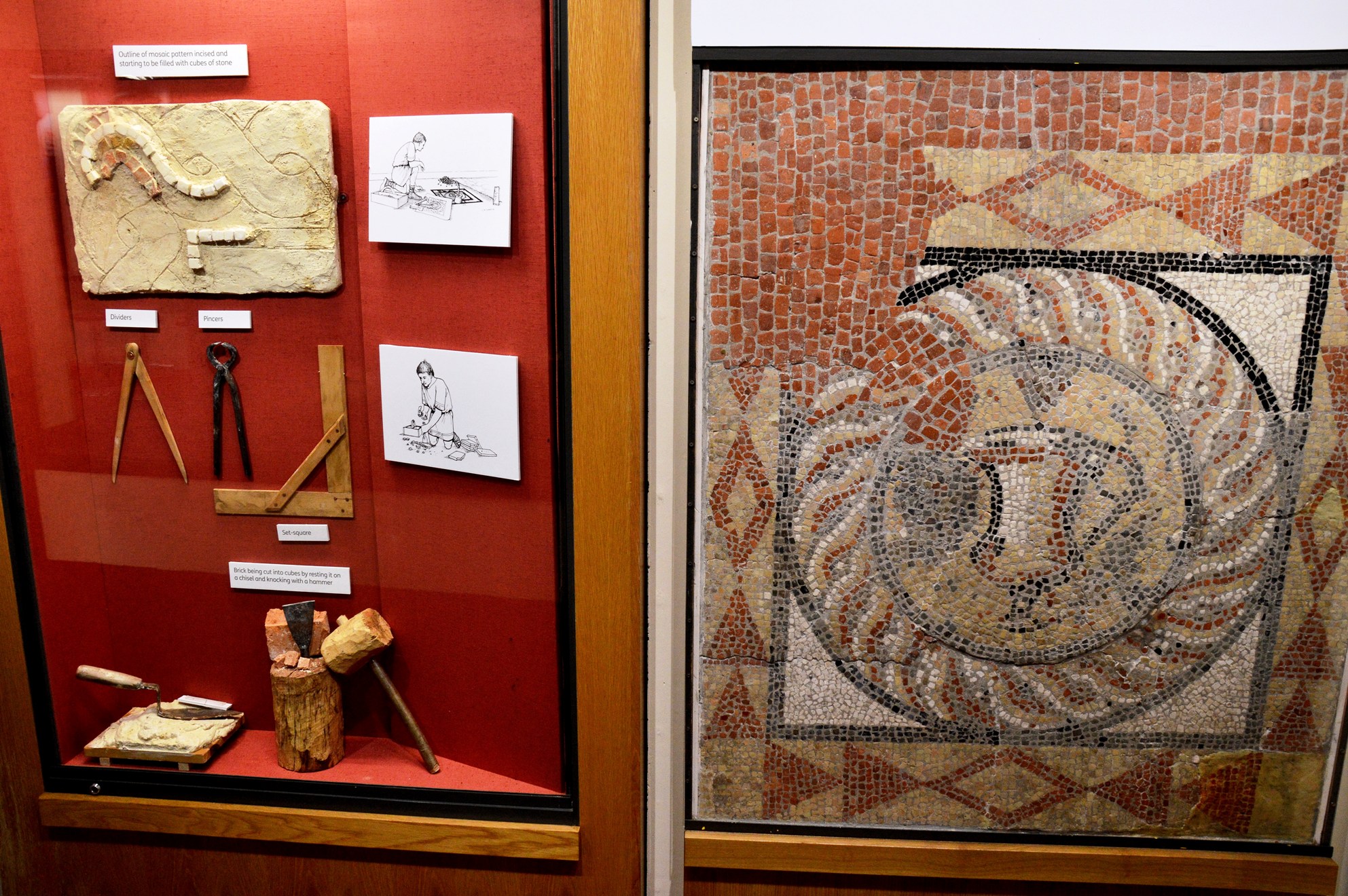
Inside the Roman Museum
Roman Museum ⇒ I wasn’t all that impressed for the cost but you can get a cheaper combined ticket with the more extensive Heritage Museum (although not open all year).
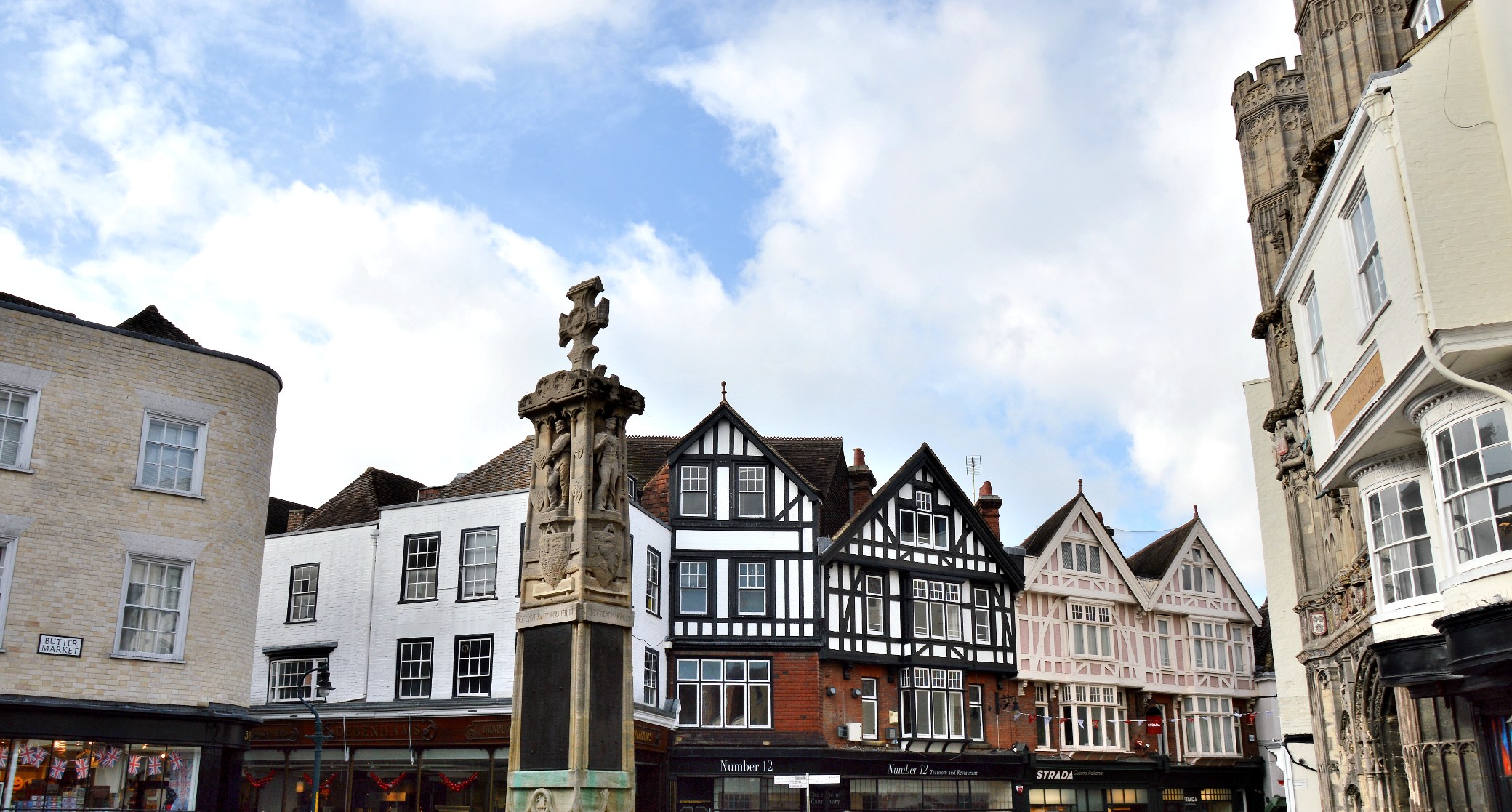
Turn left at the end of Butchery Lane and one comes to the War Memorial and the entrance to Canterbury Cathedral (on the right) on Burgate.
.
.
Canterbury Cathedral
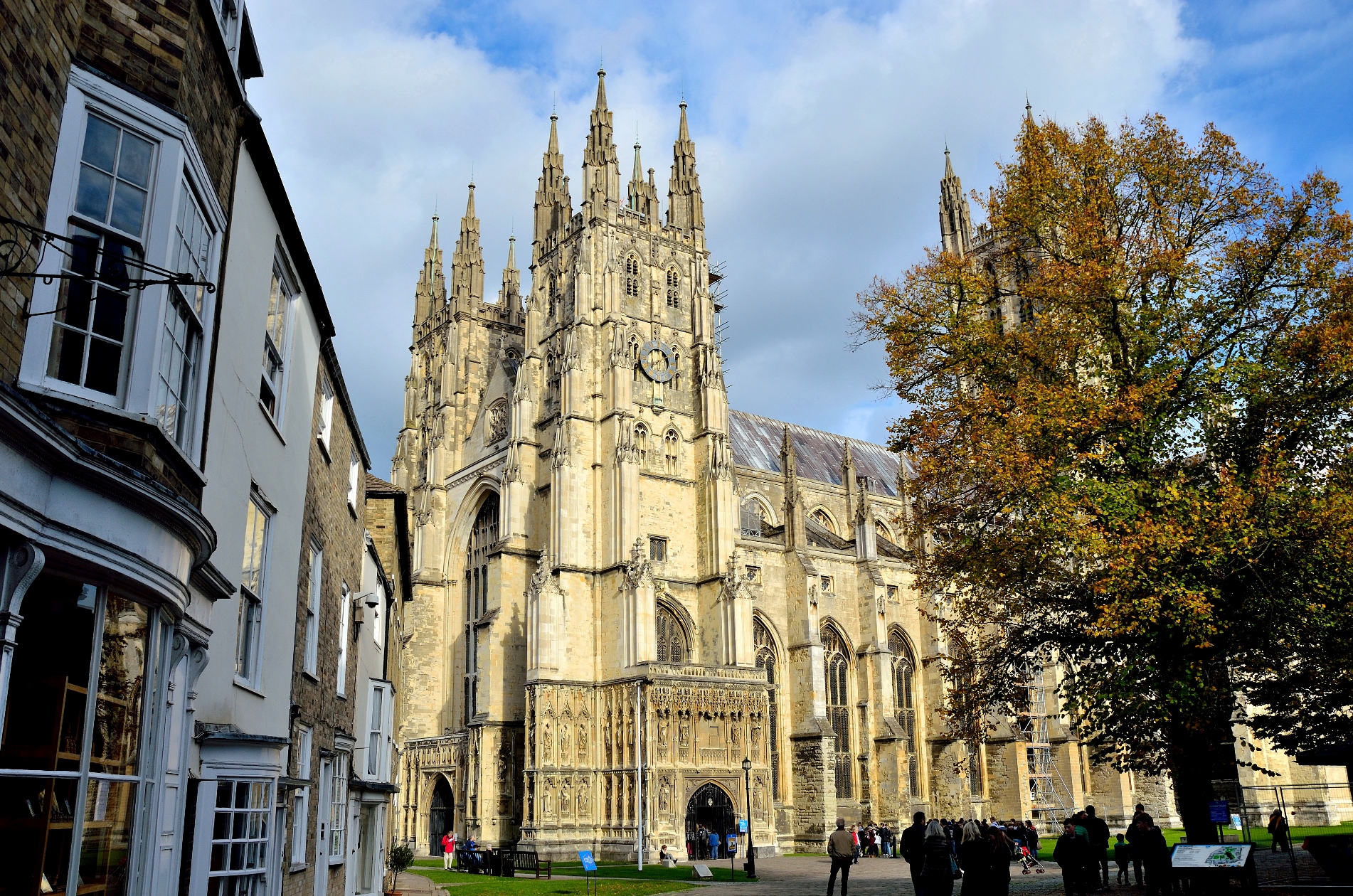
Canterbury Cathedral ⇐ with pictures of the extraordinary interior.

Canterbury has some interesting shops and plenty of inns and other eateries.
.
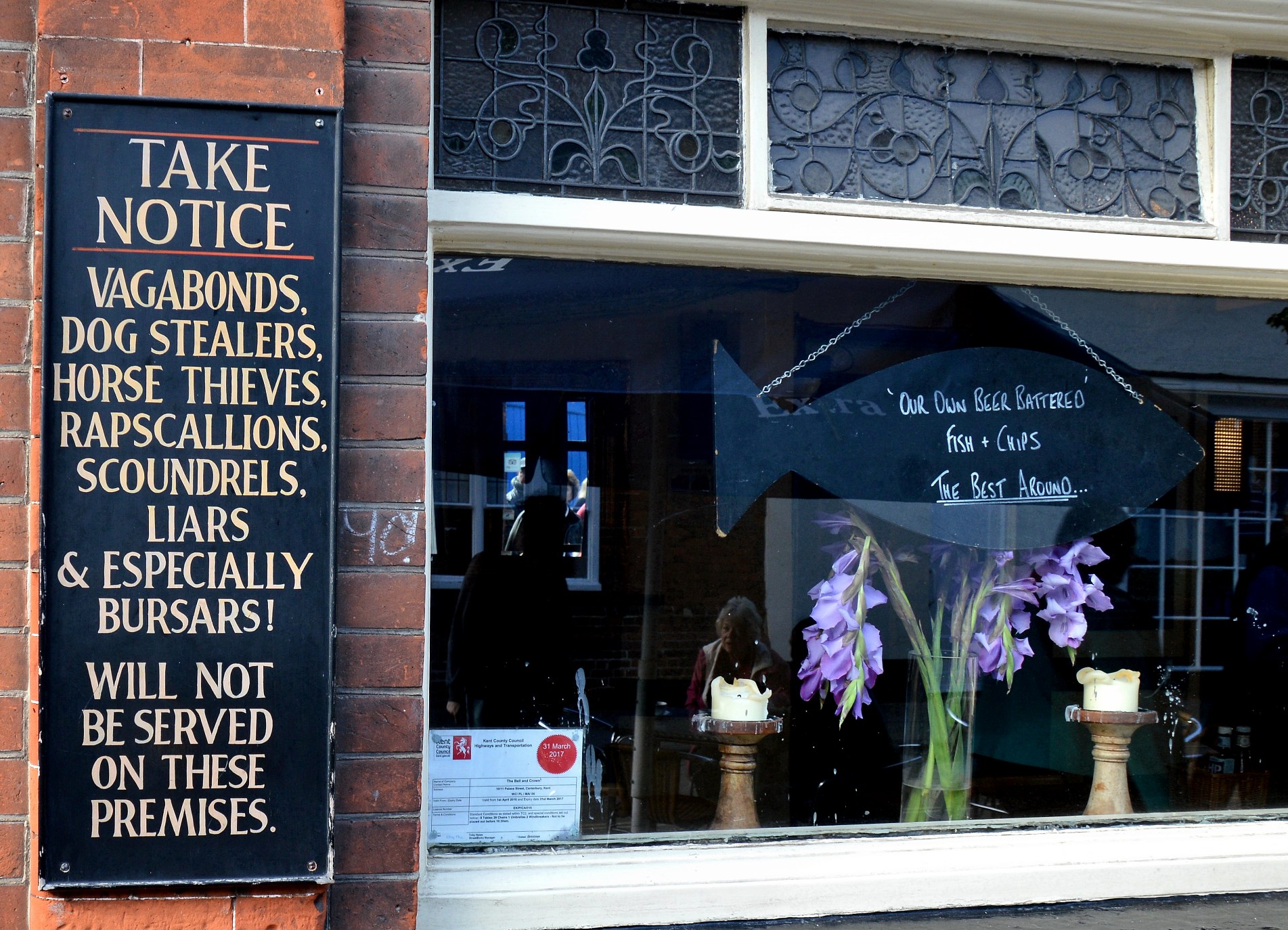
This is Bell and Crown which has plenty of seating outside and is on Sun Street (extending from Burgate). As you can see it is a friendly place (really) and I was pleased to find that it serves from a wholesome and enjoyable menu.
.
.
.
.
.
Canterbury’s St Augustines Abbey
Turning back along Burgate and continuing to the end, one then crosses a main road (Lower Bridge St) onto Church St which leads to Monastery St. To one’s left is Findons Gate and Lady Wootons Green (with statues). To one’s right is Longport and the entrance to St Augustines Abbey ⇐ museum and ruin (please see the link for the gate and green).
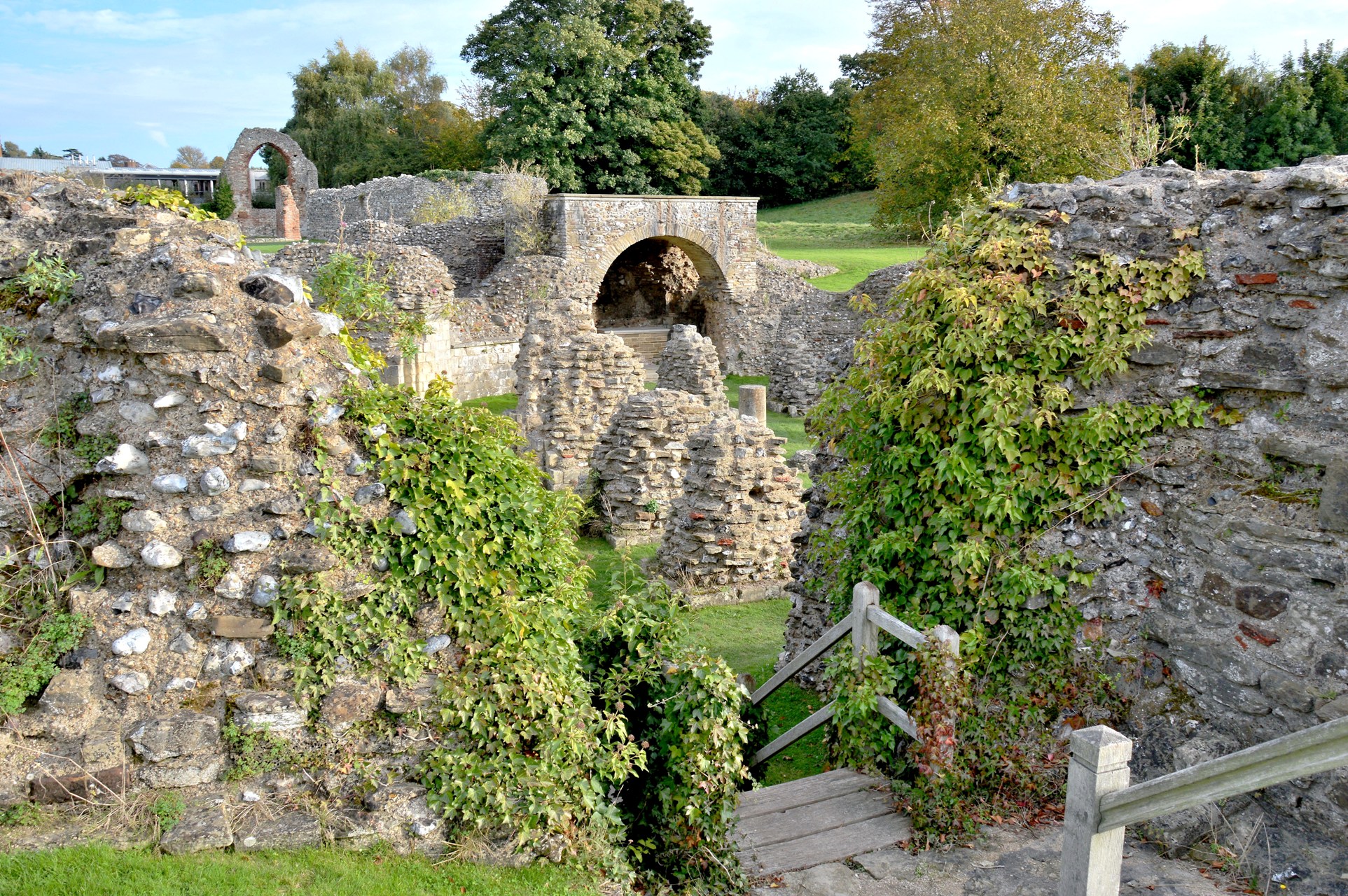
St Augustines Abbey ruin
Longport continues on to the west and to North Holmes Road which leads to St Martins Church ⇒ . St Martins is the oldest working church in the UK and one can visit on Tuesdays, Thursdays and Saturdays (please check the link above). The second oldest (by a small margin) is All Hallows by the Tower ⇐ (London).
There is plenty more to see in Canterbury including Canterbury Castle ⇒ ruin. I hope you enjoyed your brief tour and thank you for visiting.
St Augustine’s Abbey, Canterbury
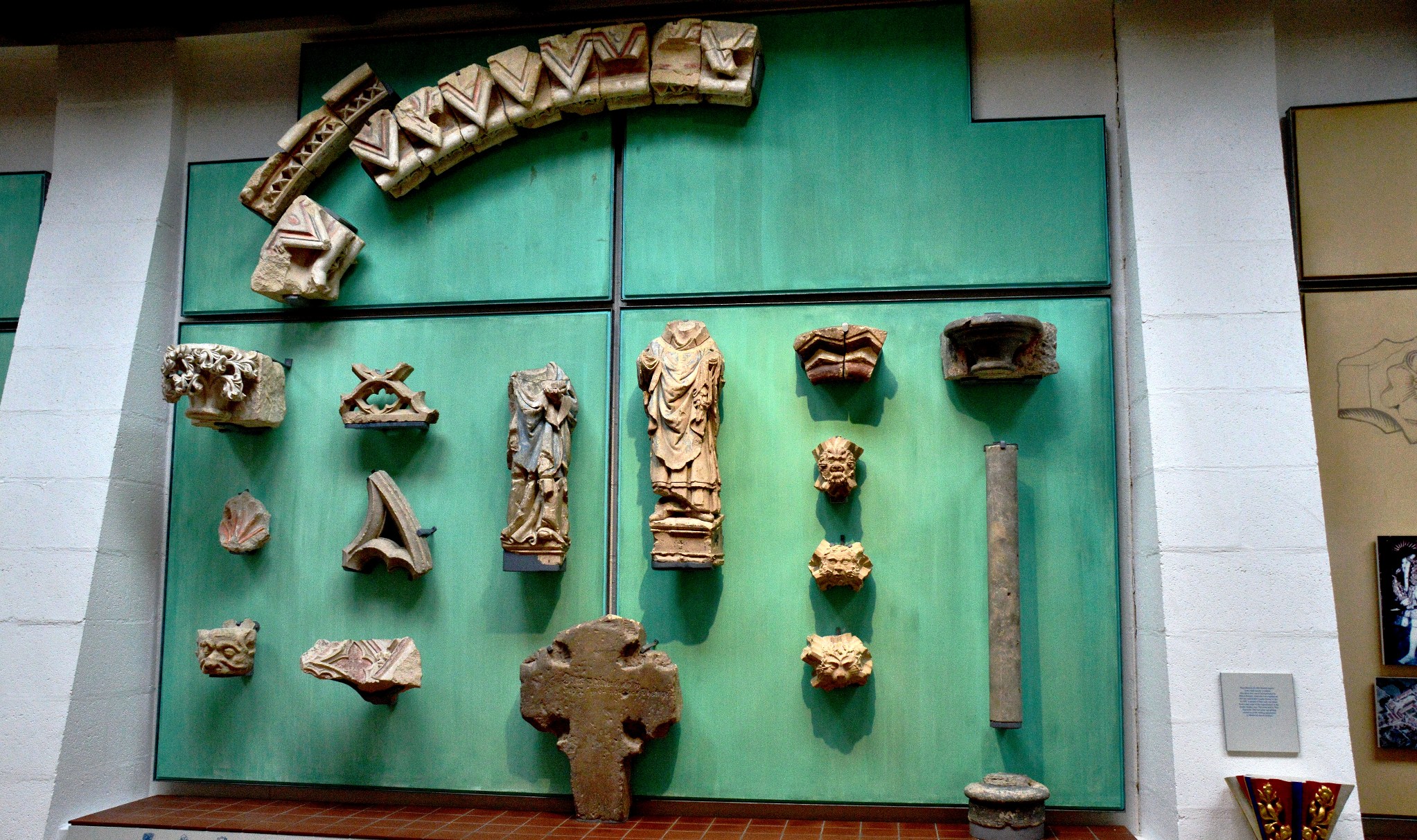
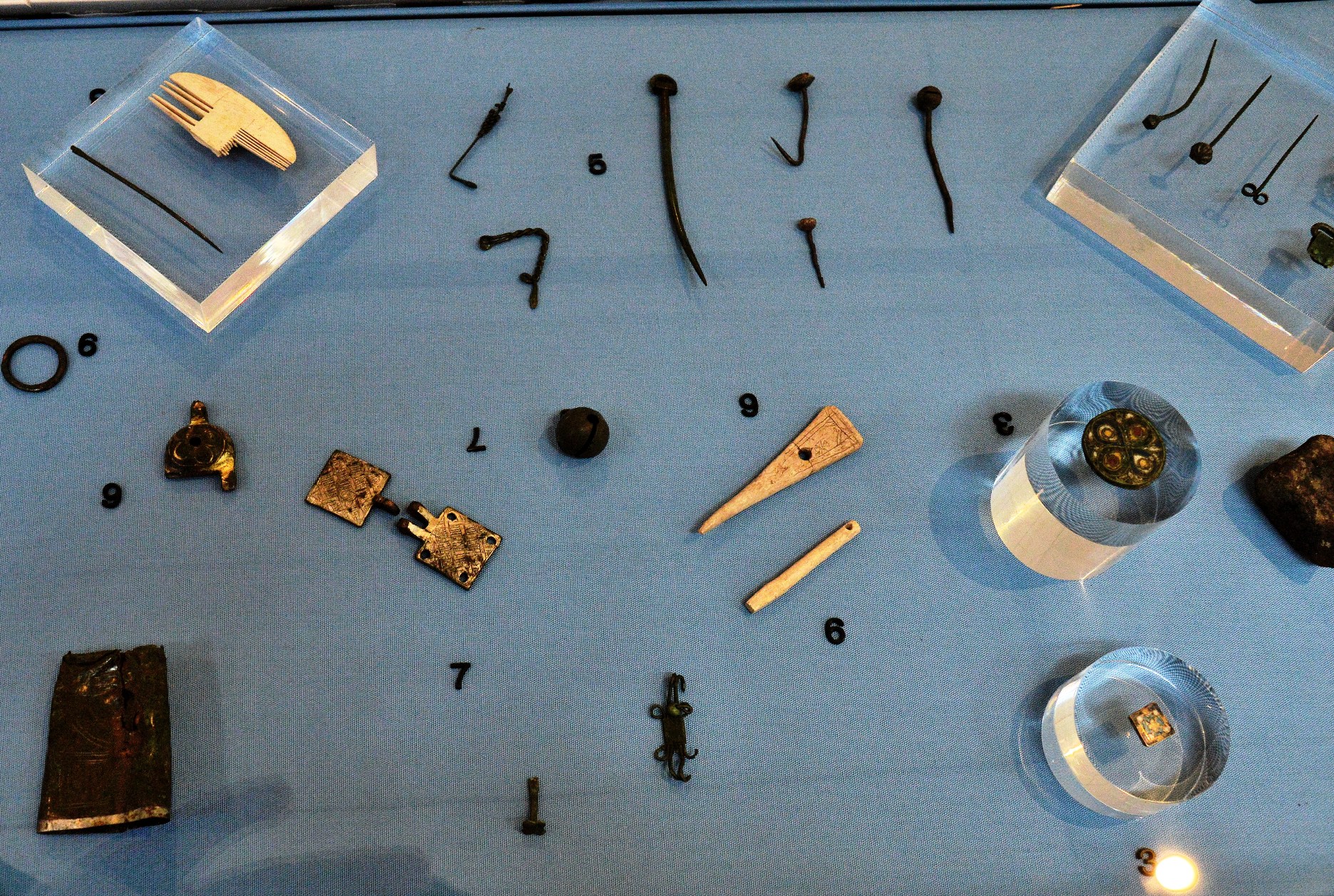
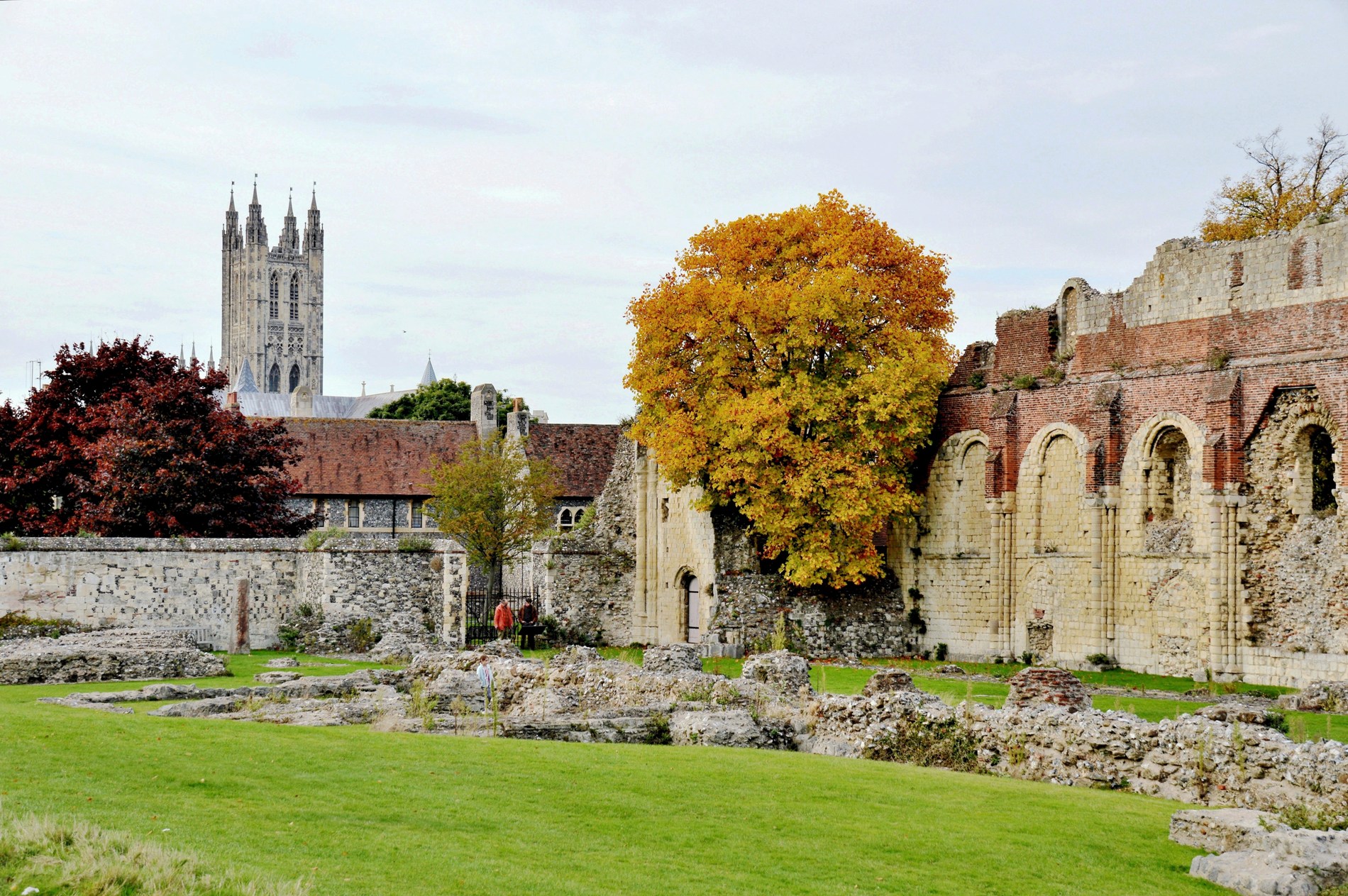
St Augustine’s Abbey was founded shortly after Canterbury Cathedral (Ad 597)⇐ and is now a small museum and the ruins left after the Dissolution of the Abbeys during the reign of Henry VIII. The entrance is on Longport (Road) just east of Canterbury old town. Entry is limited during the winter months and there is a charge. Whether it is worth the cost does depend on ones interest. Please see the Website ⇒.
.
.

.
.

These buildings appear to be part of Kings School and are not accessible. The two towers in the distance are Fyndons Gate which can be viewed from the outside on Monastery Street just opposite Lady Wootons Green. The green has statues of of the 6th century monarchs, King Ethelbert and Queen Bertha. I missed these so:-
Fyndons Gate by Google Images⇒ (except the one with the greenish statue that is really the entrance to Canterbury Cathedral).
Lady Wootons Green and Statues by Google Images ⇒.
The Beaney House of Art and Knowledge in Canterbury
The Royal Museum and Free Library was founded in 1858 and moved to the Beaney Institute in 1891 following a bequest by George Beaney to build an ‘Institute for Working Men’. The building is on the High Street and is bigger than it looks, housing an information centre, modern library, cafe and several exhibition rooms. Entry is free and it is child friendly with tables for games and drawing. The Beaney is an award winning facility with exhibitions, educational facilities and events. Website ⇒.
Just a few of the exhibits :- .

Sculptures of the Magna Carta Barons ⇒.
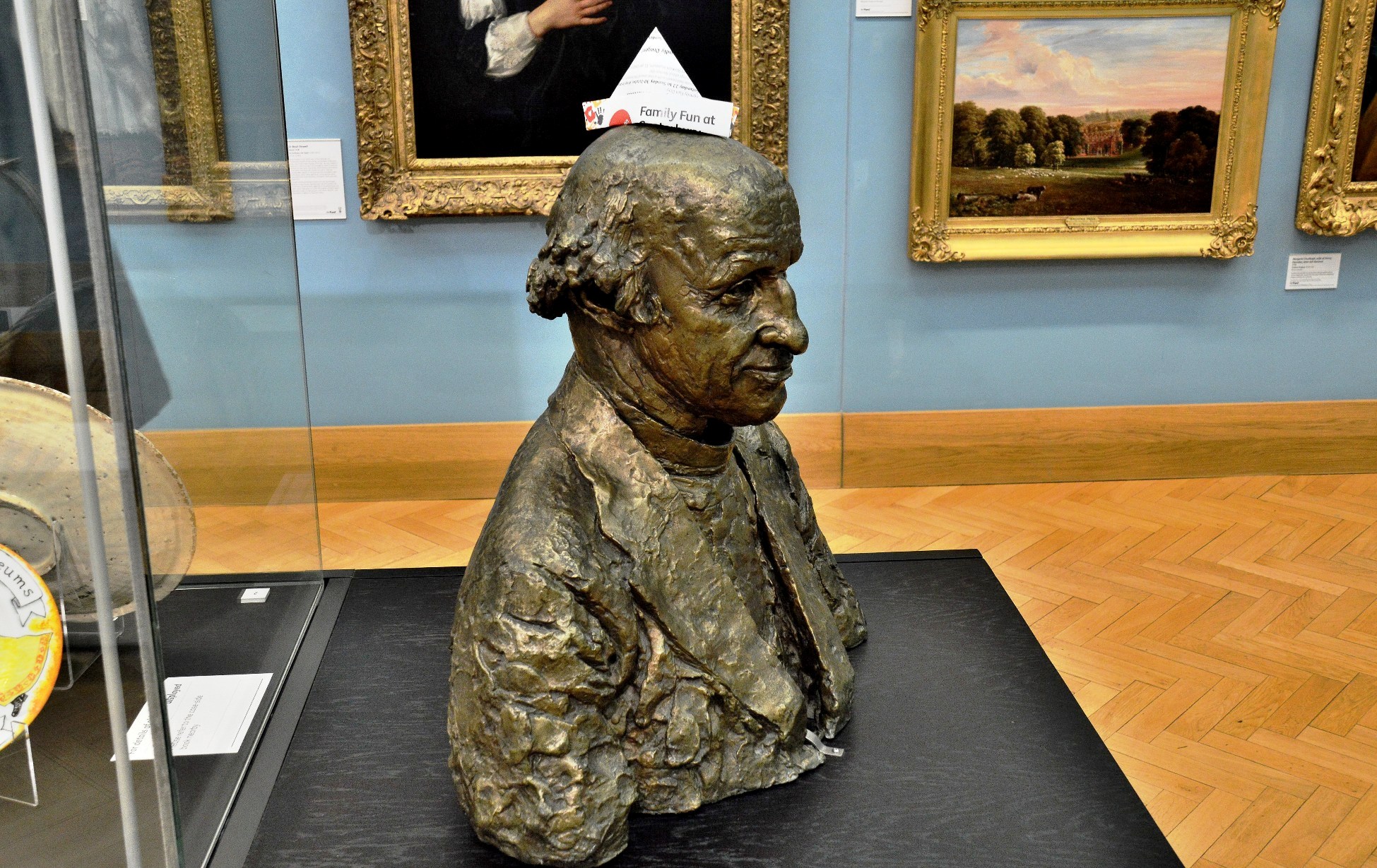
Child friendly.

Granny Knowles by Laura Knight
Kent was a summertime haunt for travelers and people from the East End of London to engage in hop picking.
And:-
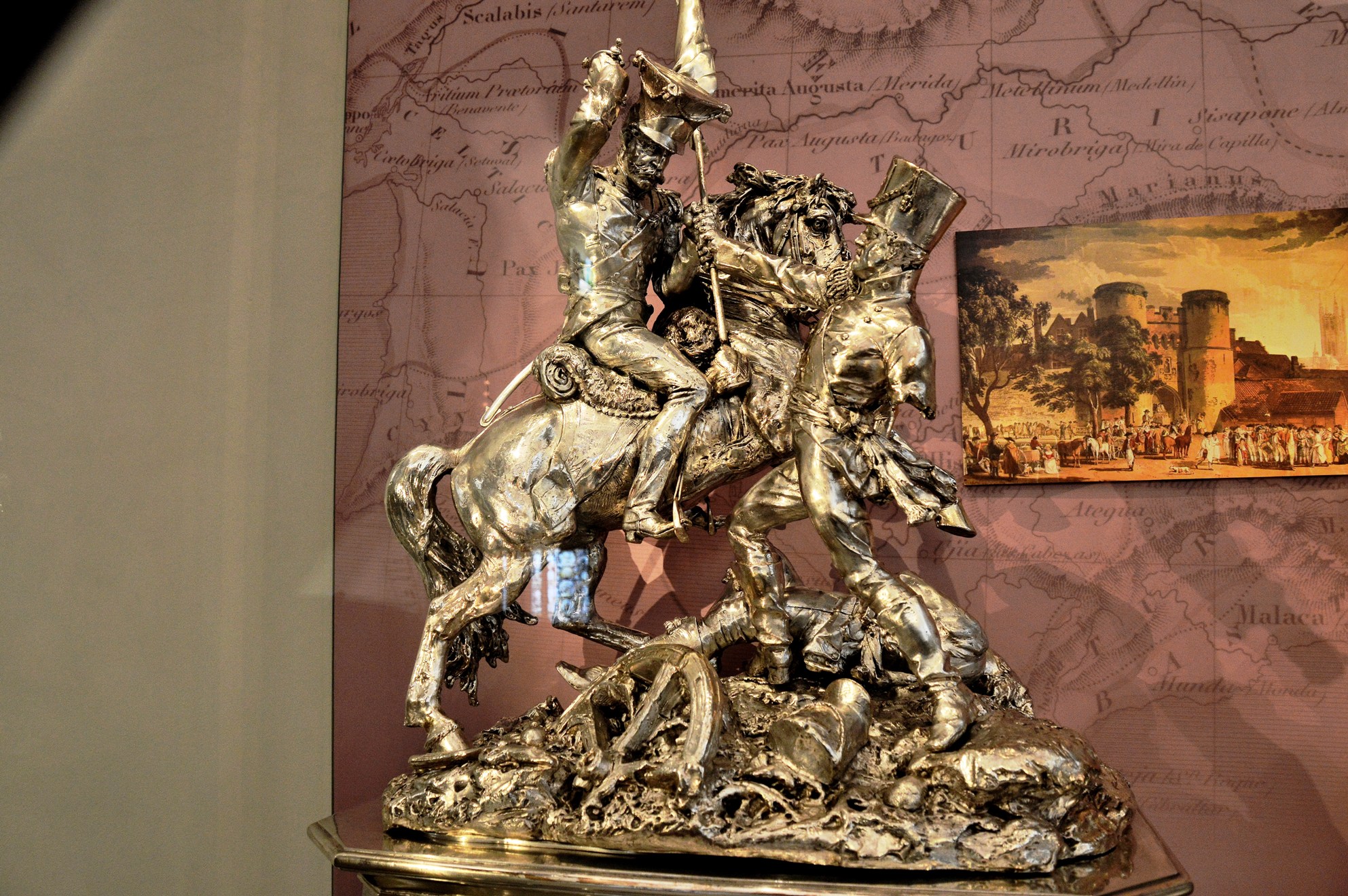
.
And :-
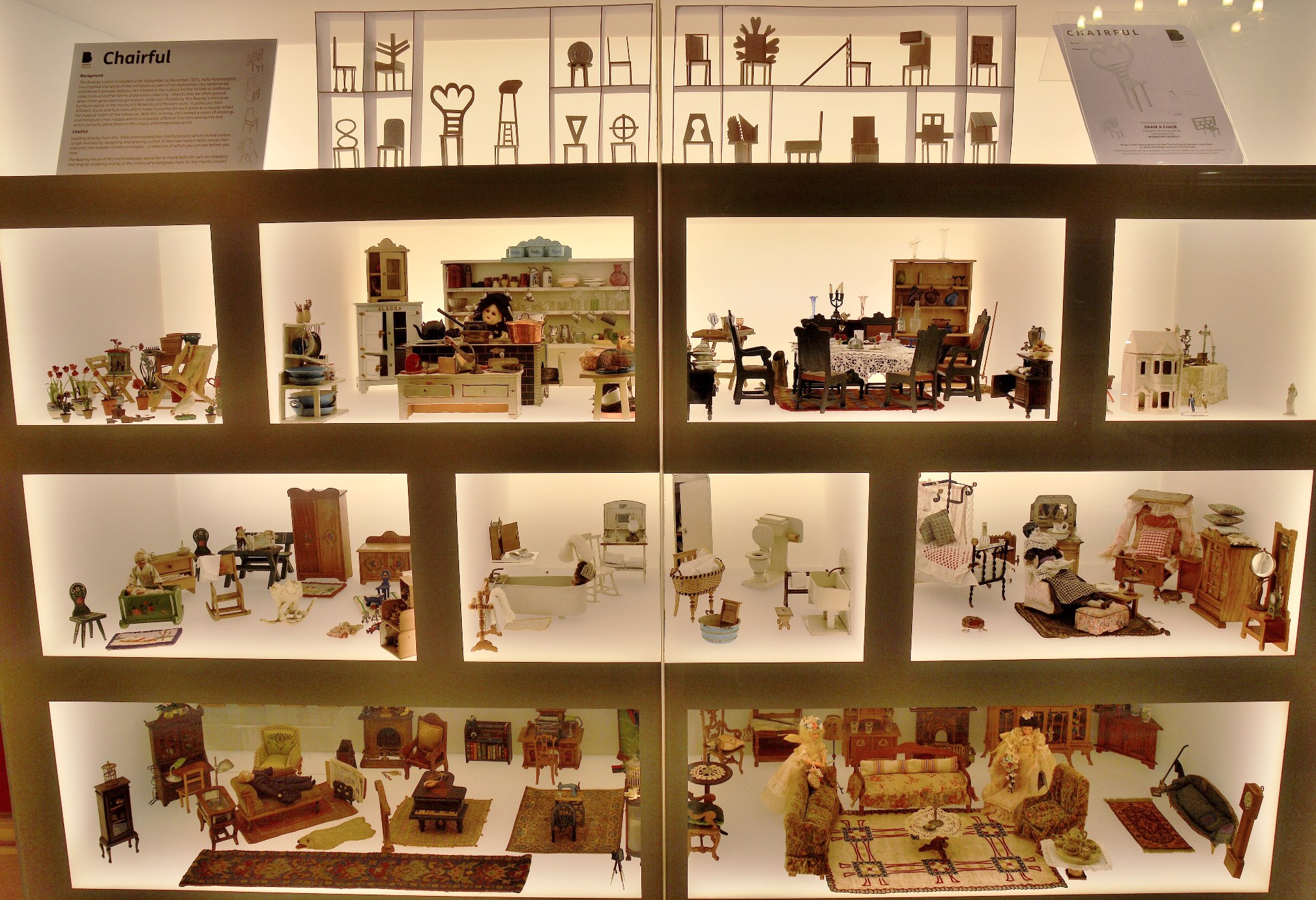
.

And:-

.

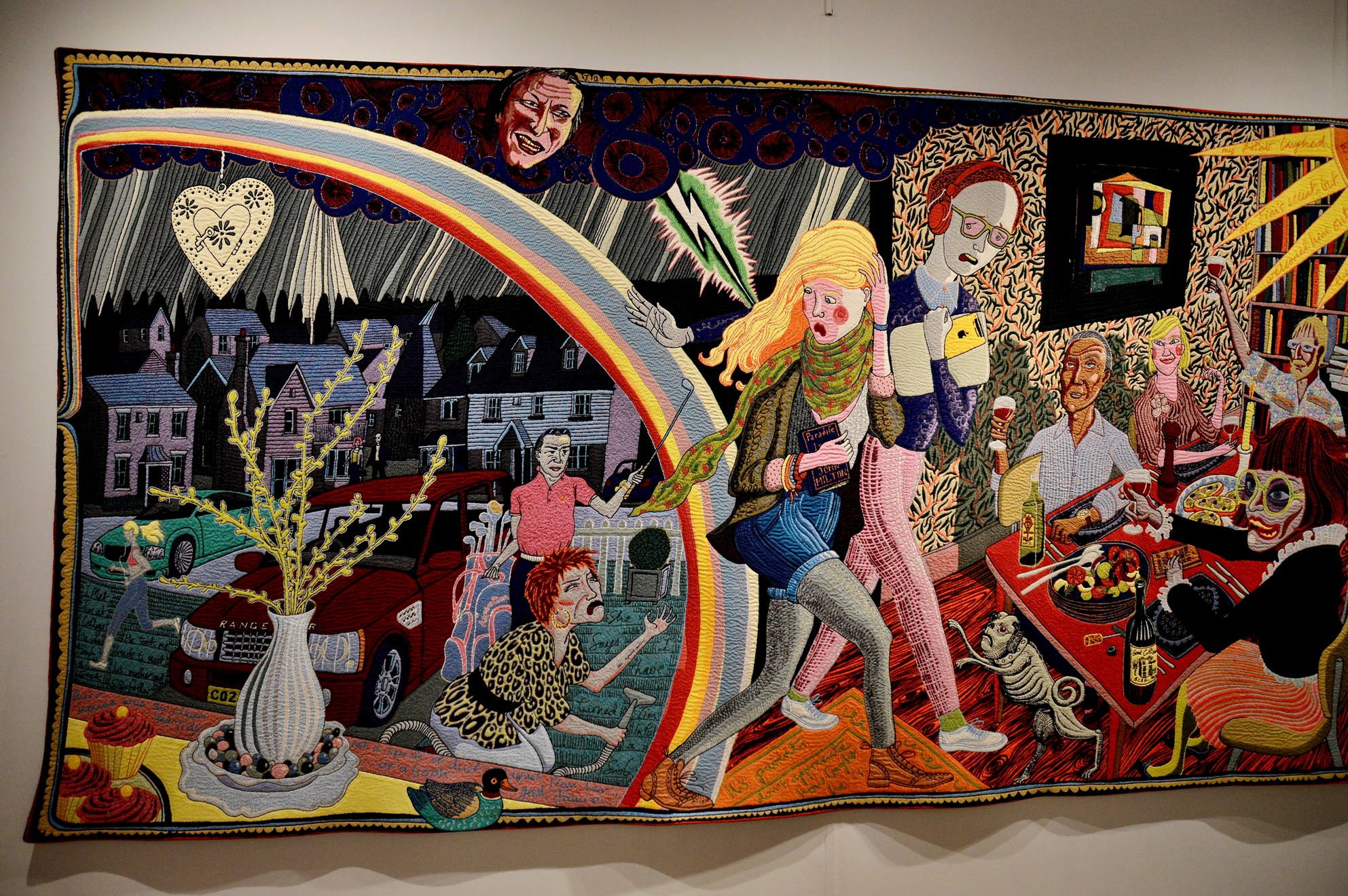
And, part of a temporary exhibition by Grayson Perry called “The Vanity of Small Differences”.
The Eastbridge Hospital of St Thomas in Canterbury

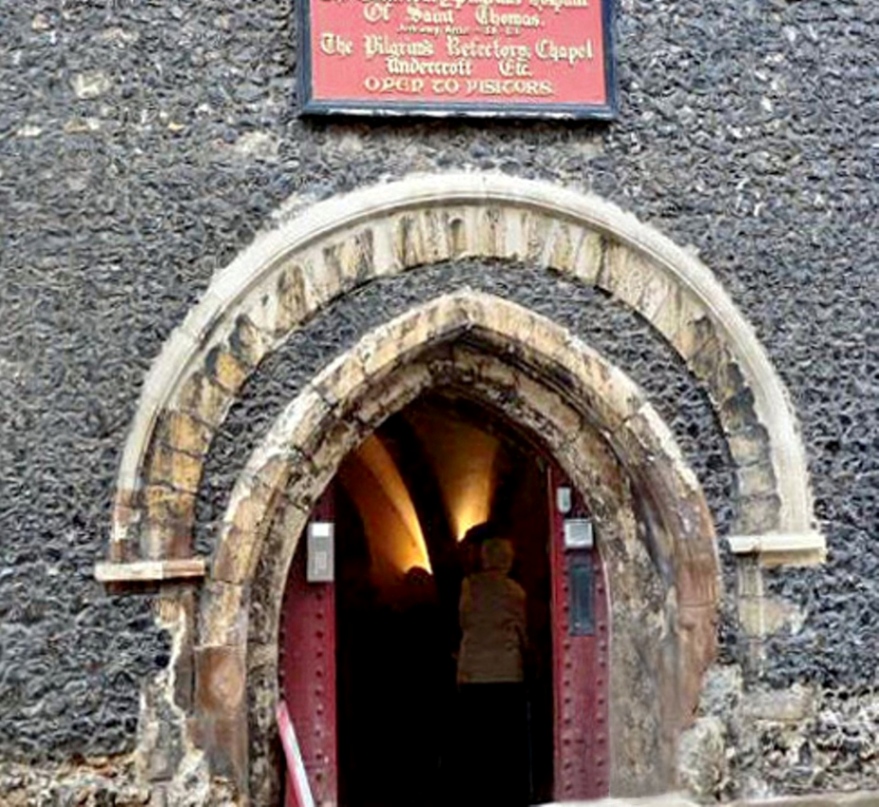
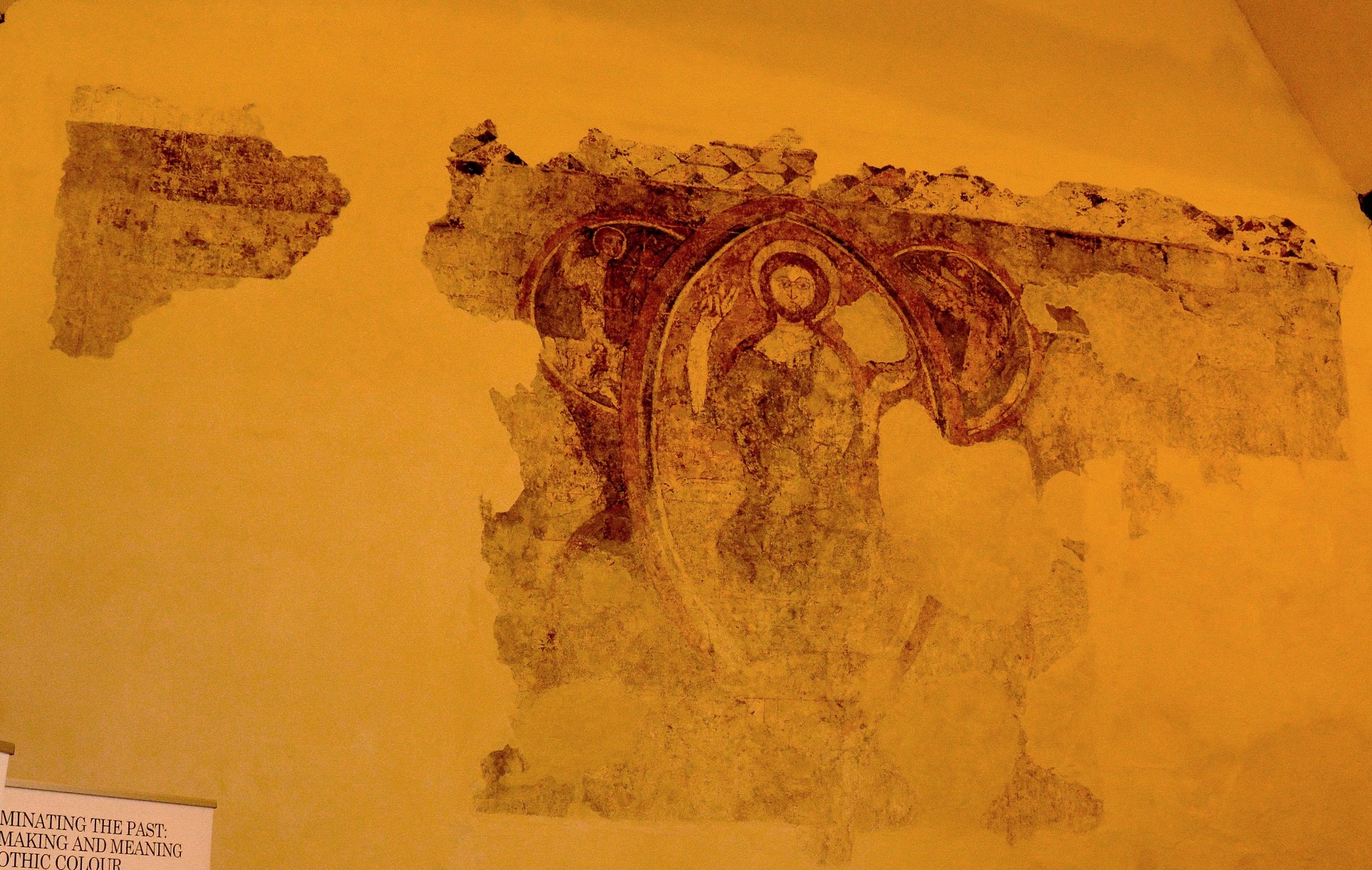
The Eastbridge Hospital of St Thomas is on Canterbury High street and is part of a bridge over a branch of the river Stour. It isn’t very big but they only ask £2 for a visit. Visiting ⇒.
The site was created in 1180 as a place of hospitality for poor pilgrims visiting Canterbury Cathedral ⇐ where Thomas (later St Thomas) Becket was murdered in 1170 and became a martyr. Next to the chapel is an Alms House with 8 occupied flats.


Canterbury Heritage Museum
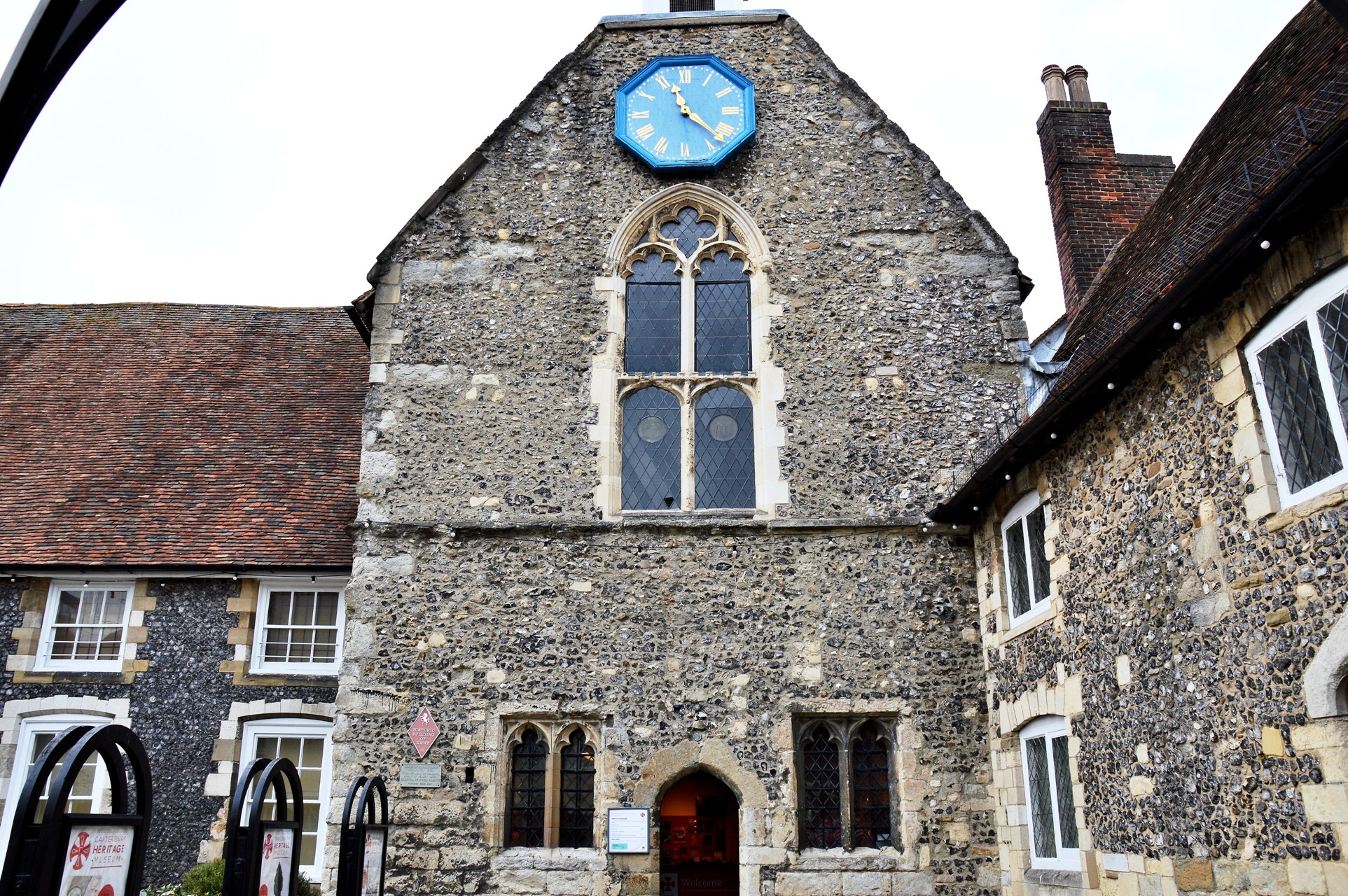
The Heritage Museum building dates from 1373 and is on Stour Street just off Canterbury High Street. It is quite large, well worth a visit and, for me, second only to Canterbury Cathedral ⇐. The museum is child friendly but there is a charge for adults and it is not open all year round, so please see the website ⇒
For a closer view of an image please left-click once and then again.

First a little history.
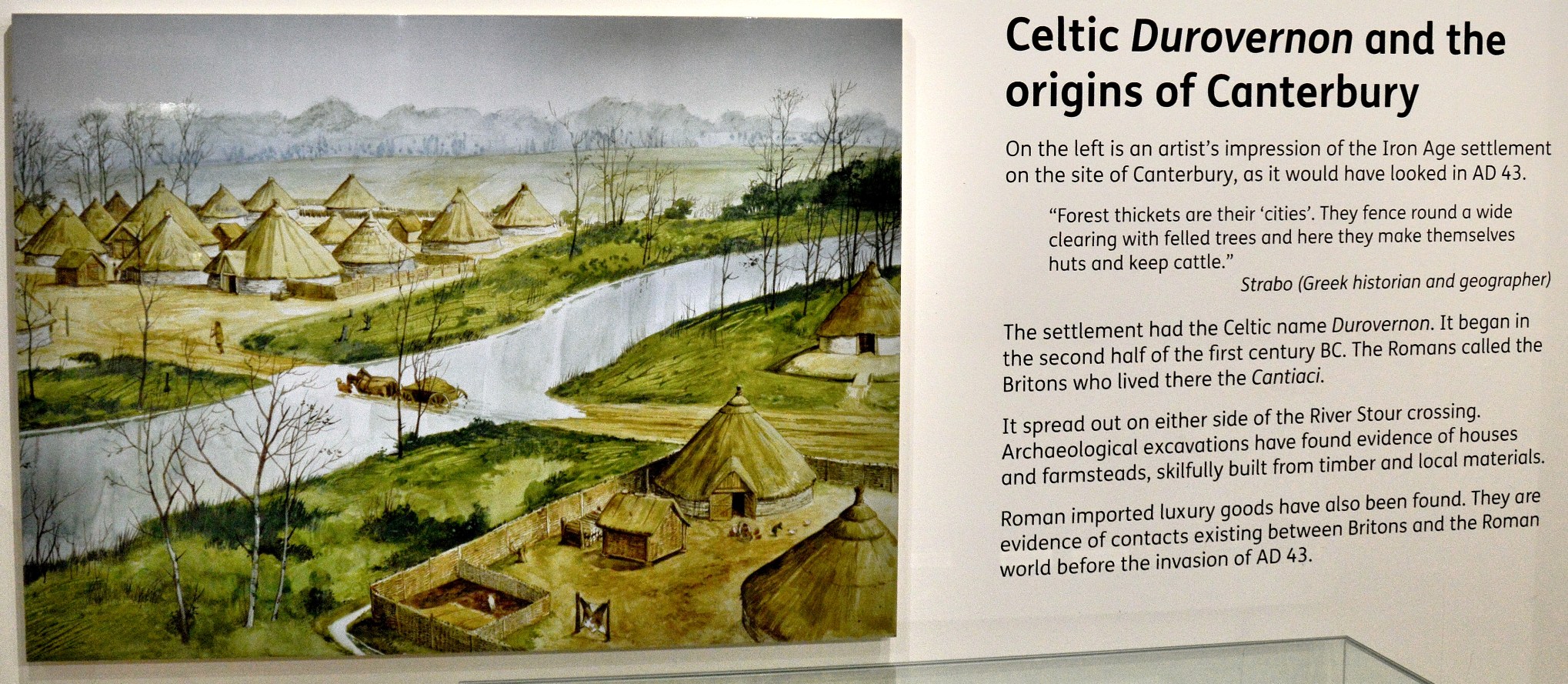
The following two artists impression are really from the Roman Museum (a few minutes walk away on Butchery St), but help to complete the picture.

Roman Canterbury AD 150
.
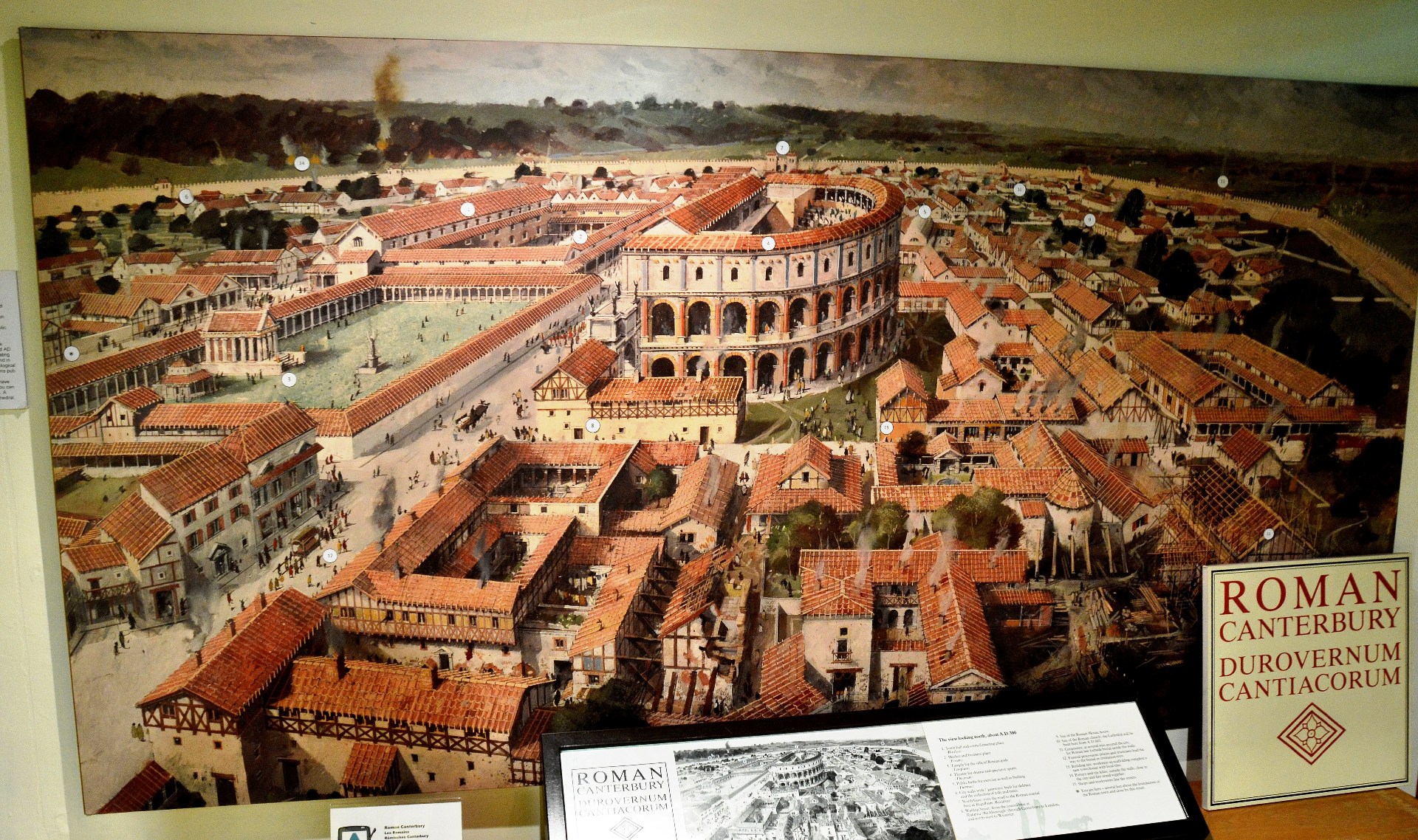
Roman Canterbury AD 300
And, back to the Heritage Museum.

Anglo-Saxon Canterbury AD 700
It seems the new locals put aside bijou for hairy Saxon style, although it looks like the early cathedral can be seen in the distance.
Just a few of the items on display:-
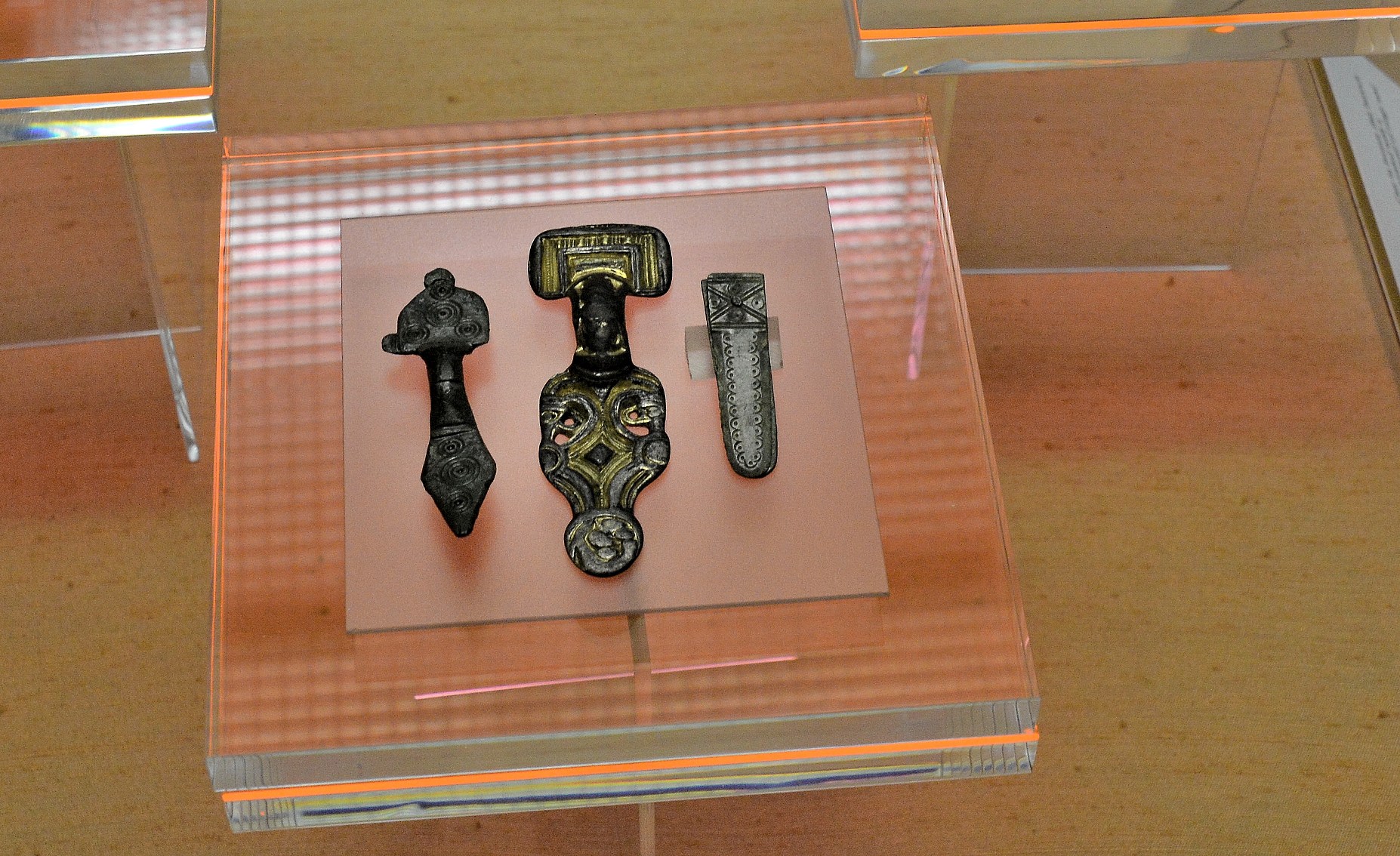
6th Century Anglo-Saxon Bronze Brooch
.
 The Normans came along in the the 11th Century and had a preference for stone.
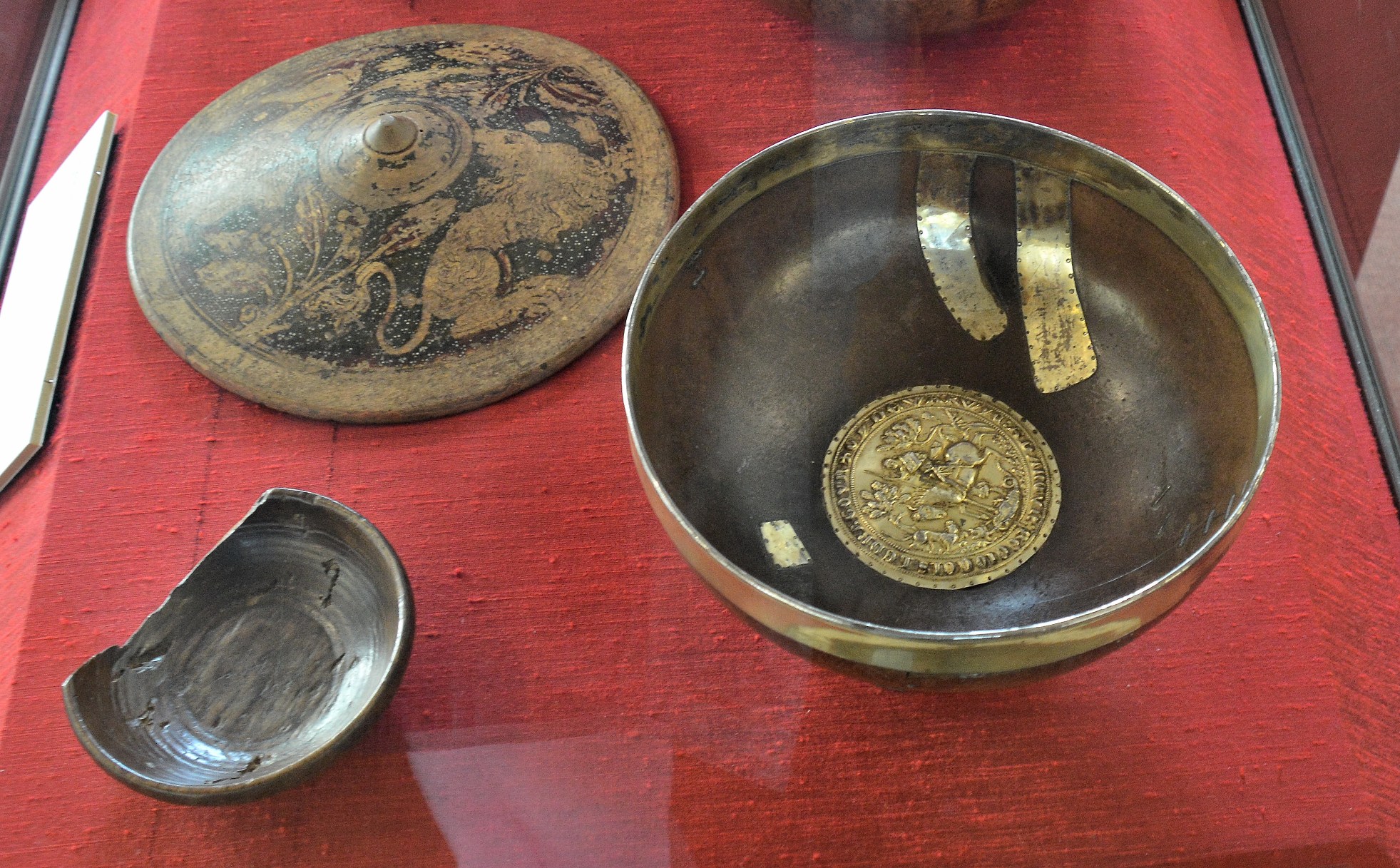
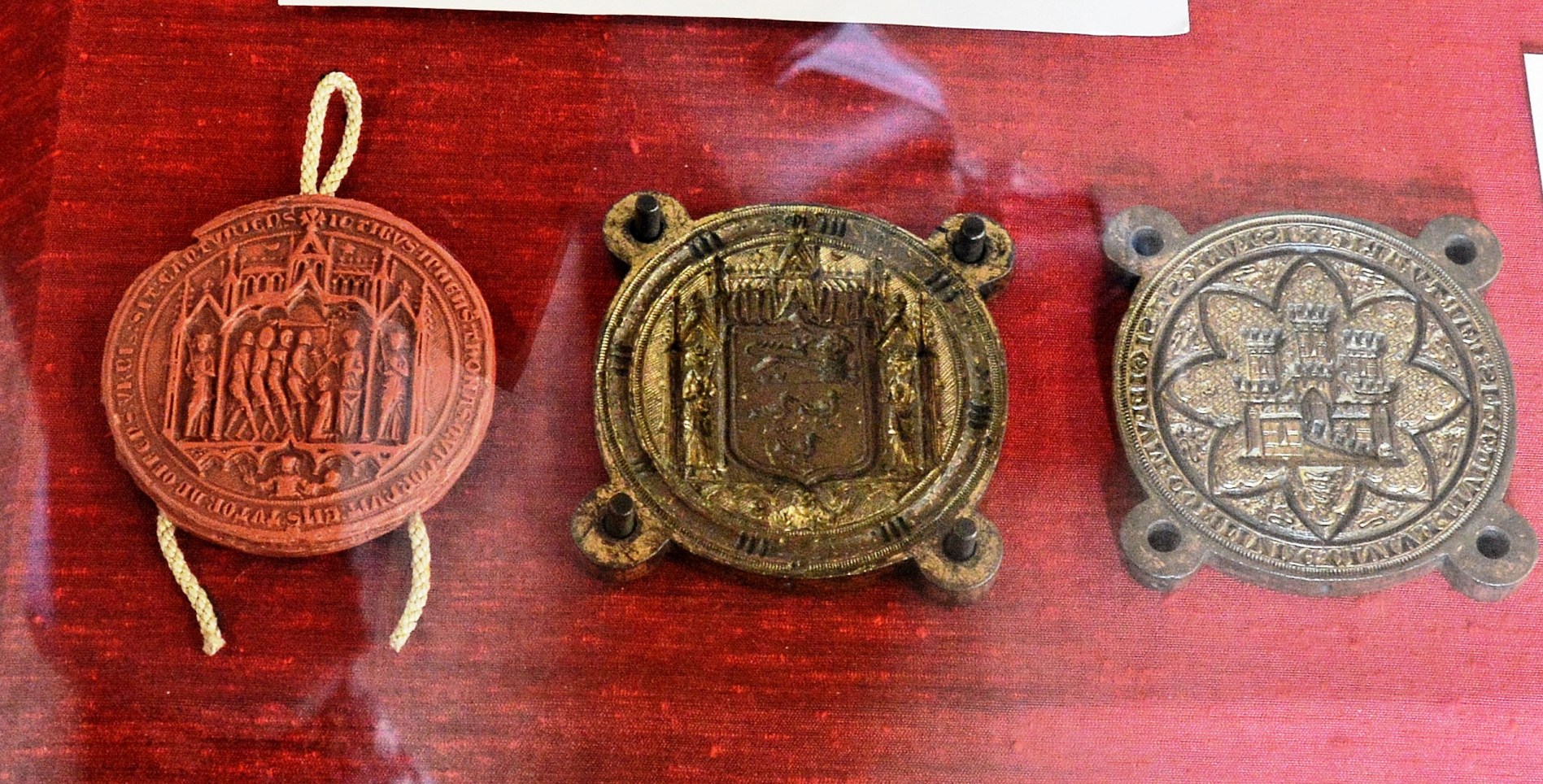
Medieval Mazer
.
 .
.
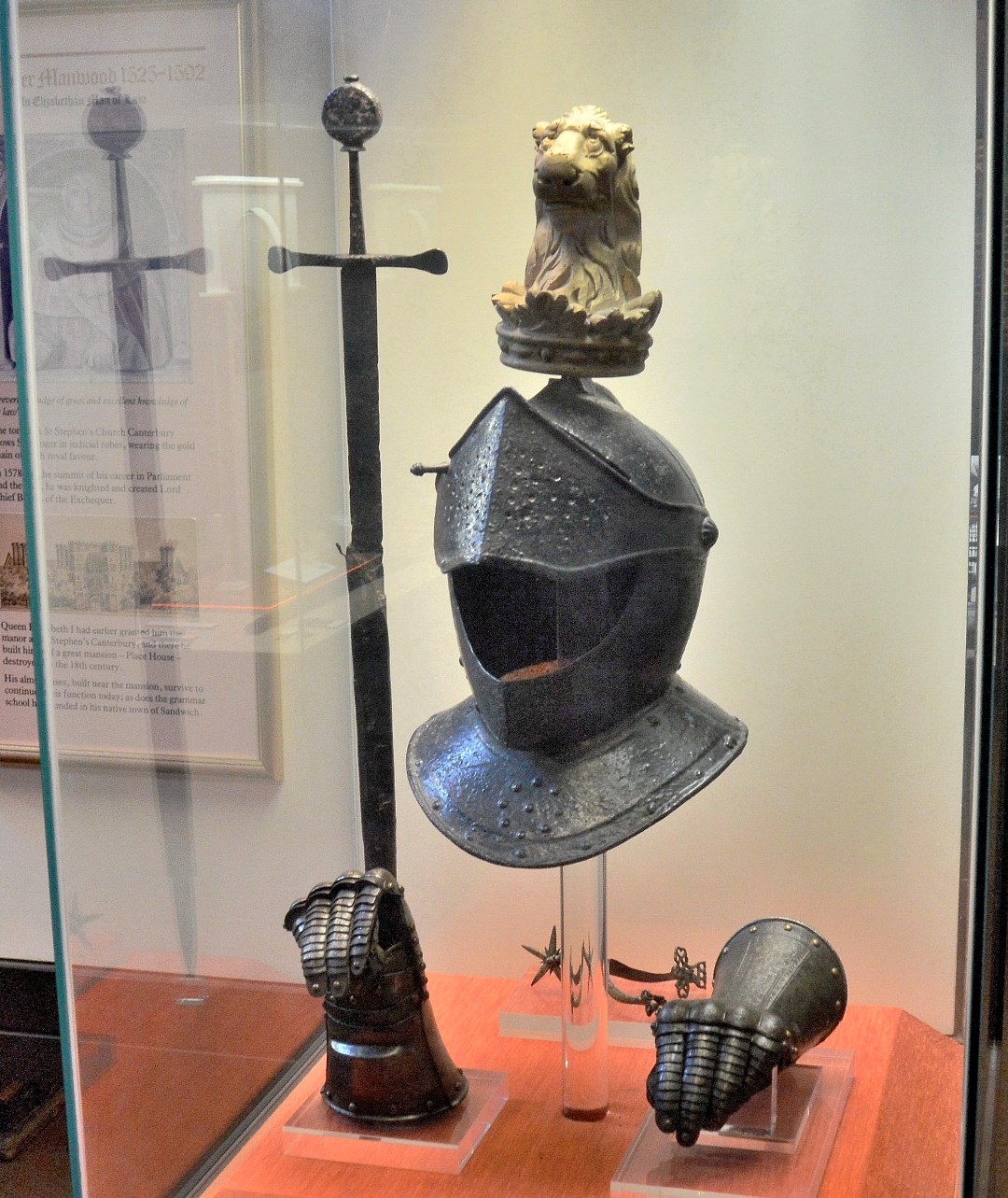
And armour.
.
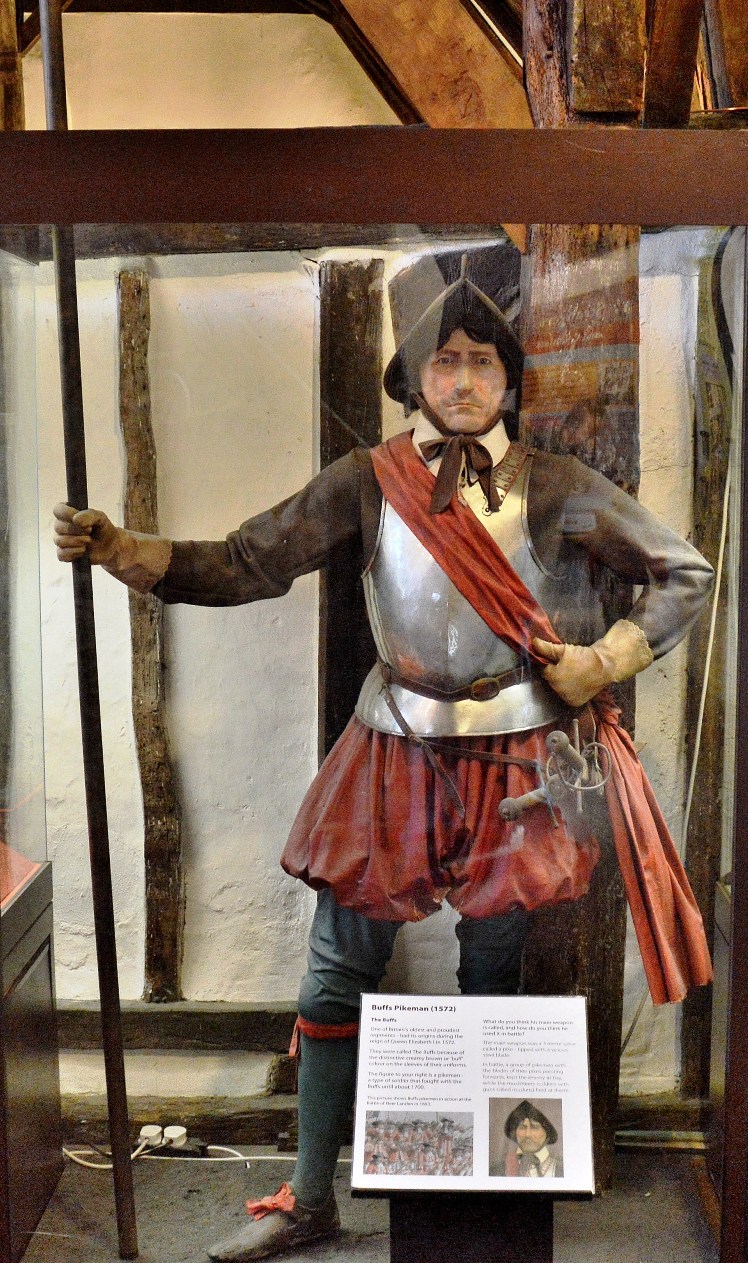
Elizabethan Soldier – A “Buffs” Pikeman 1572
The Buffs are a long-standing regiment originating in Kent and garrisoned at Canterbury. Once known as the 3rd Light Foot but now known as the Royal East Kent Regiment. Referred to as the Buffs because of the buff colouring of their sleeves.
In 1858 whilst stationed at Malta, Lieutenant John Cotter, Adjutant of the 2nd Buffs, would shout “Steady, The Buffs!”, a shout which was popularised by Rudyard Kipling and entered common use.

.

Invicta Steam Locomotive
Invicta was built at the Stephensons Works, delivered and driven by Edward Fletcher and opened the Canterbury and Whitstable Railway in 1830.
.
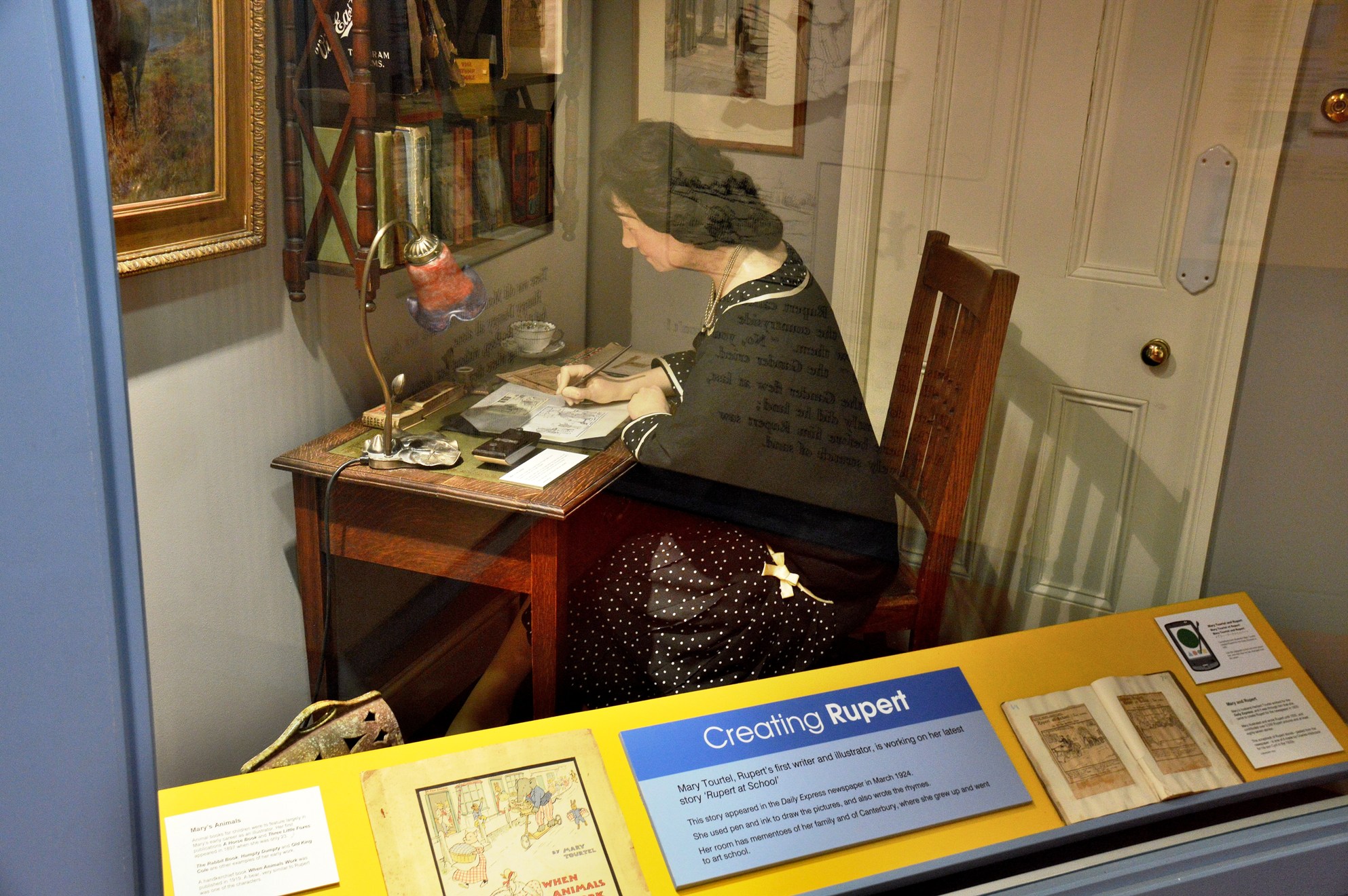
Mary Tourtel who Created Rupert the Bear in 1920.

.

.
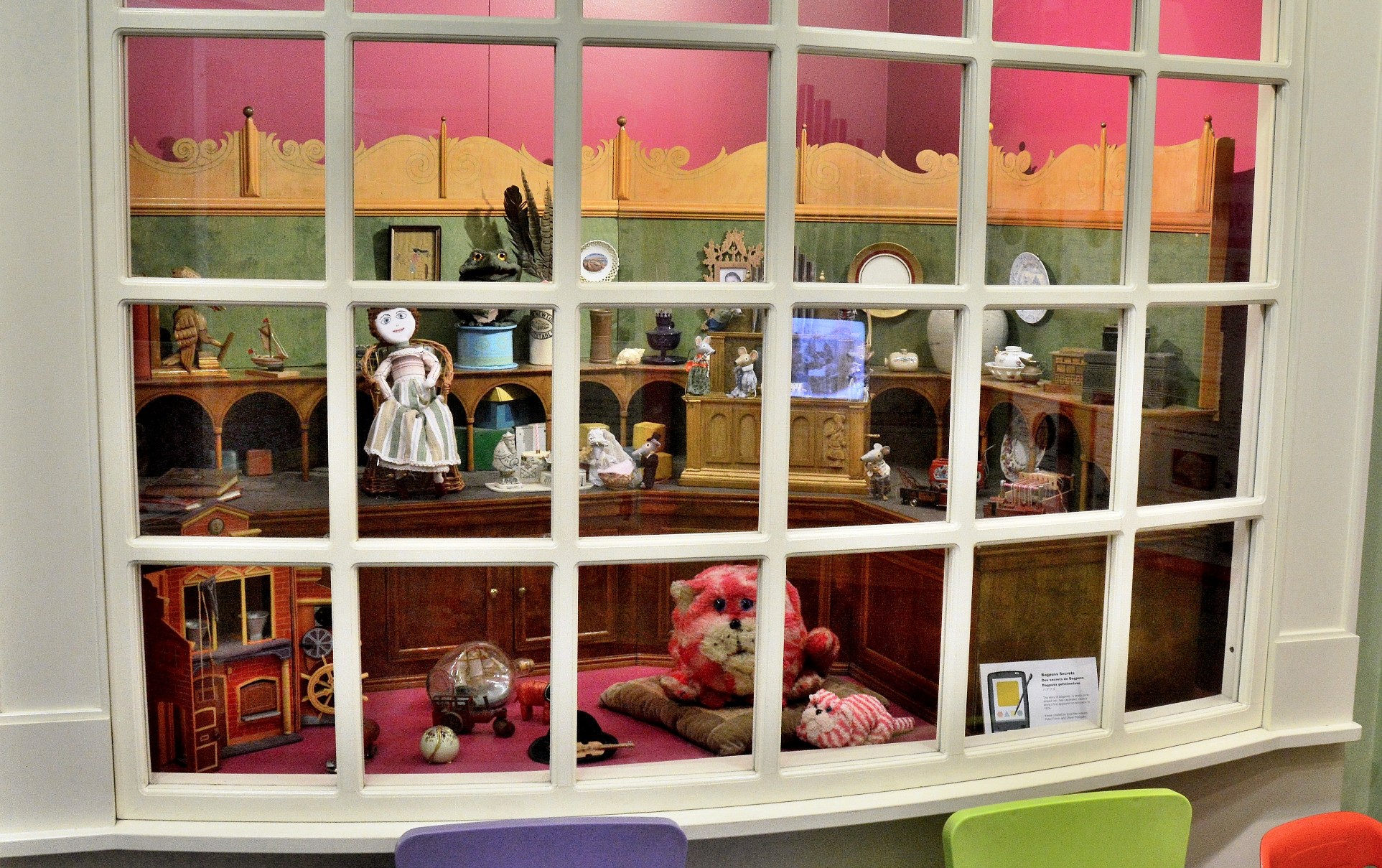
Bagpus and Friends
Oliver Postgate and Peter Firmin created Bagpus, Ivor the Engine, Noggin the Nog, the Clangers, Tottie: The Story of a Dolls House and The Pogles family in a converted cowshed in Blean near Canterbury using the company name Smallfilms ⇒.
There are more of these exhibits at this museum and at the Victoria and Albert Museum of Childhood ⇐ (East London).

Tottie: The Story of a Dolls House
.
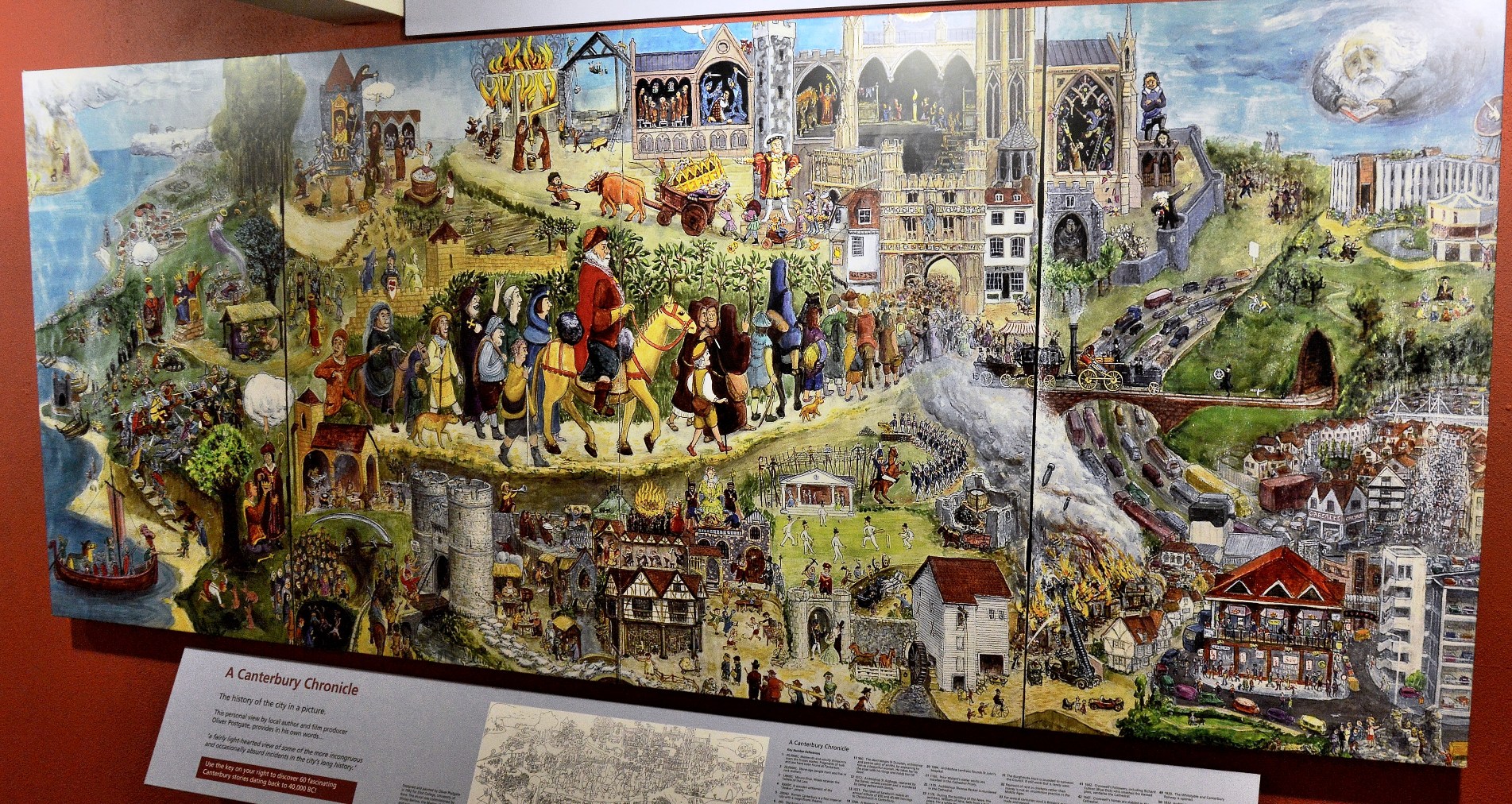
Oliver Postgate’s Canterbury Chronicle
And more from amazing Canterbury later.
Canterbury Cathedral

17 Pics. Canterbury Cathedral ⇒ was founded in 597 by Augustine and enlarged during the 11th and 12th centuries. The cathedral became notable when archbishop Thomas Becket ⇒ was murdered there by followers of Henry II. Becket was later cannonised as a martyr and Canterbury became a place of pilgrimage.
Canterbury became yet more famous when Chaucer wrote The Canterbury Tales ⇒ in 1386.
The cathedral is not so greatly ornate as St Paul’s Cathedral ⇐ but it is an extraordinary sight. There is a charge for entry so please see the website ⇒.
.
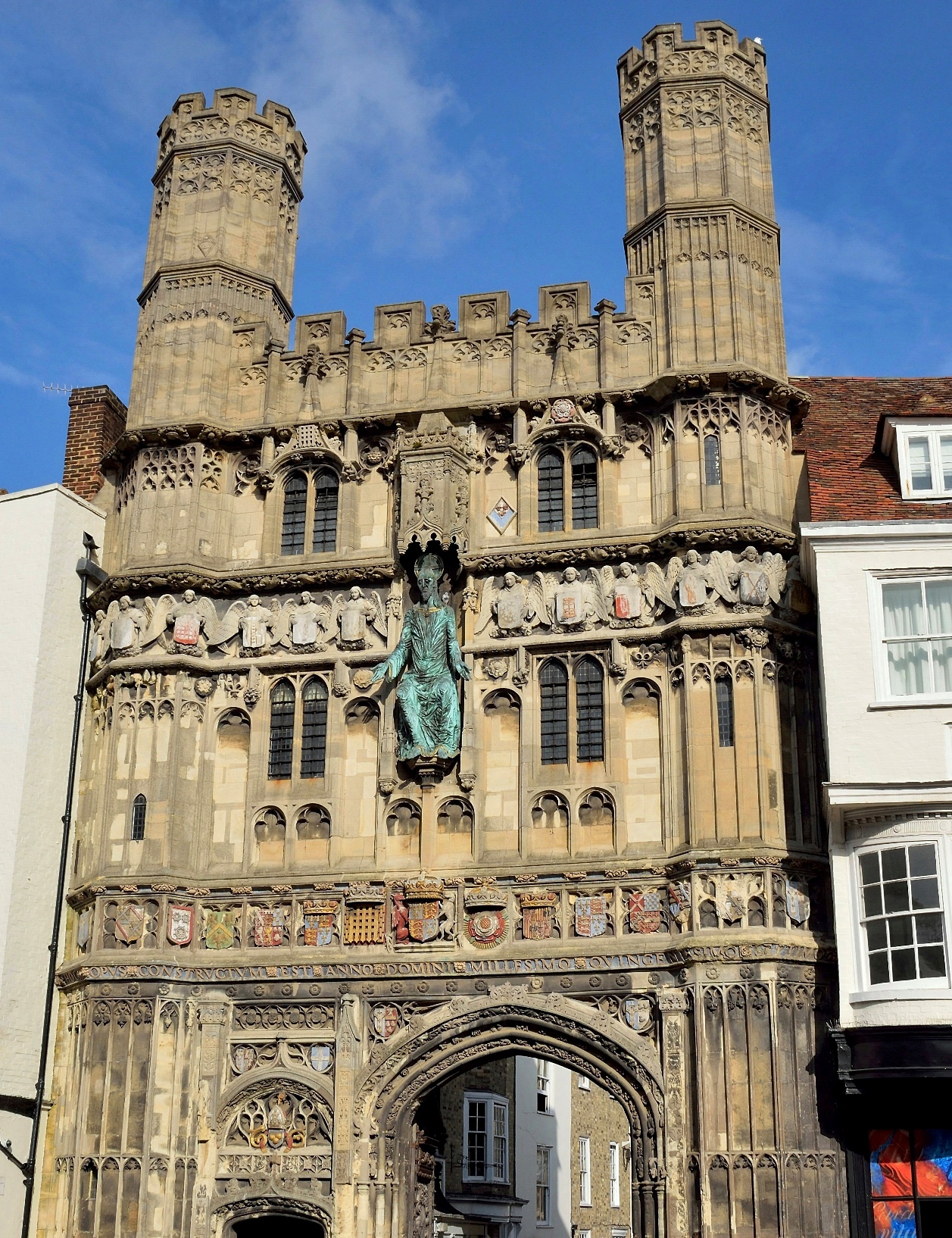
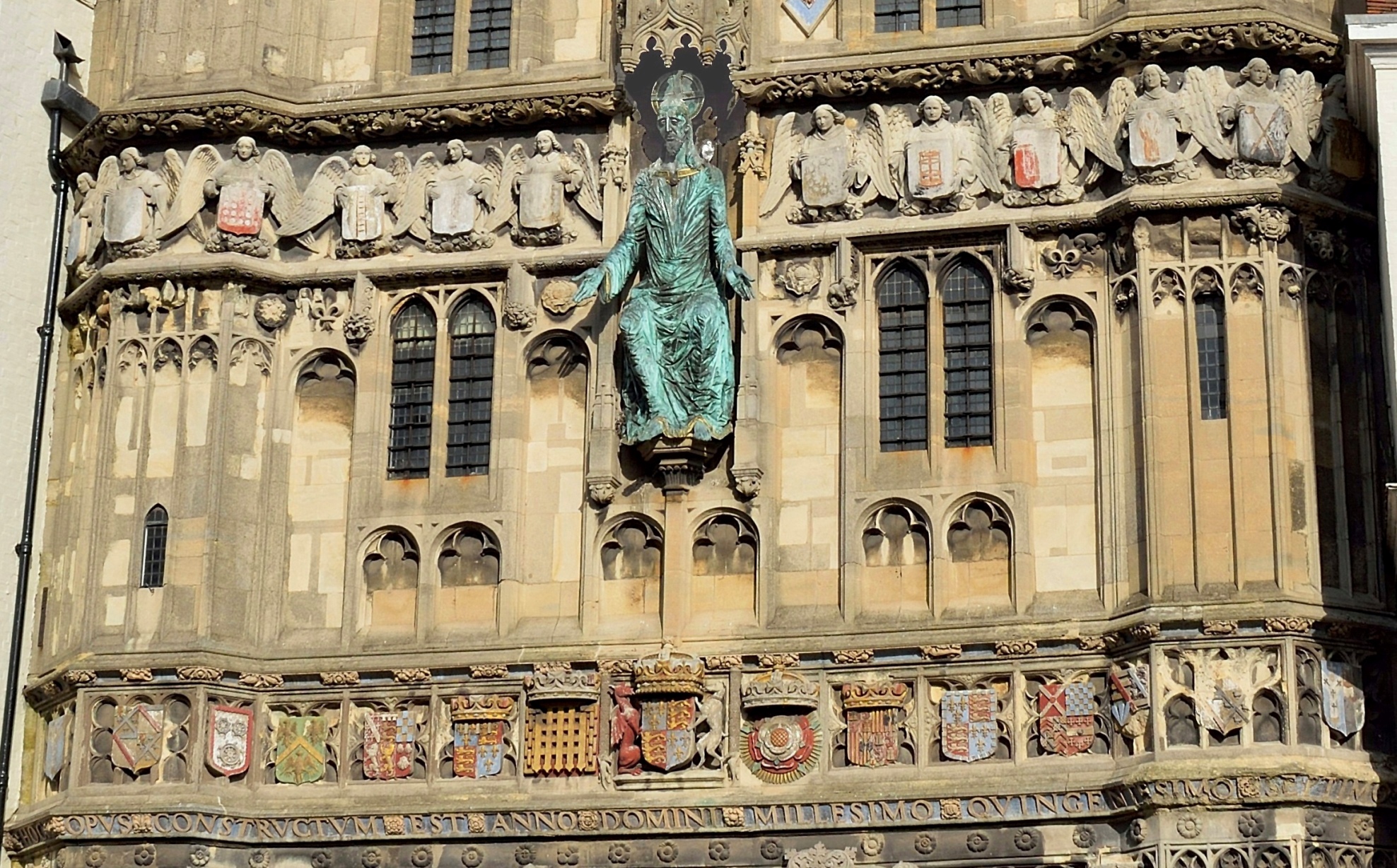
The gate to the cathedral precincts.
.
.

Cathedral Entrance
.

The entrance leads into the Nave and one is struck by the huge size and antiquity of the cathedral. The ability to construct on this scale without the assistance of modern technology is awe inspiring.
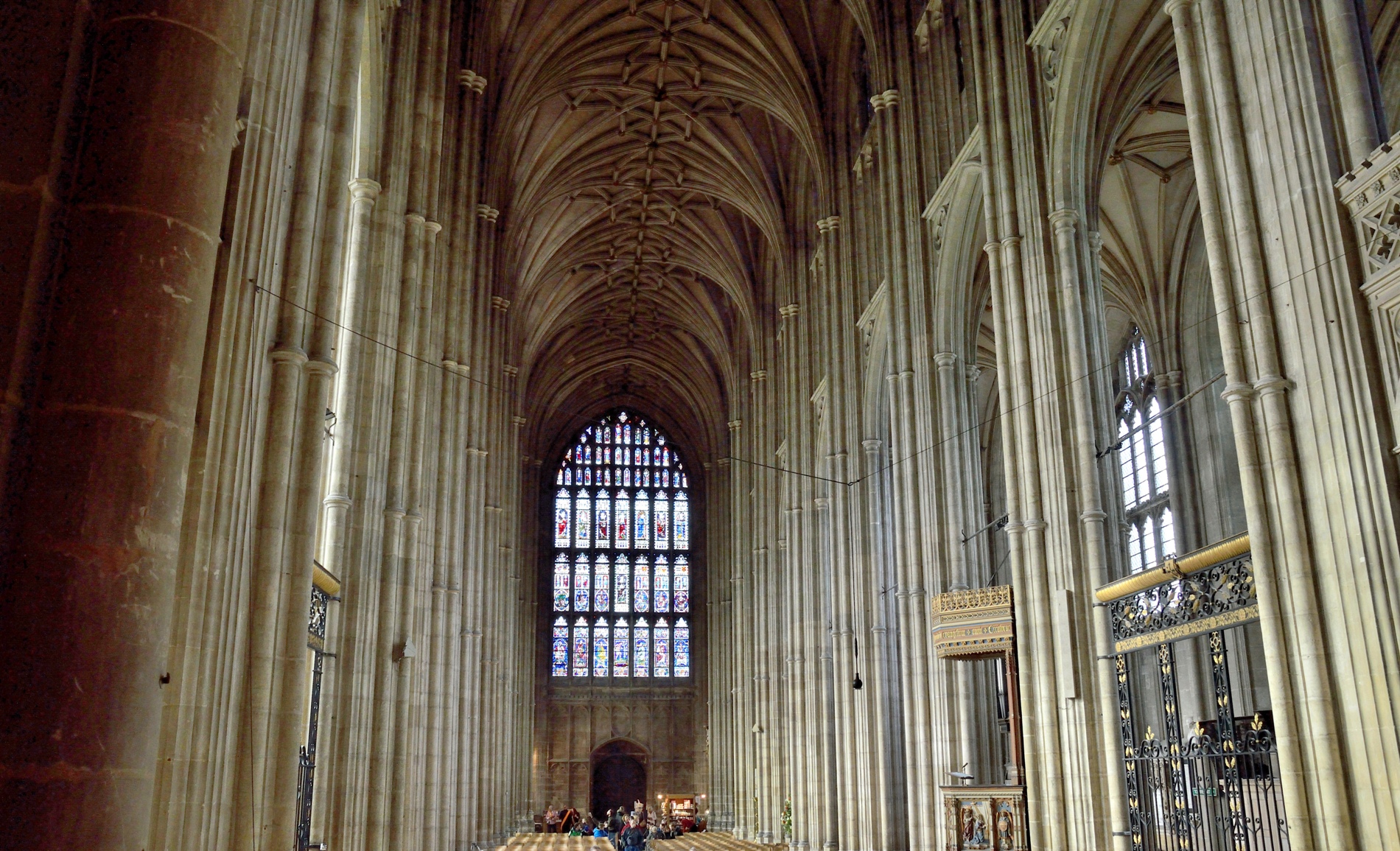
Looking back from the far end of the Nave.

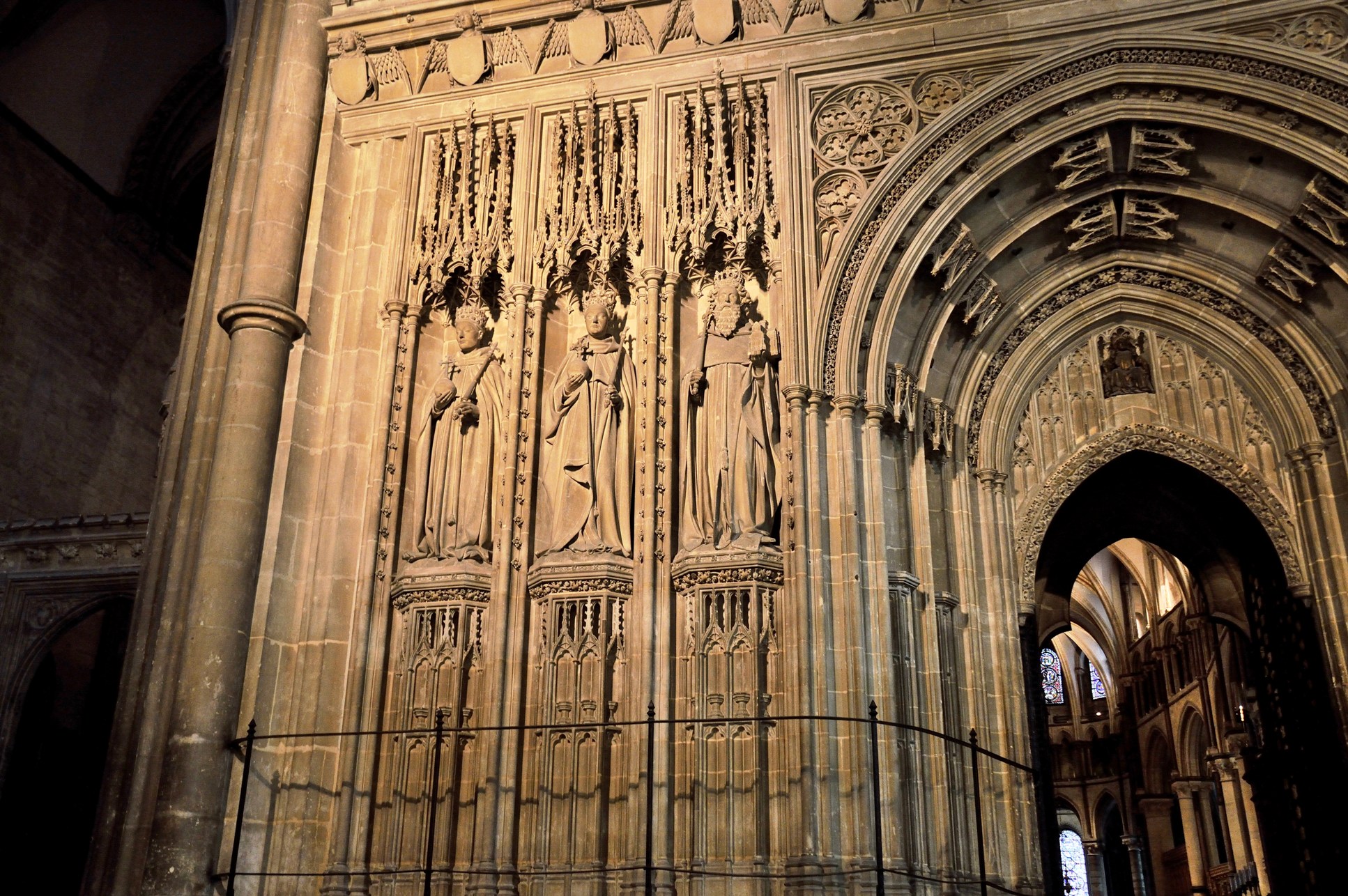
Continuing further there is the entrance to the Quire and Trinity Chapel.
.
 .
.
Some of the stained glass along the way.
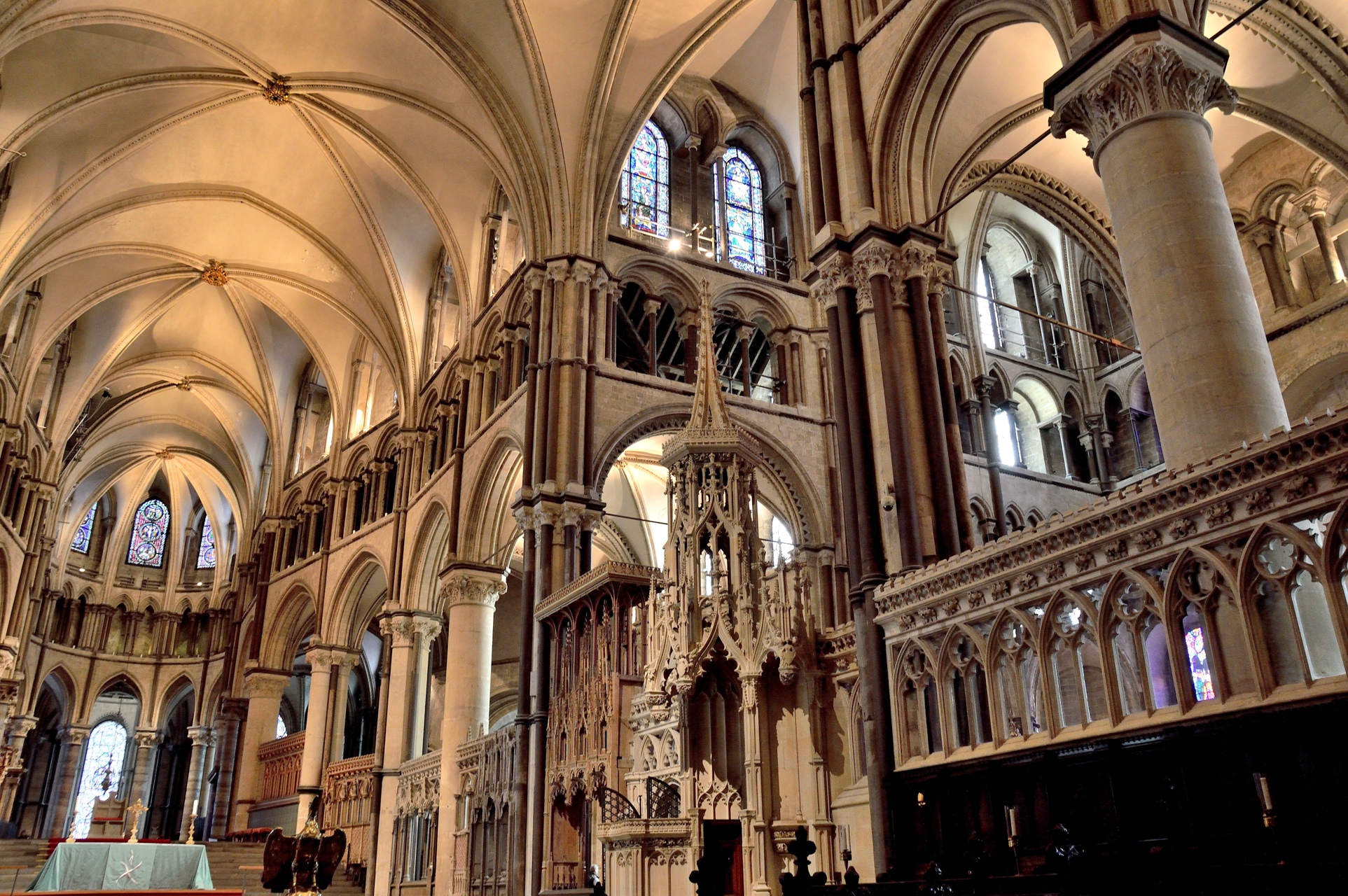
The Quire and Trinity Chapel.
 .
.
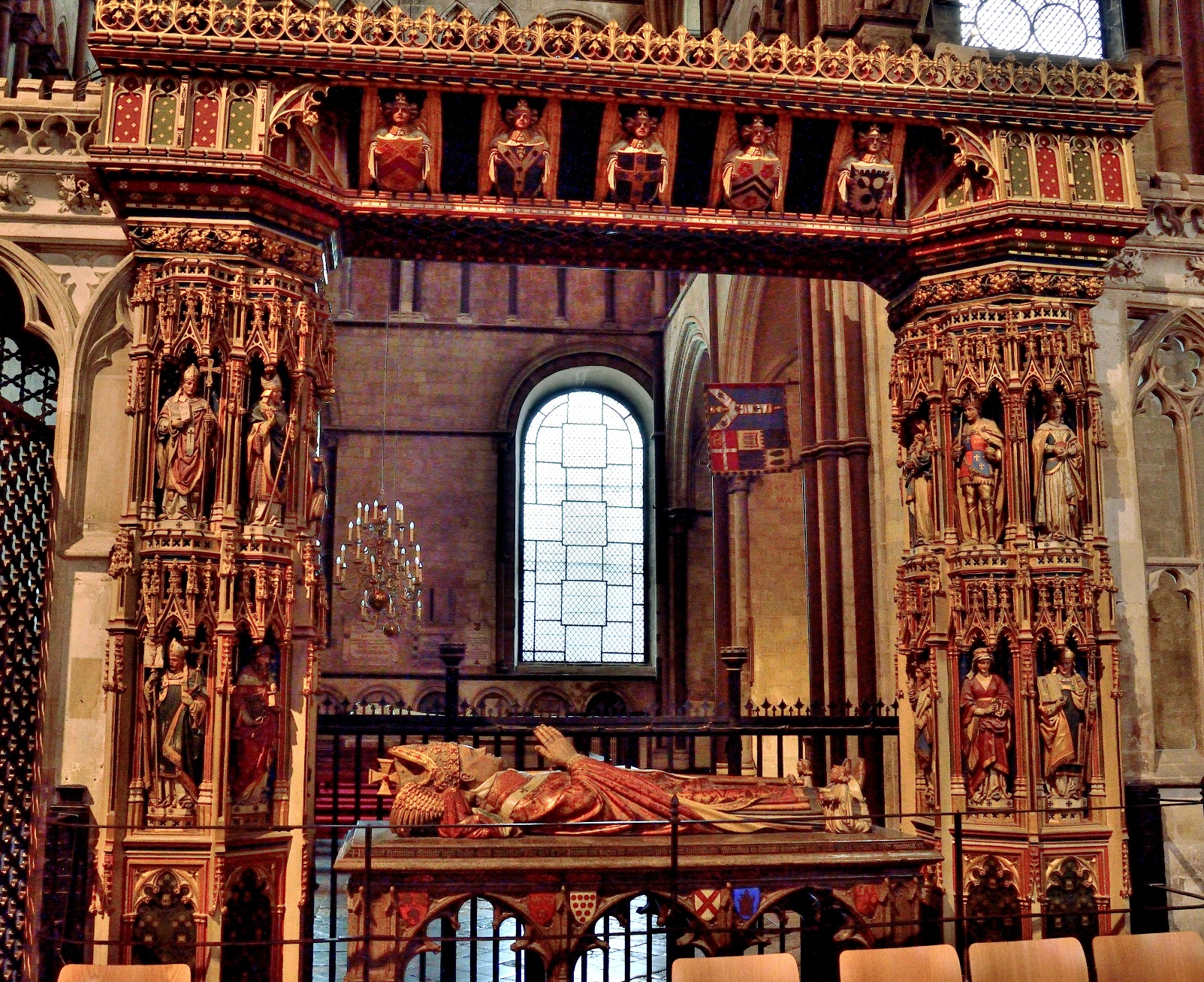
The tomb of Archbishop Chichelle. There are many tombs in the cathedral including Henry IV and Edward the Black Prince. Archbishop Chicelle is the most ornate. Thomas Becket was buried beneath Trinity Chapel but his bones were destroyed during the Dissolution of the Monasteries in the reign of Henry VIII .

.
 .
.

It seems that graffiti is nothing new, although it is always worth taking a close look in old churches and buildings for Witch Marks ⇒, which are not quite as they sound.
AND don’t miss out on the Cloisters with their extraordinary ceilings (I did). They are at the back of the cathedral. Here are some Google pictures ⇒ .
Thanks for visiting Freed From Time and there are a lot venues at About Canterbury ⇐.
Covent Garden Market, London
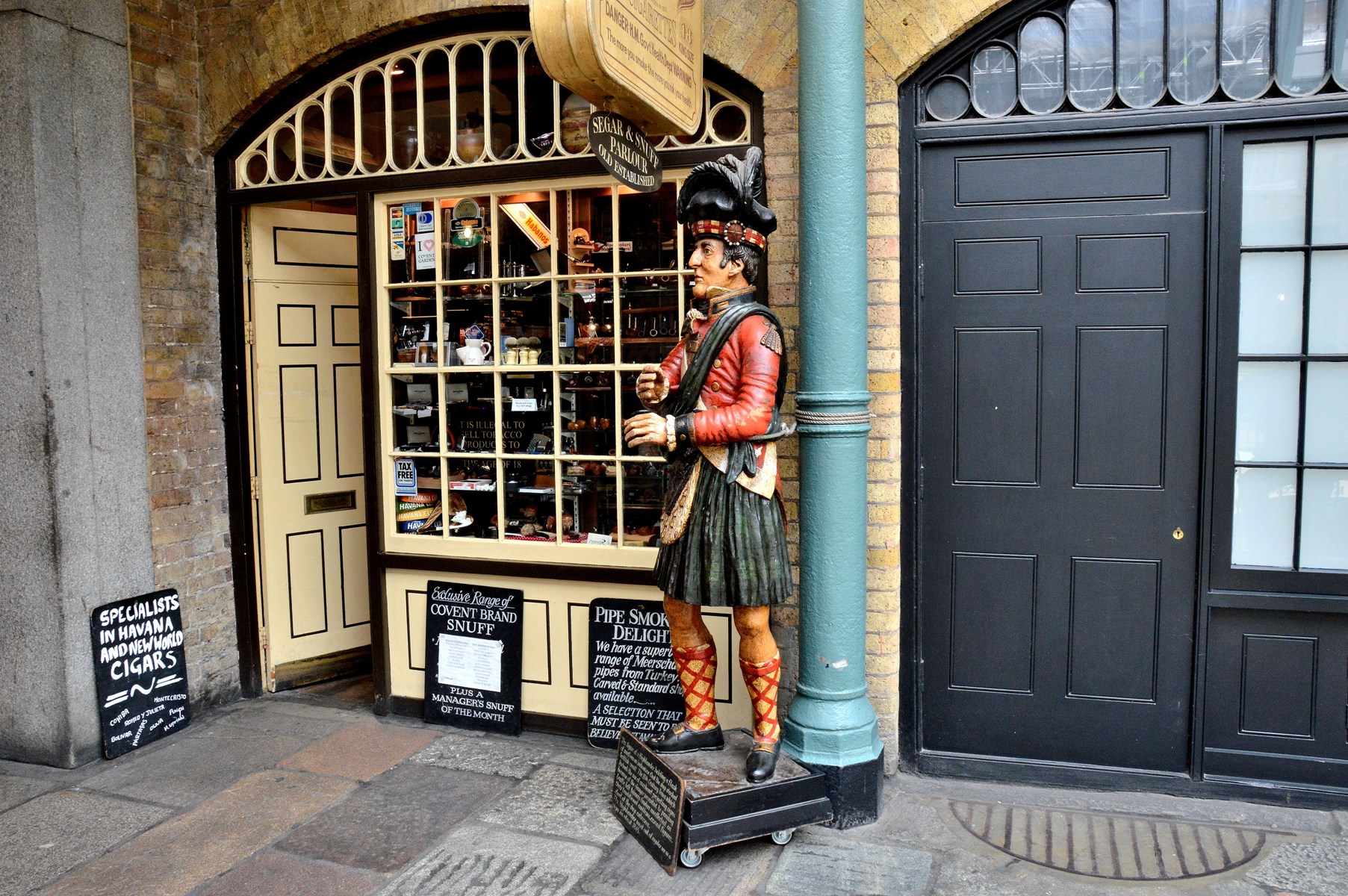
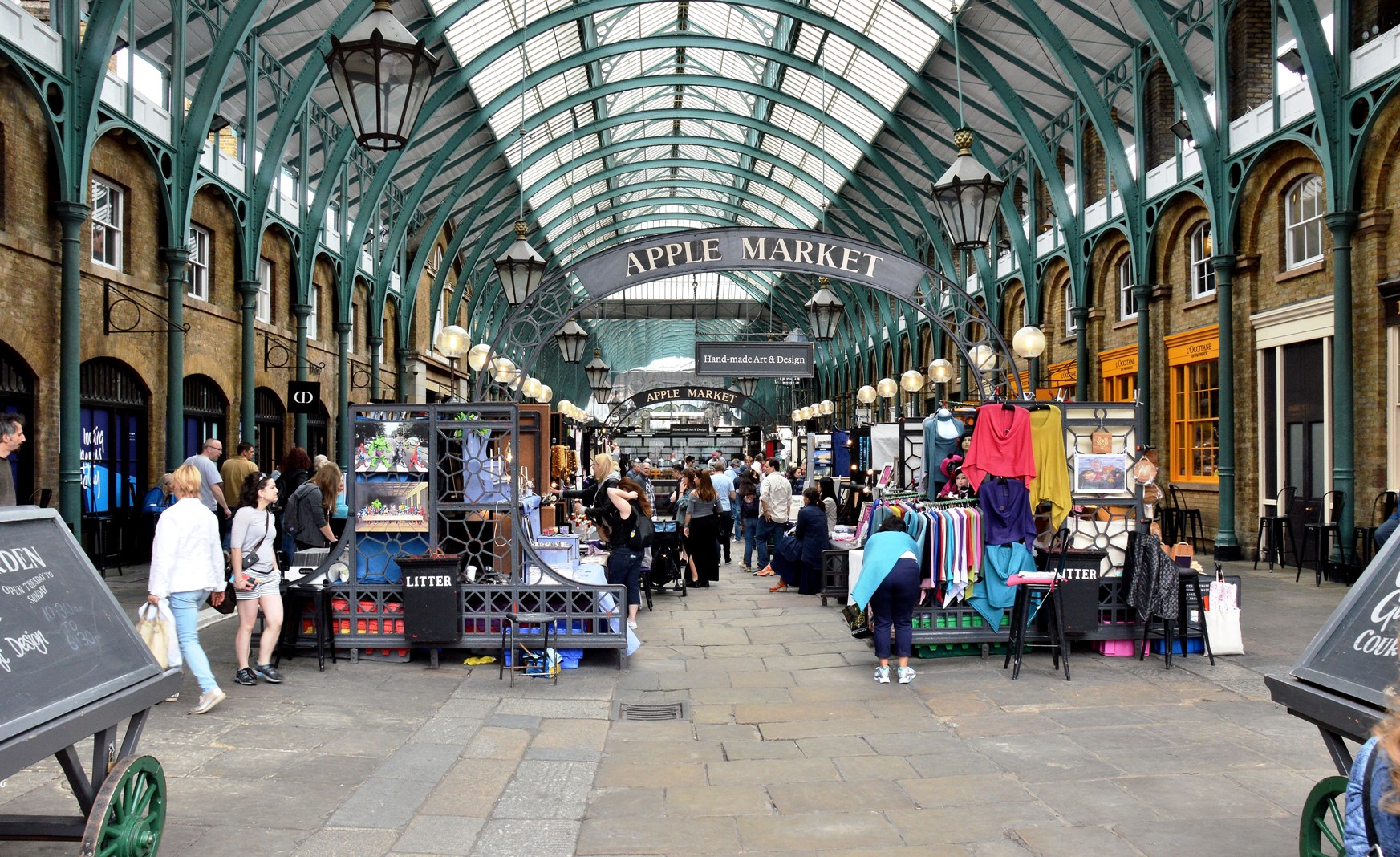
The area was first settled in the 7th century, although abandoned by the 9th century it was eventually walled off by Westminster Abbey in 1201 for use as arable land and orchards. The area was referred to as the “Garden of the Abbey and Convent”, and then later the “Covent Garden”. By 1654 a small fruit and vegetable market had developed. By 1974 the market had become substantial and moved to New Covent Garden Market near Nine Elms.
These days the market houses outlets for arts, crafts, fashion and a number of eateries. Whilst it can be expensive the entertainment is free. A large, interesting and not necessarily expensive market can be found at Old Spitalfields Market⇒ which has some speciality days.
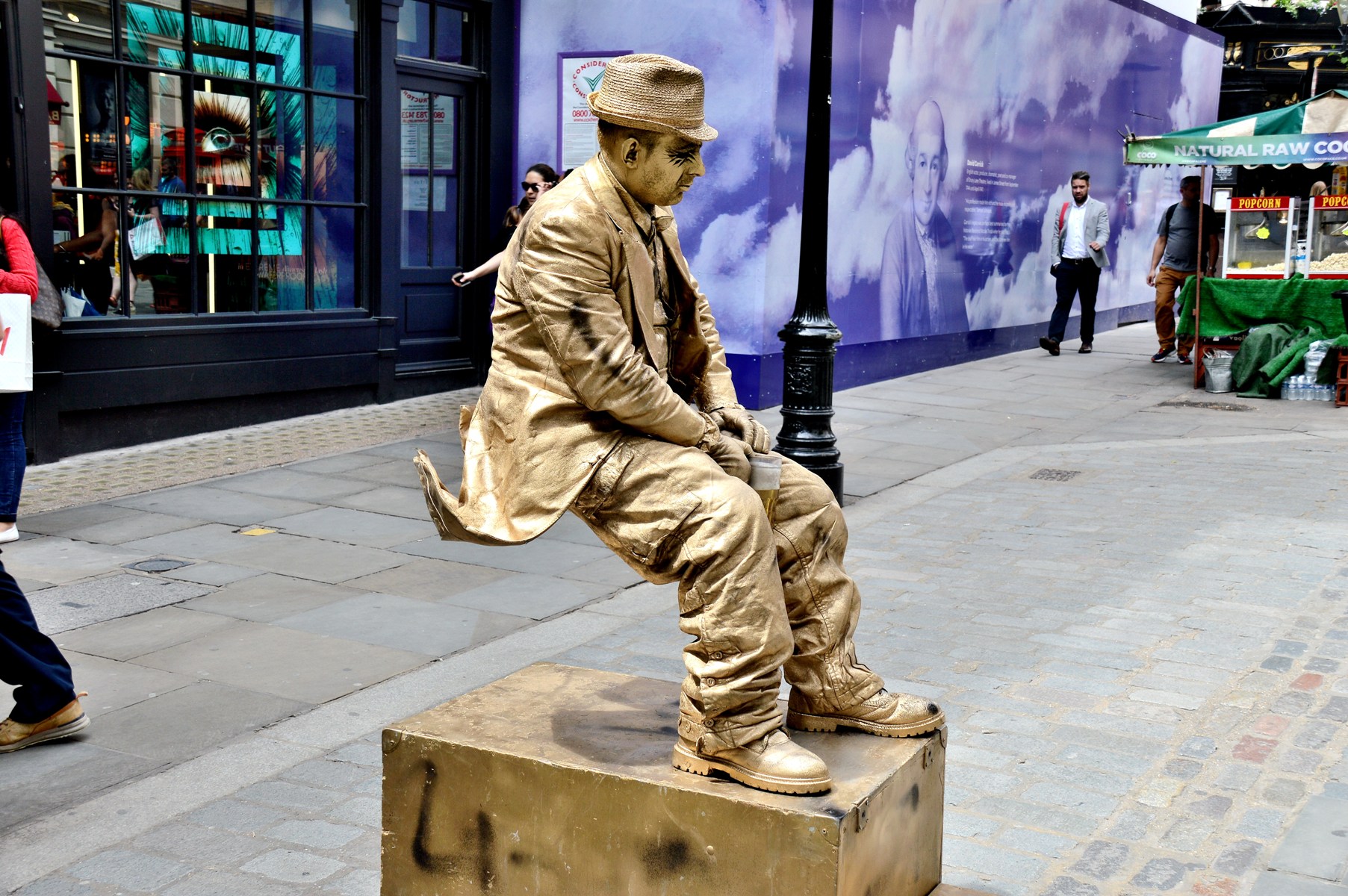
Covent Garden:-.
.
.

A little opera (A Capella of course) with ones luncheon.

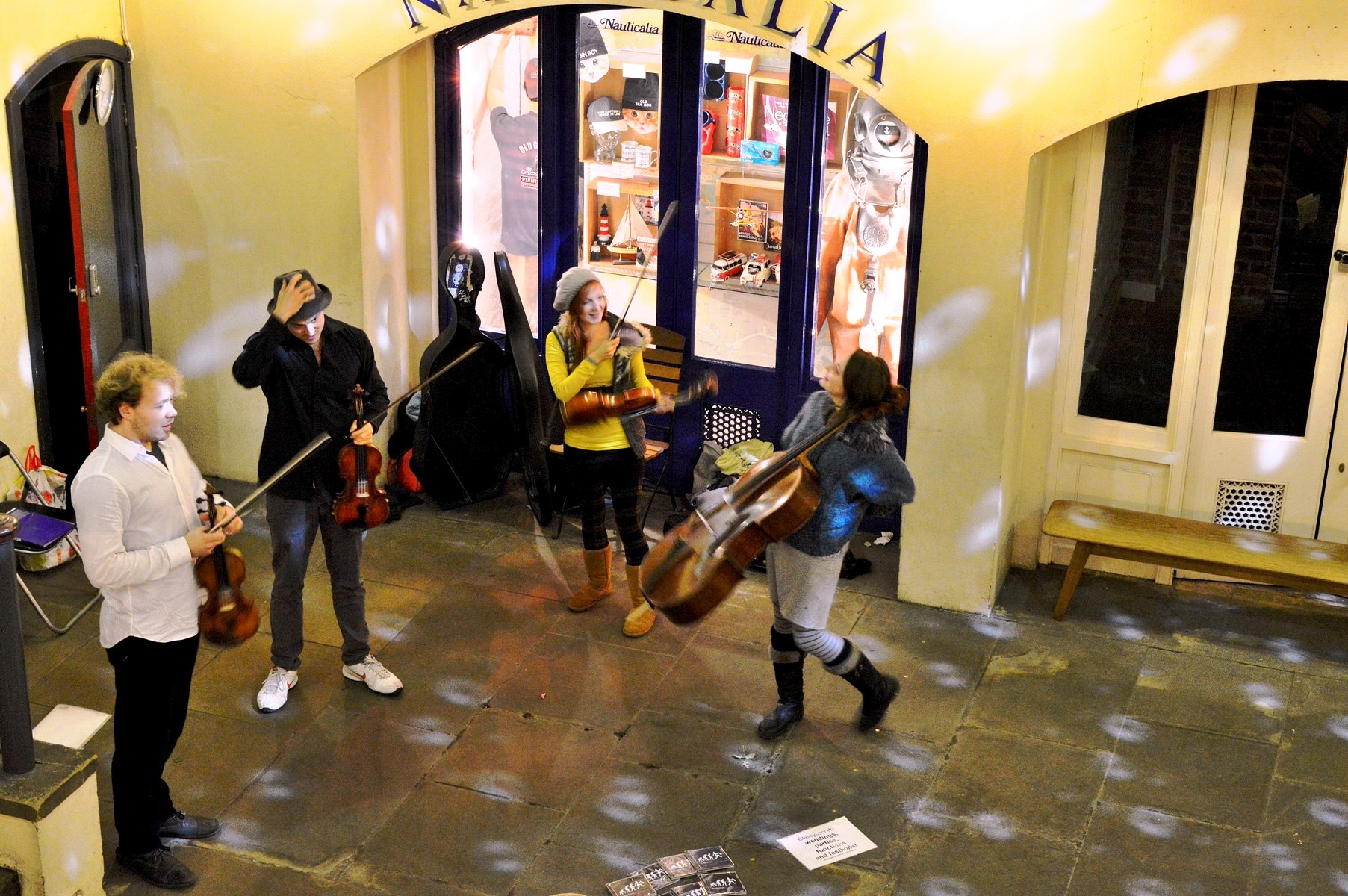
Or a string quartet.

Or perhaps a little bondage.

Maybe watch someone juggle with sharp stuff.
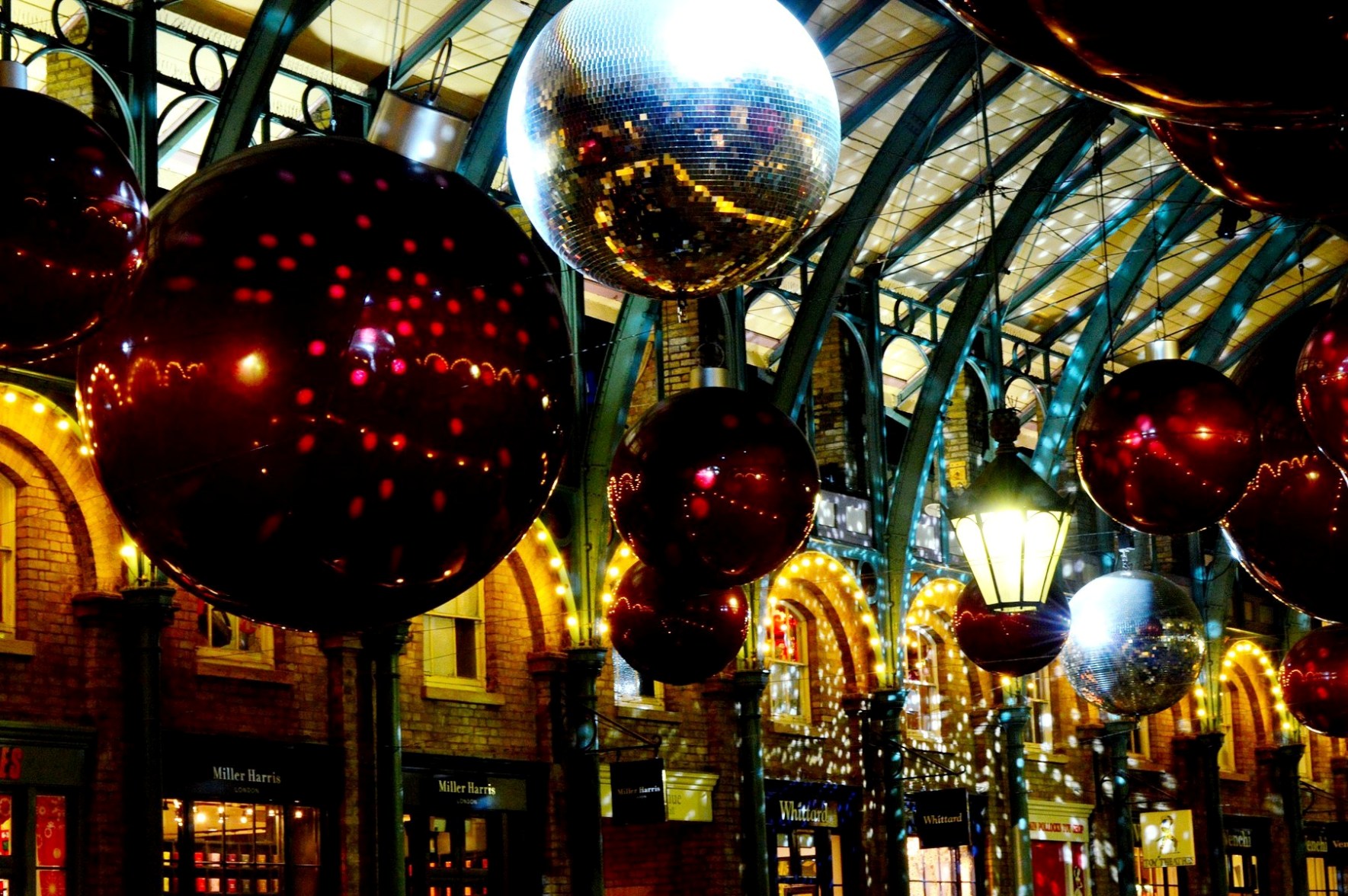
They do make an effort at Christmas.
- Christmas is coming, the geese are getting fat
- Please to put a penny in the old man’s hat
- If you haven’t got a penny, a ha’penny will do
- If you haven’t got a ha’penny, then God bless you!
.
.

Crossness Pumping Station

18 pics. The Crossness Pumping Station ⇒ , just east of London, together with 82 miles of brick intercepting sewers, 450 miles of main sewers and 13,000 miles of local sewers were connected and officially opened in 1865. Visiting ⇒ sometimes steaming but not always open so please check the link.
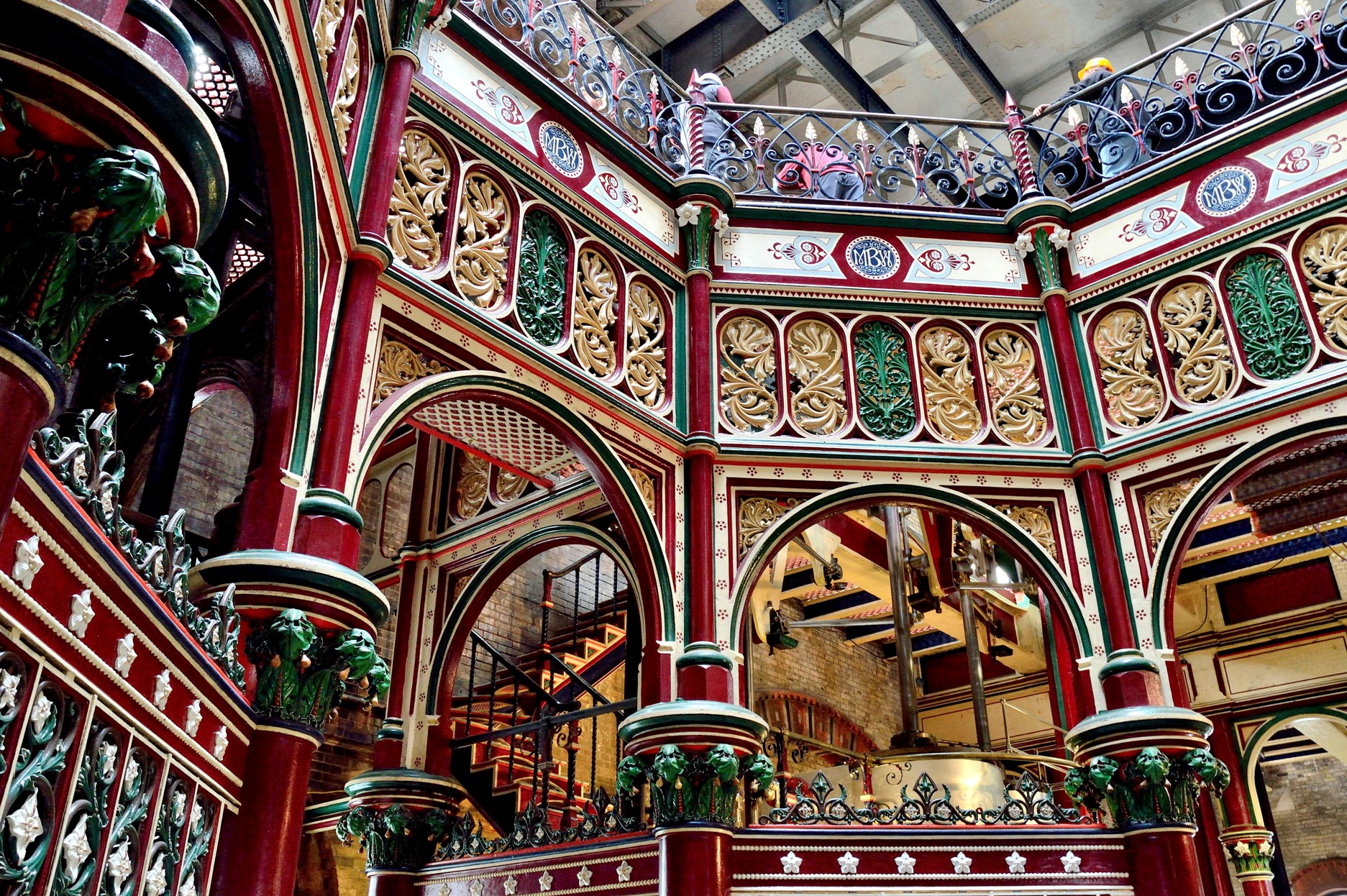
This was to solve :-

The Great Stink
At that time they believed that a miasma (odour) was the cause of diseases, such as cholera which killed thousands. Indeed a city could not grow or prosper without solving the problem. The solution, of a well designed sewage system, was a major part of resolving the actual cause of such diseases, infected water.
Another important contribution was a clean water supply system. An example of this and the great engines can be found at the London Water and Steam Museum ⇐.
The London sewage system was designed by Sir Joseph Bazalgette who also designed many other Victorian London buildings and mustaches. 🙂

.

The pumping station continued in use until the 1950’s, abandoned until 2003 when one of the four engines and most of the ornate ironwork were restored.

Visitors get hard hats.

.

.
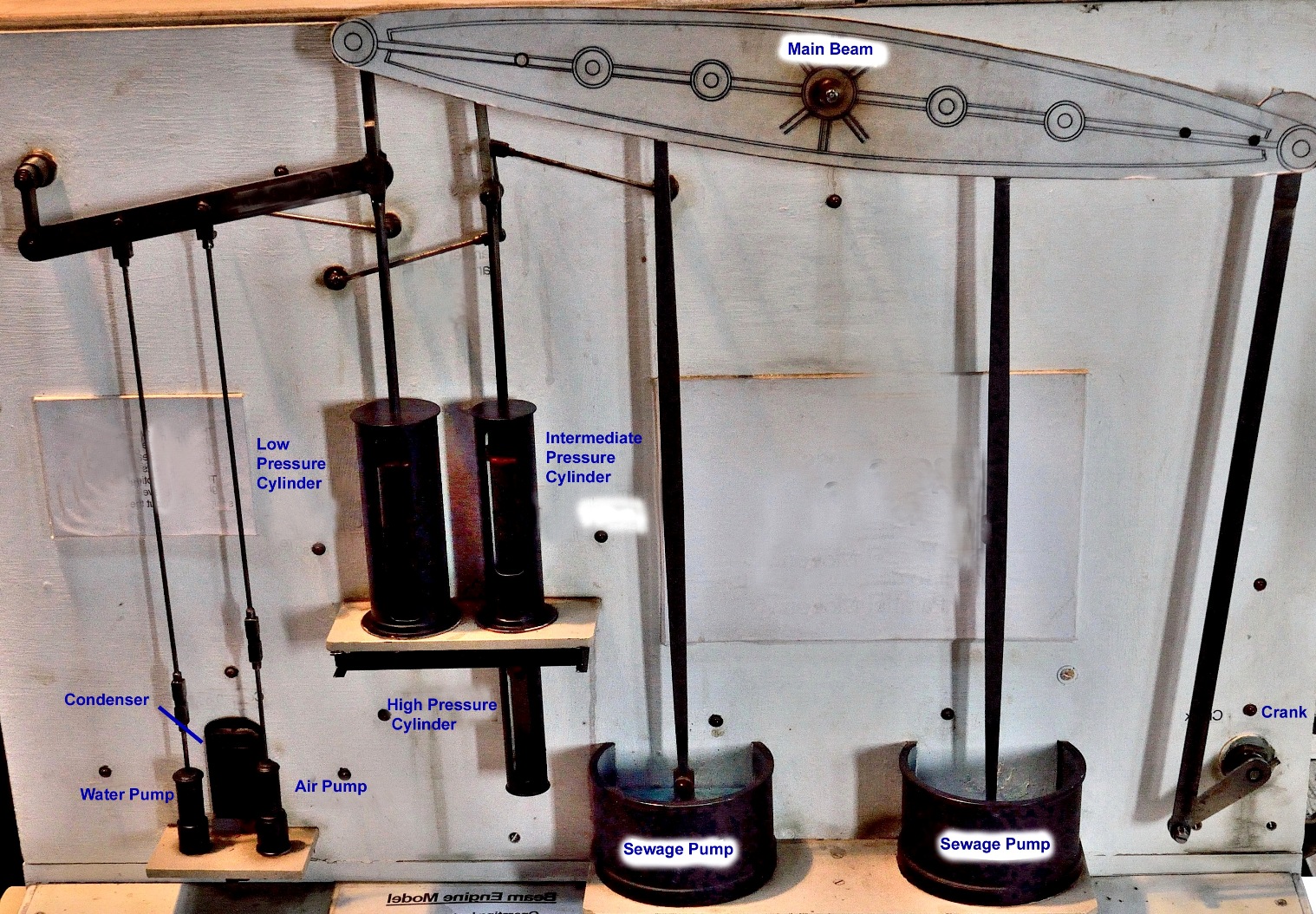
Each engine was of the triple expansion type where; a high pressure steam cylinder (the lower here) received high pressure steam (lots of pounds per square inch) over a small number of square inches, an intermediate pressure cylinder received lower pressure exhaust from the high pressure cylinder over more square inches and the intermediate cylinder exhaust was passed to the largest low pressure cylinder. An efficient way to use all of the pressure provided by a boiler.

The high pressure cylinder in the basement.

The intermediate and low pressure cylinders on the ground floor.

A chap with a proper hat is always reassuring. 🙂

One of the main beams (the refurbished one) on the first floor.
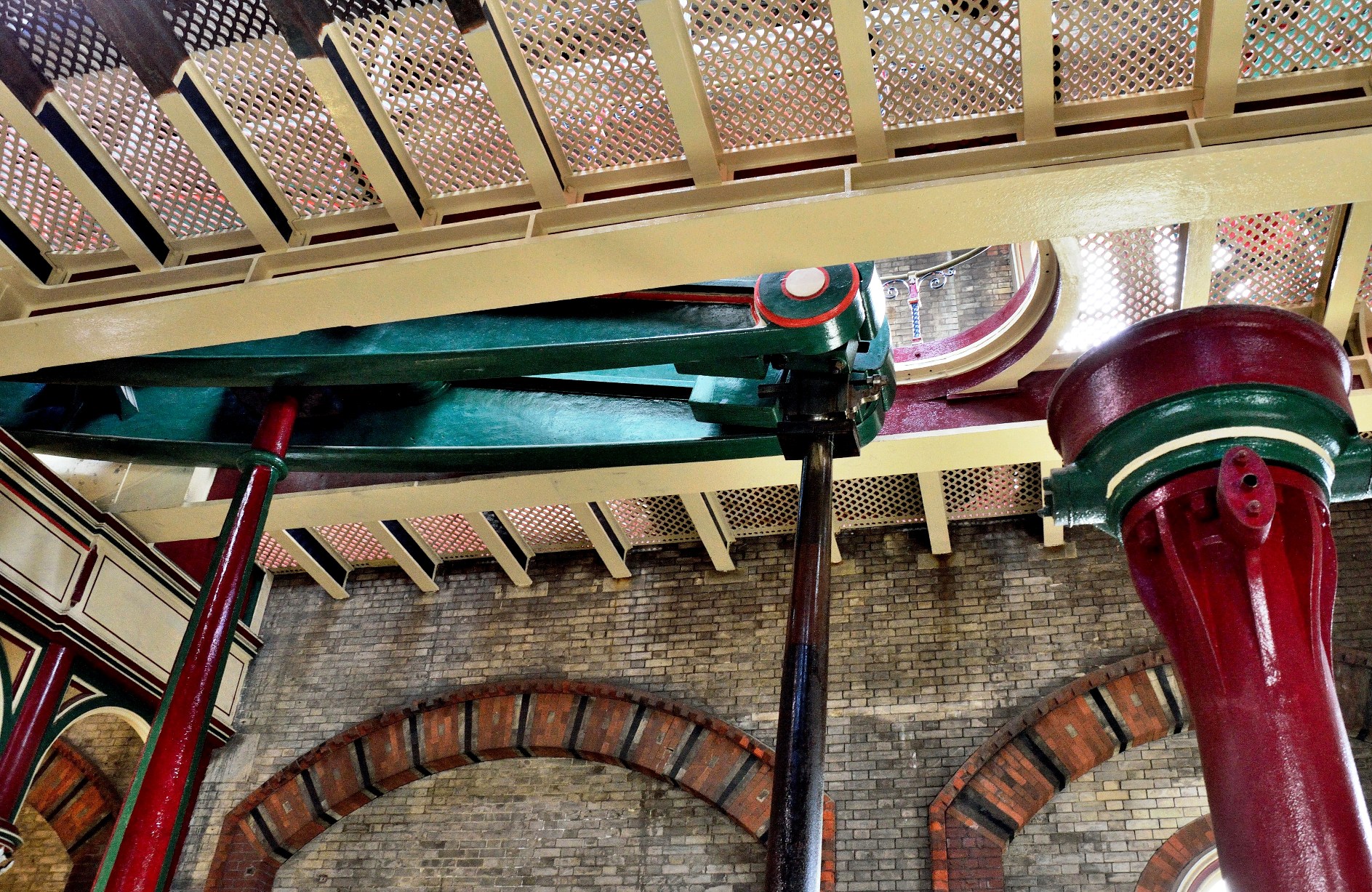
And, from underneath. The shaft on the left operates one of the pumps and the one on the right leads to :-
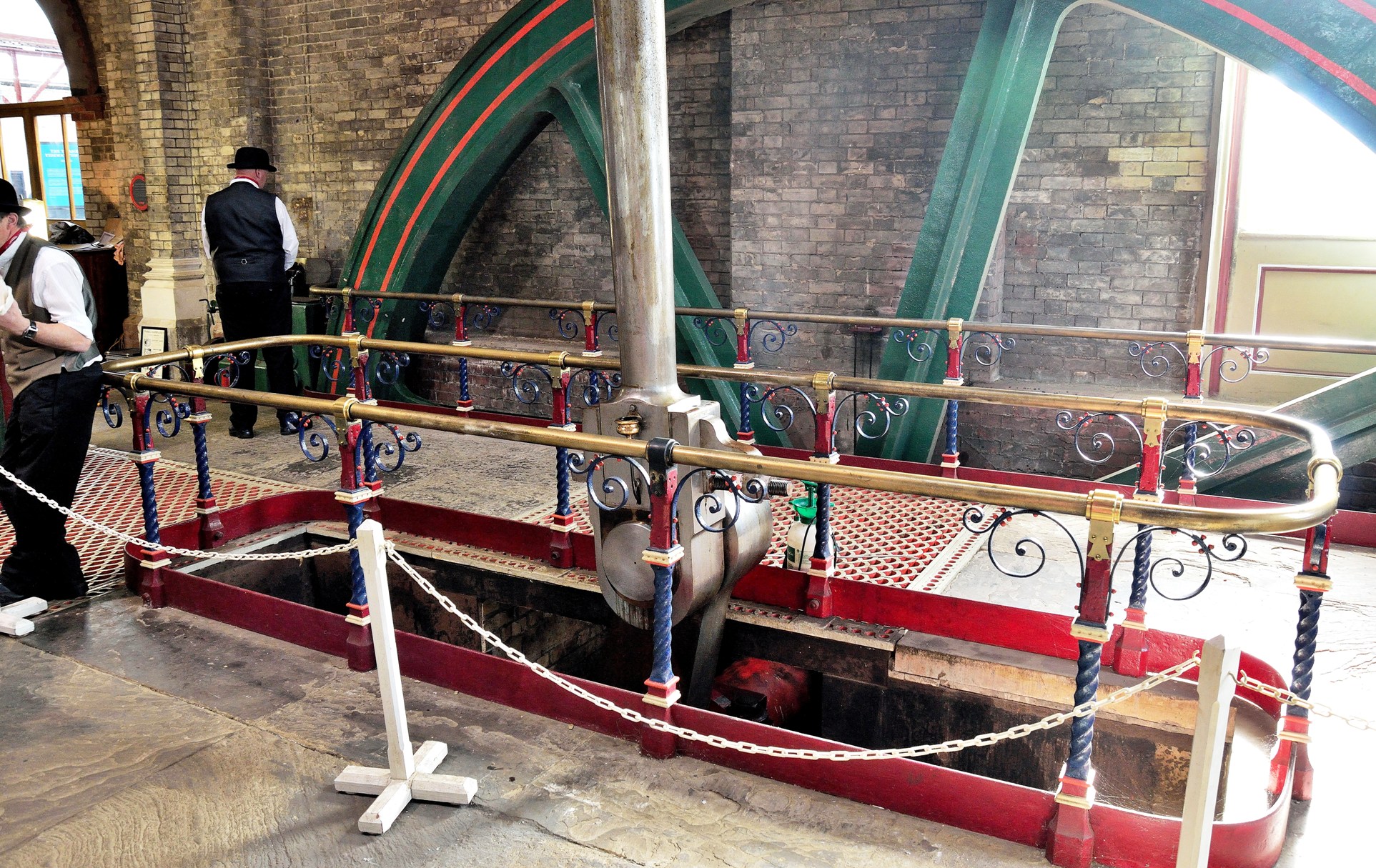
.. the crank and wheel which simply maintain a steady impetus.

The governor (or regulator) is attached to the engine so that it spins. The faster it spins the more the weights are forced outward by centrifugal force. As the weights are forced outward they depress the central plunger which reduces the flow of steam and slows the engine achieving a regulated speed.

And, outside on a wet day..

I hope you enjoyed your visit.
Tower Bridge

North Approach to Tower Bridge
London’s Tower Bridge ⇒ was built and ready for use by 1894. The centre section still opens to allow tall vessels to pass. The bridge lift schedule ⇒.
A little history:-
1912 – during an emergency, Frank McClean had to fly between the bascules (lifting sections) and the high-level walkways in his Short biplane, to avoid an accident.
1952 – a London bus driven by Albert Gunter had to leap from one bascule to the other when the bridge began to rise with the number 78 bus still on it. – Harry Potter would have been proud.
The bridge is next to The Tower of London ⇐ and both are very close to Tower Hill Underground rail station.
Entrance to the bridge interior is from the either the north or south tower. Entrance from the north tower is easier because it means that one goes down the only section of stairs. I do prefer stairs that go downward. 🙂
Do keep your ticket for later entrance to the old engine rooms.
At the base of the north tower there is a lift which leads to a small exhibition/film area.

Then to the two walkways. Each walkway has a section of glass floor..
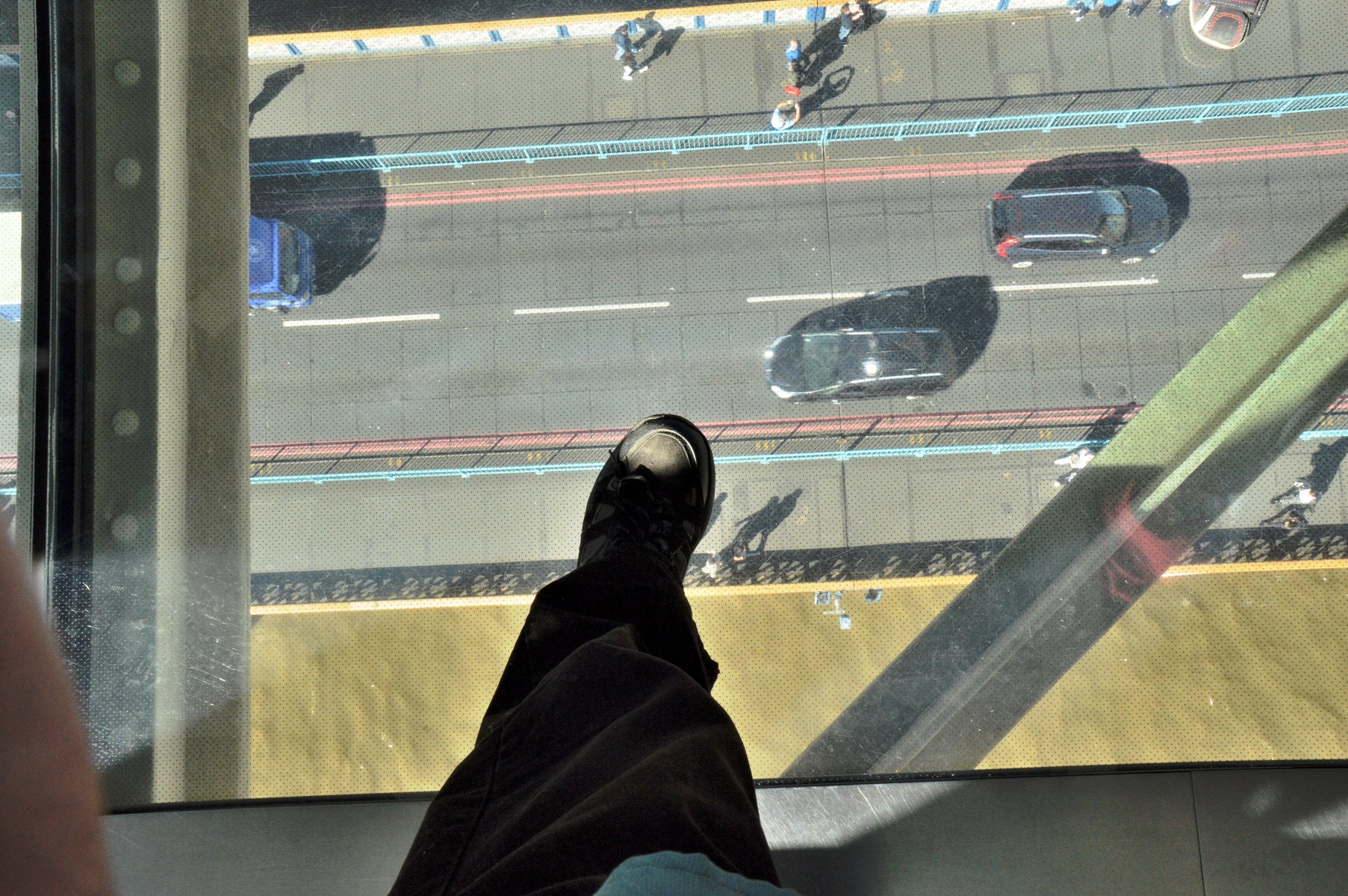
One small step for man.
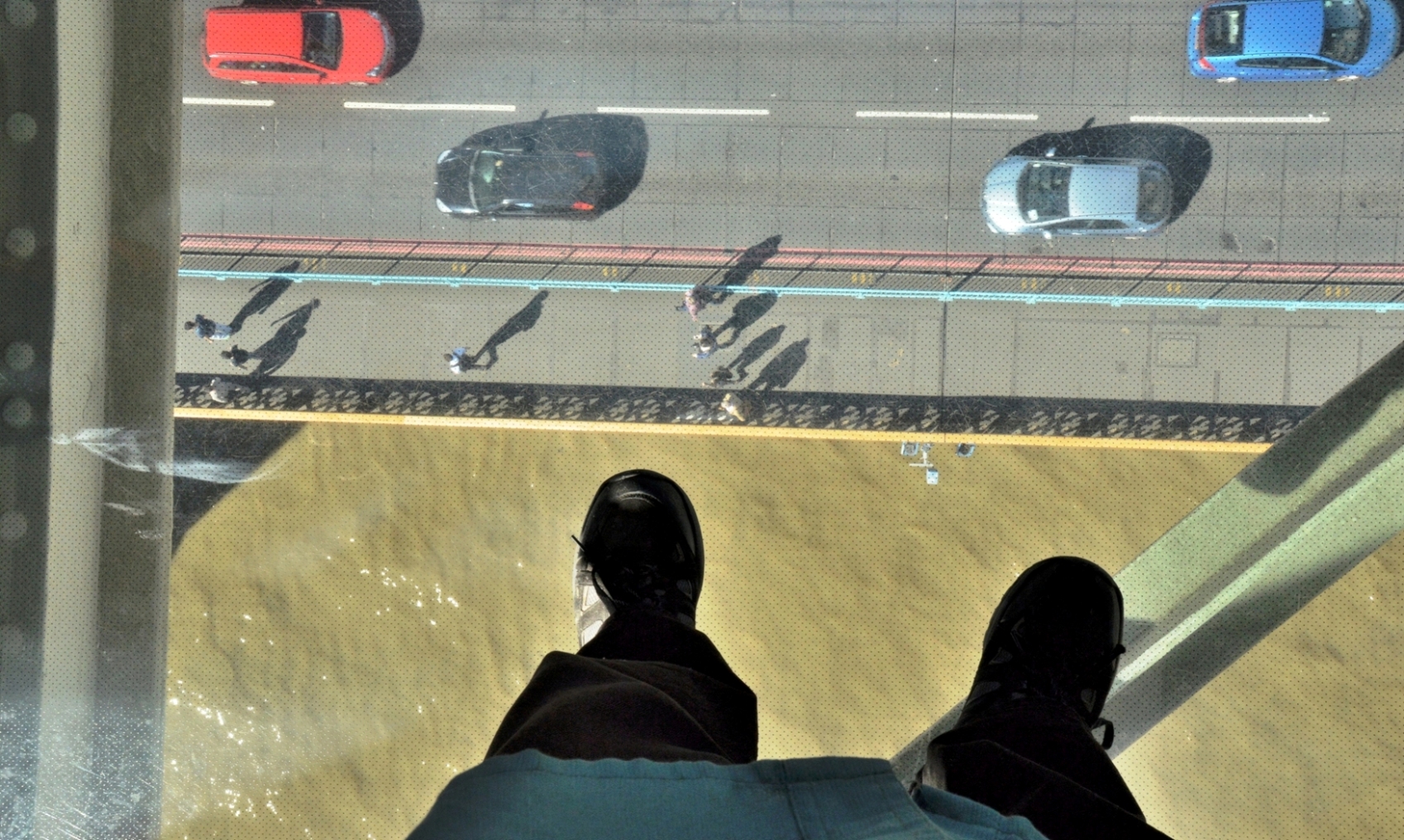
One giant leap ~ these boots need a clean.
Younger feet seemed to have less apprehension doing this. Perhaps because when I was young glass was more fragile.

View to the East and Canary Wharf
.

View to the West including HMS Belfast ⇒
.

At the top of the South Tower and then down the stairs to the next lift.
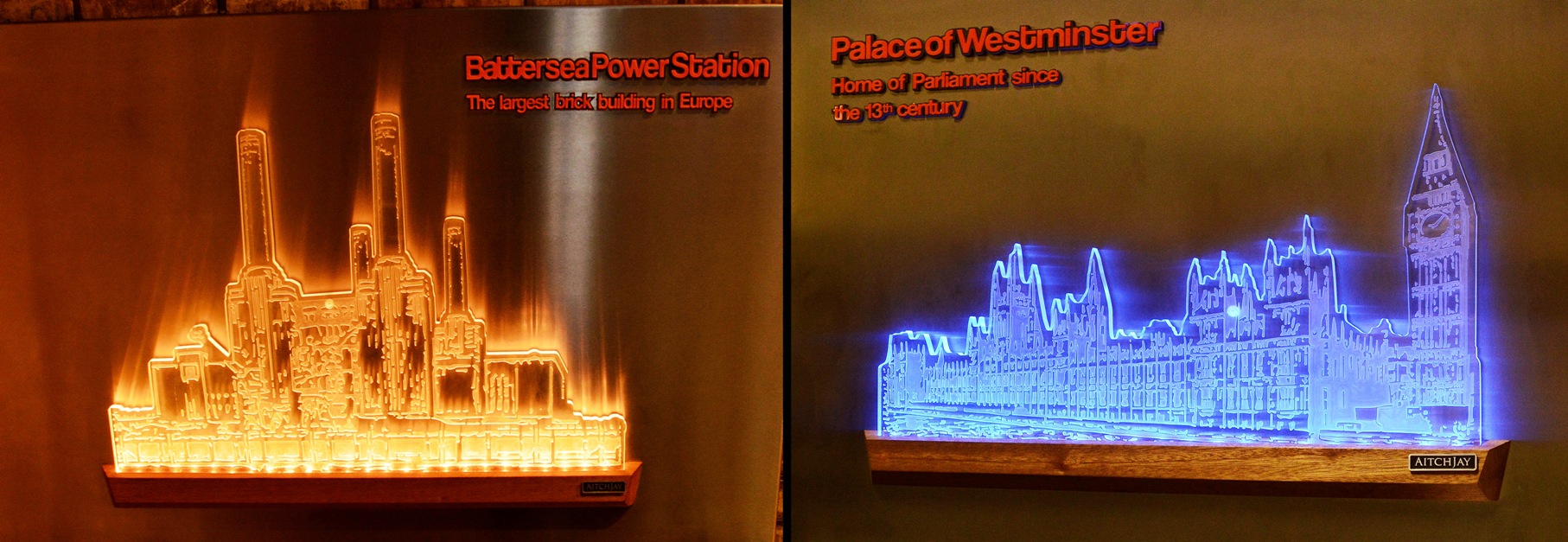
Then out of the South Tower.

. . and follow the blue line on the pavement to the old engine rooms.

.

Coal fired steam was used to drive an hydraulic pressure pump.
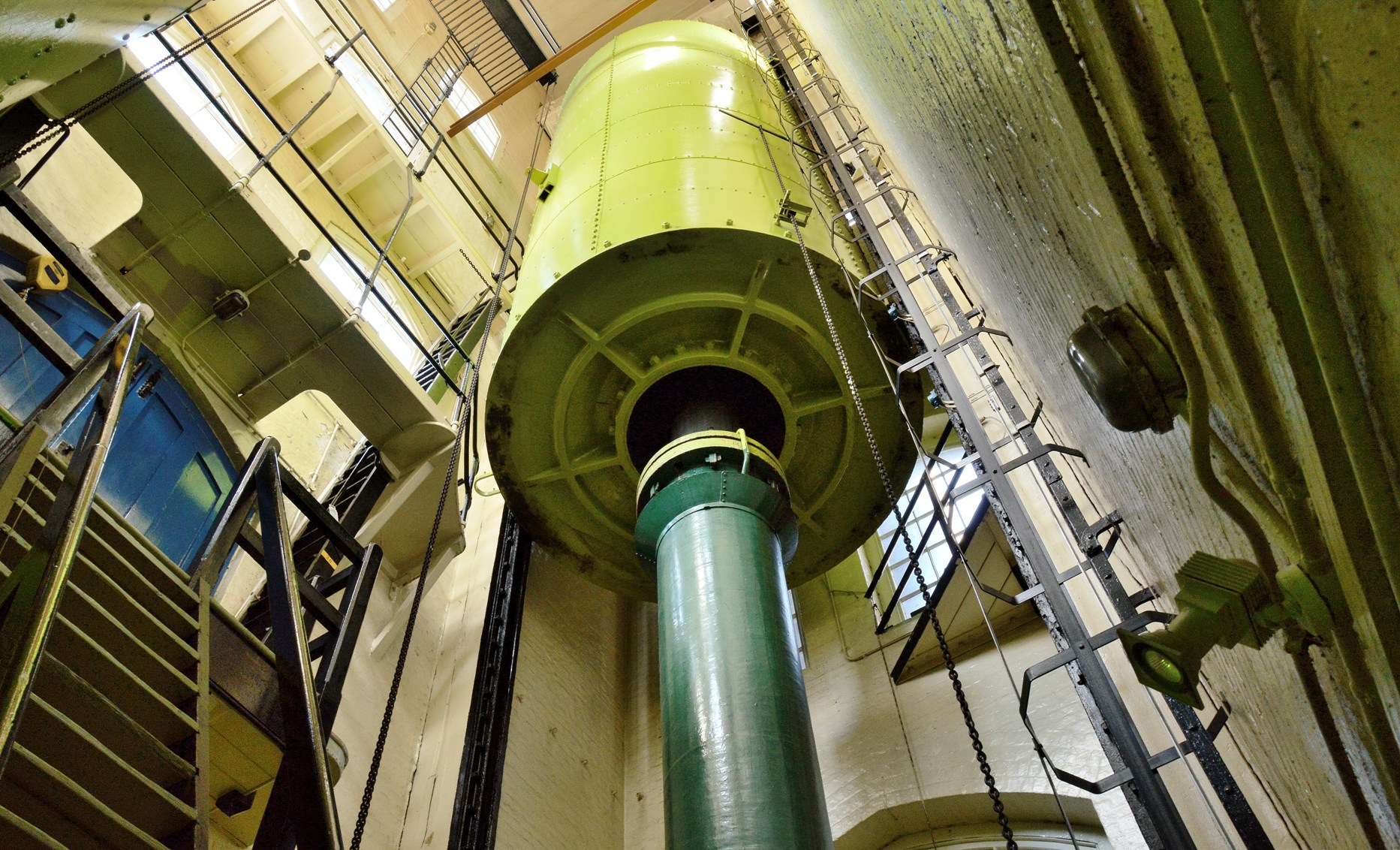
Accumulators
Pressure in the system was accumulated under weights.

These are the engines which pumped water under the accumulators.

.

When there was sufficient accumulated water pressure it was used to power the bascules (central raising section) drive engines. Since 1974 an electrical driven hydraulic system has been used. Tours ⇒ of the less accessible interior are available.
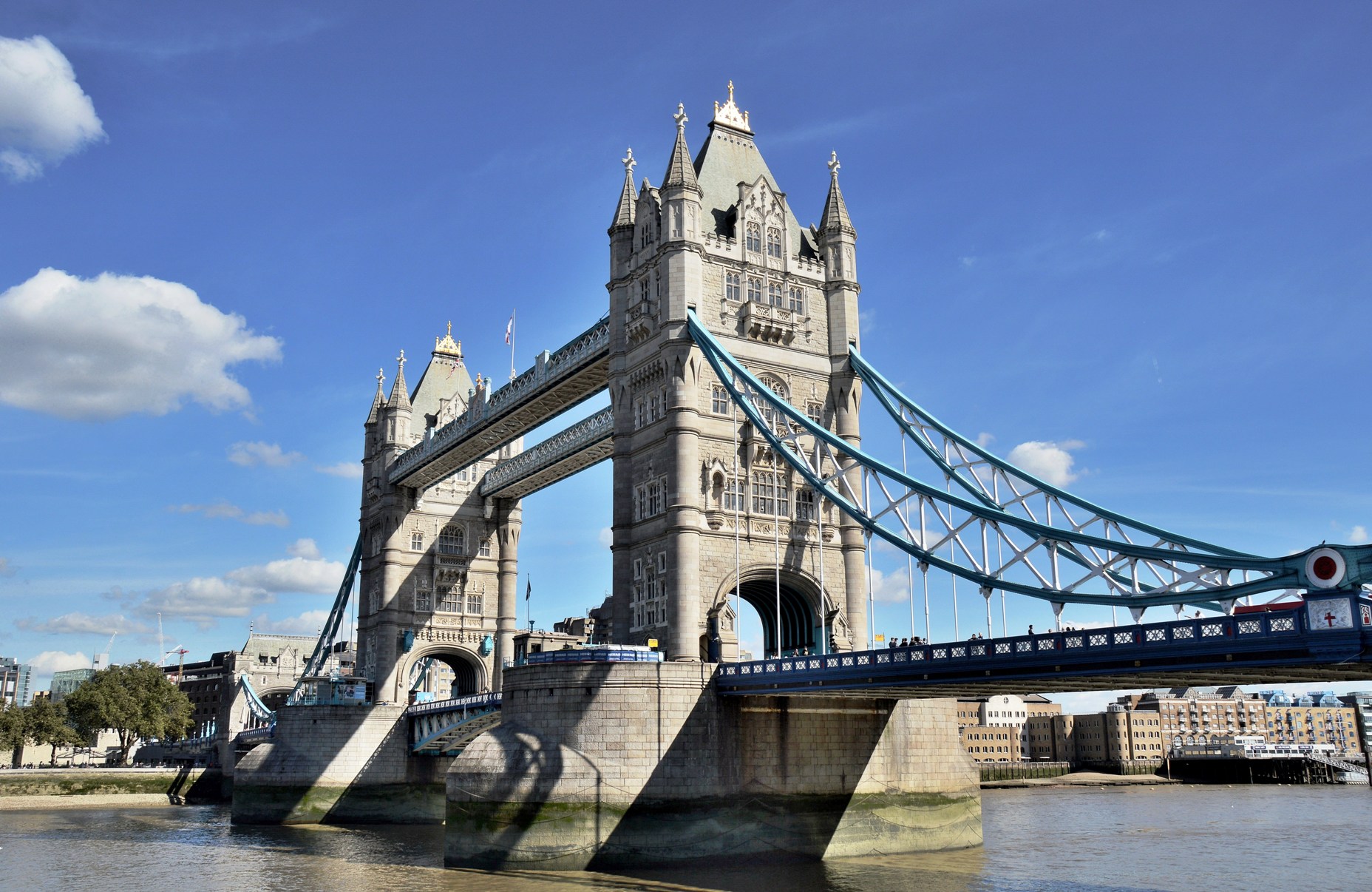
Now on the South Bank there is access to HMS Belfast, a number of eateries and the extensive South Bank attractions ⇐ .
Greenwich Royal Observatory
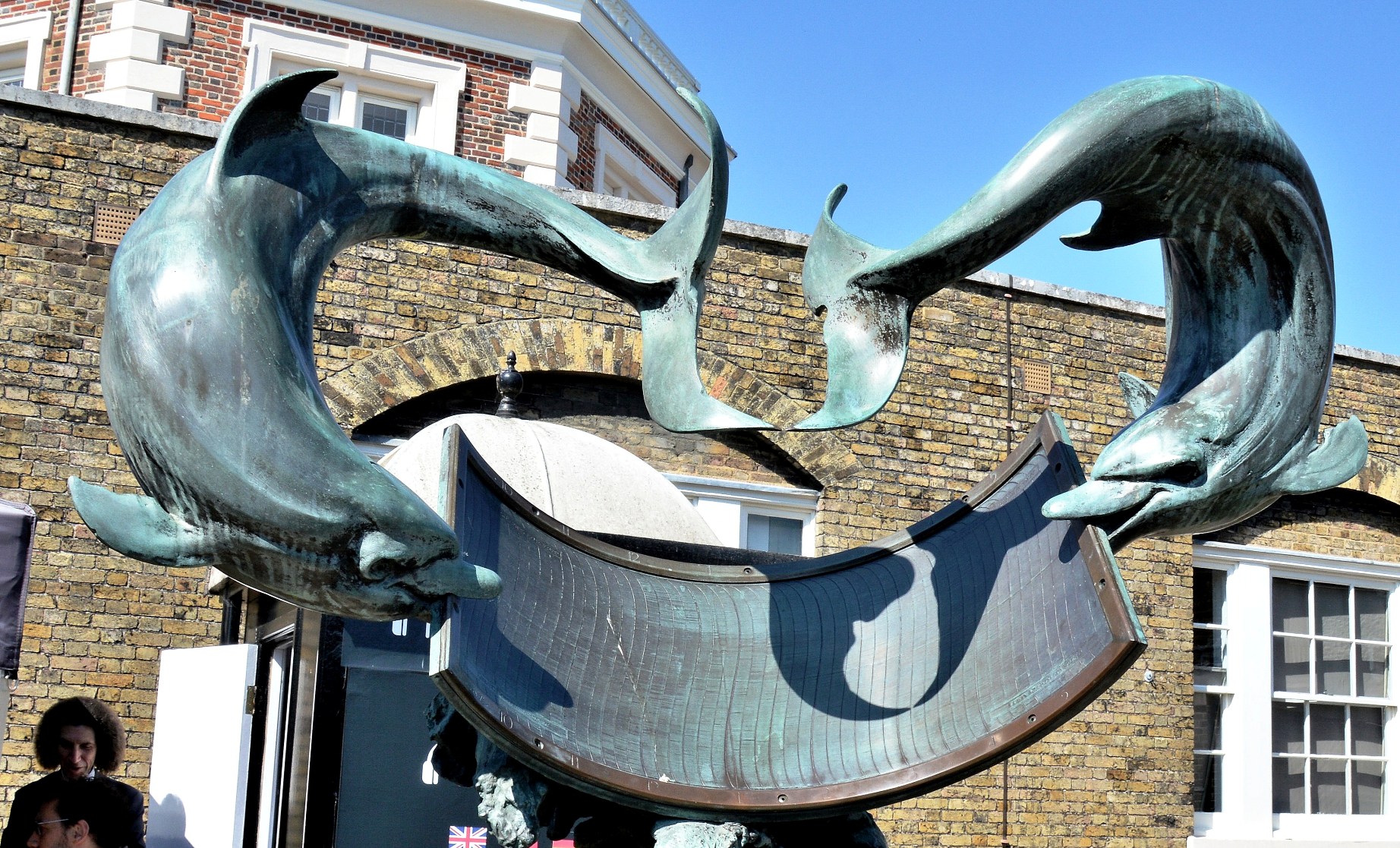
The Greenwich Royal Observatory includes Flamsteed House and the Harrison Timekeepers ⇐. In the midst is a small garden with this very impressive Dolphin Sun Dial.
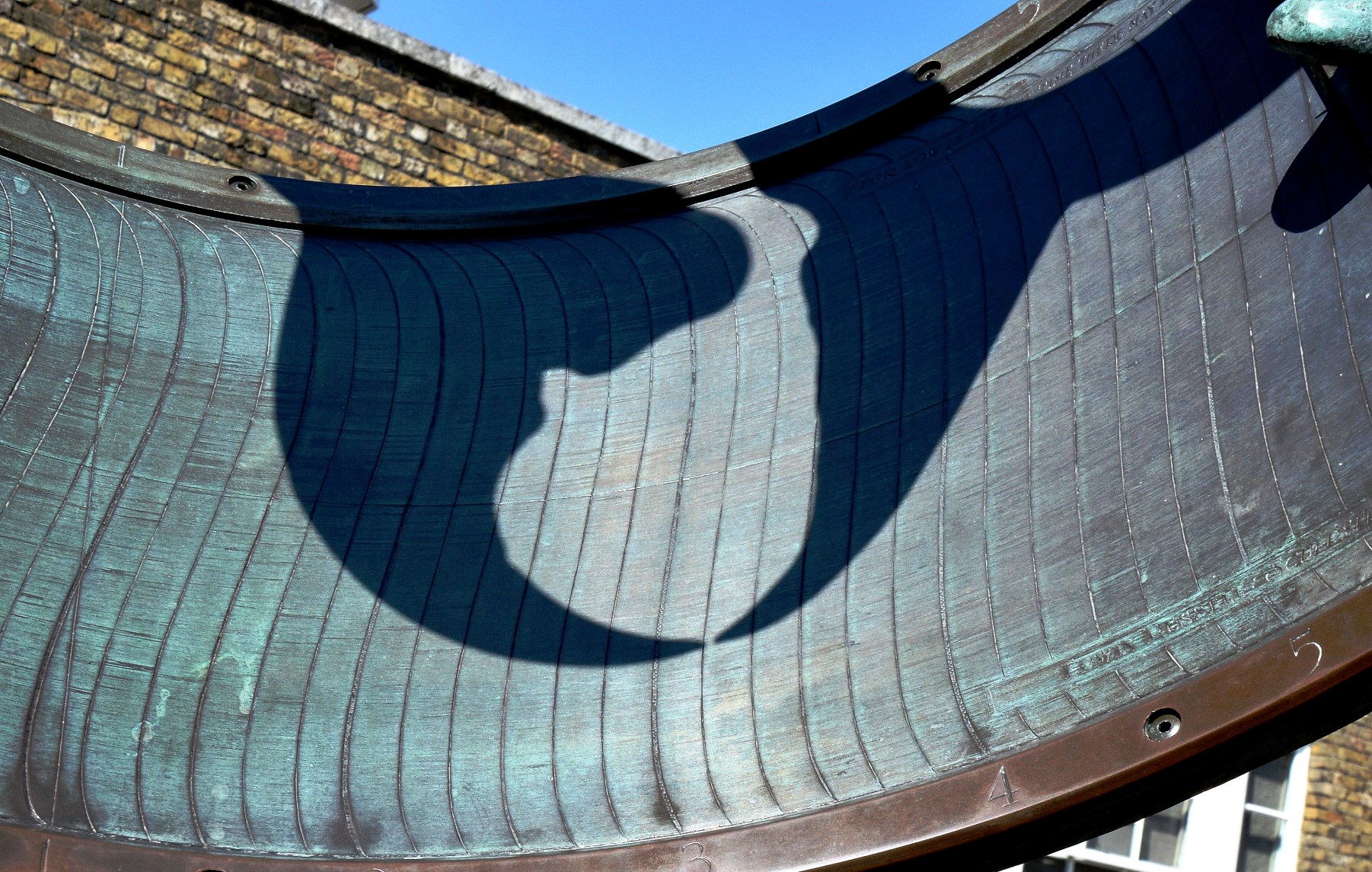
The sun-dial is self-adjusting. As the height of the sun changes with the time of the year, the shadow position changes its height and so indicates a corrected time..

The Greenwich Royal Observatory and Flamsteed House.

Inside the onion dome is the largest refracting telescope in the UK. First used in 1893, it remains one of the largest refracting telescopes ever built. Entry is free except the night sky observation evening. For more and to find out about night sky observation evenings please click here ⇒ .
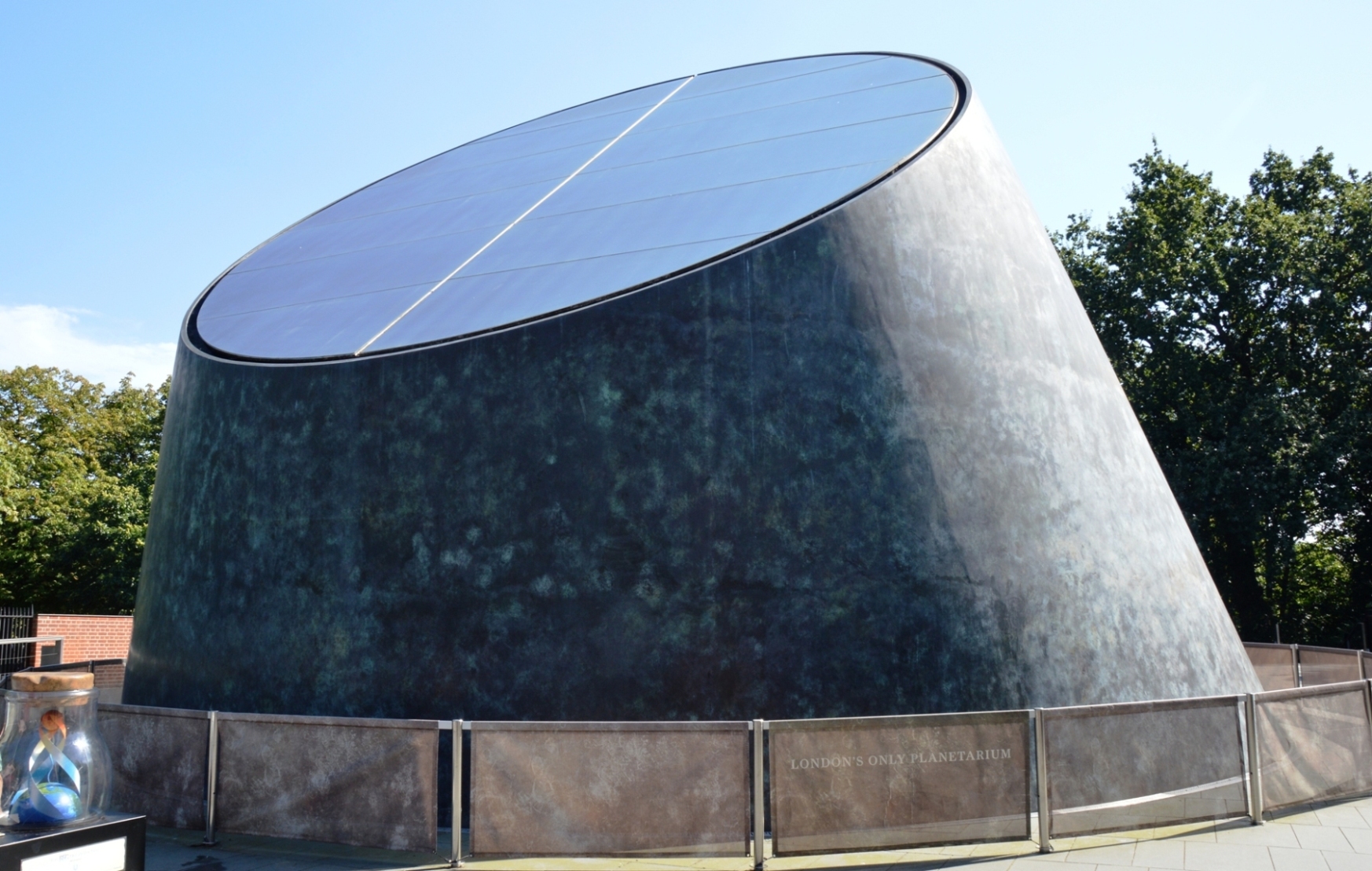
The Planetarium ⇒for which there is a charge.

The Astronomy Center ⇒ is mostly educational and is free to enter.

.
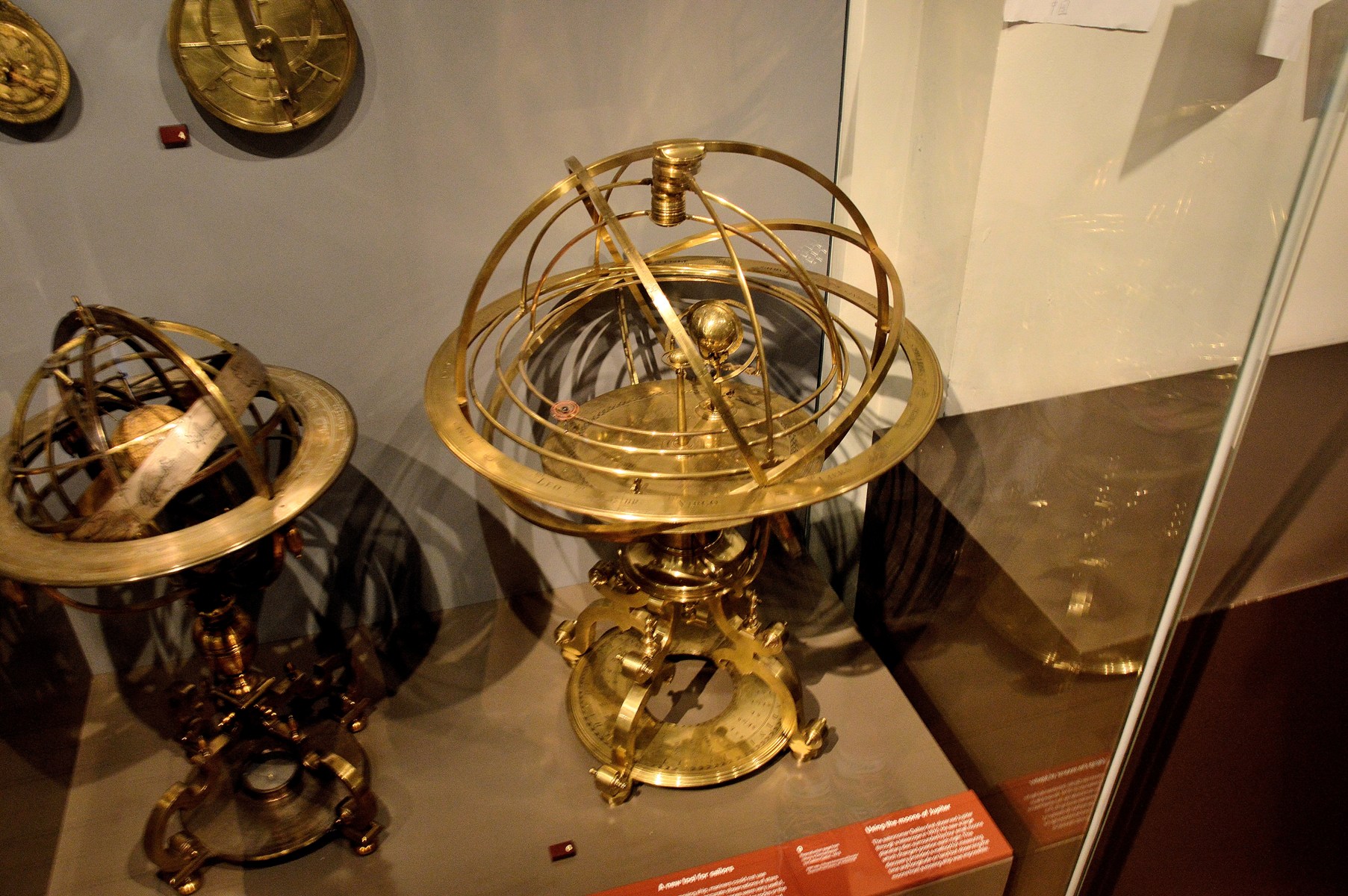
Astrolabes and Armillary Spheres were used to predict/exhibit planet and moon positions..

Visitors to the Astronomy Center can touch part of the Gibeon Meteorite ⇒. At 4.5 billion years old it is the oldest thing that a mere earthling might touch.

An early spectroscope. Spectroscopy ⇒.
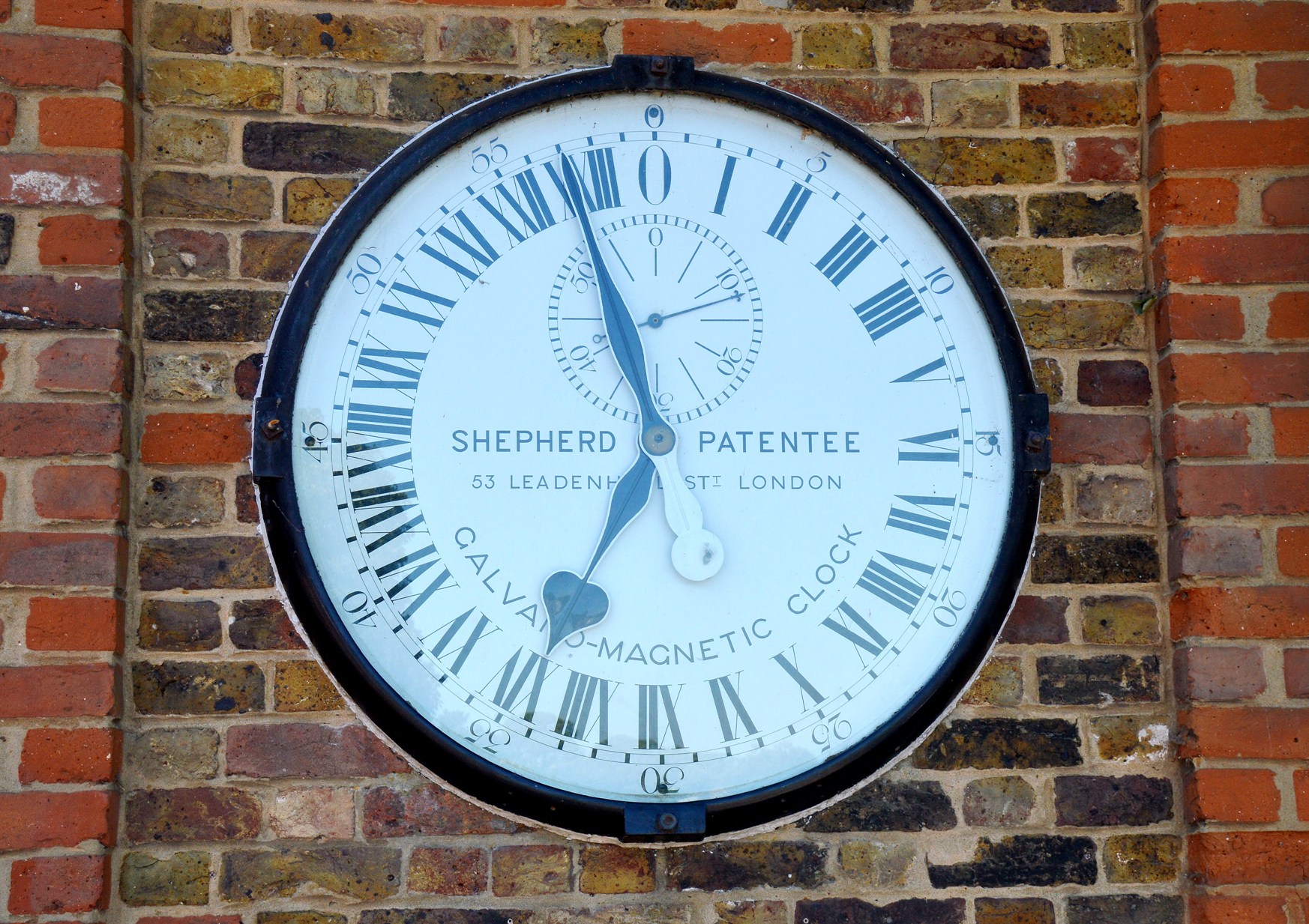
Outside the Meridian Courtyard ⇐ is a 24 hour electric clock. The use of roman numerals means that it is actually indicates 2 pm.
And, there is a lot more to see and do at Wonderful Greenwich⇐.
Flamsteed House, The Greenwich Meridian and The Harrison Timekeepers
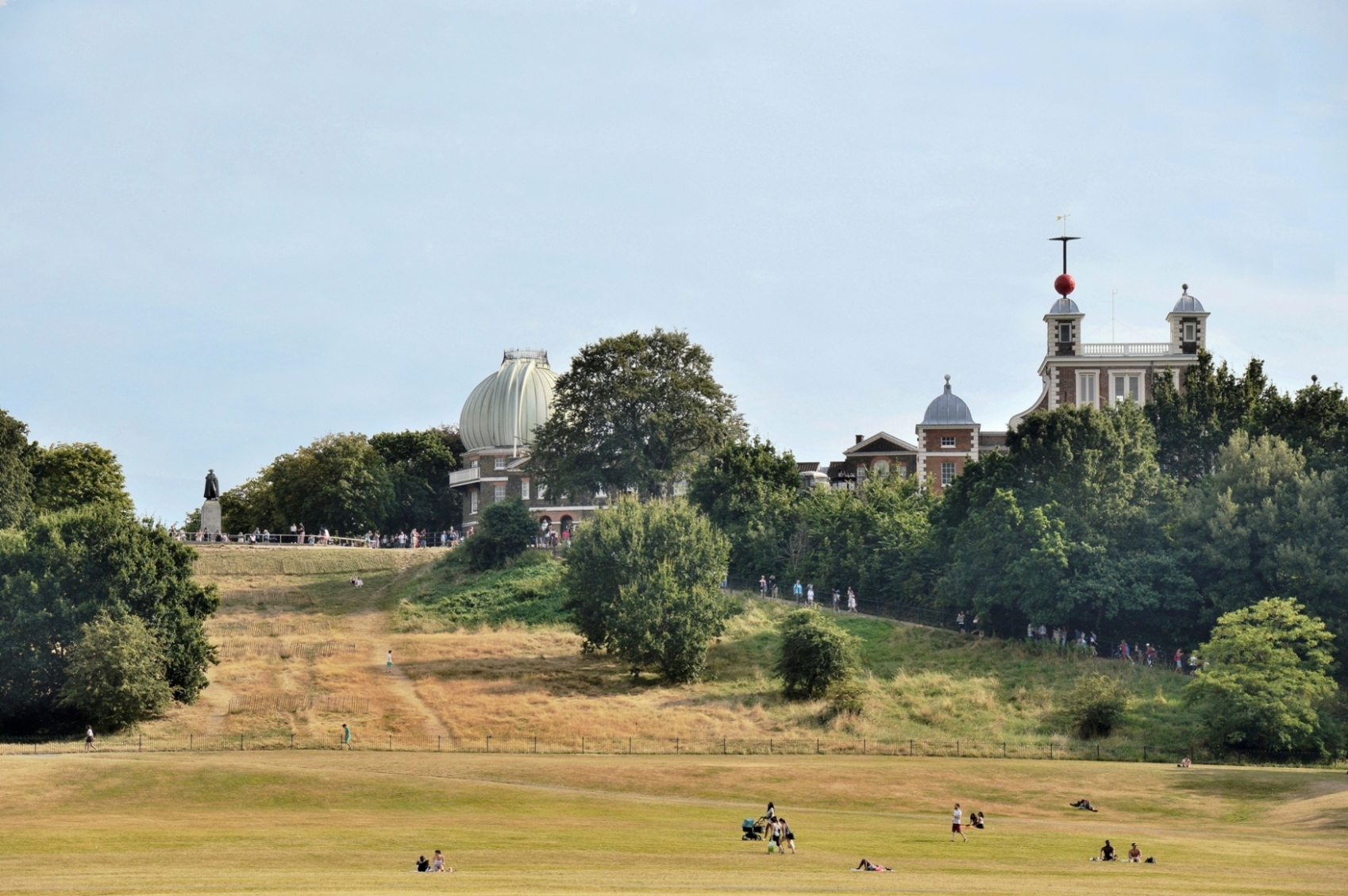
Statue of General Wolfe, the Great Equatorial Telescope, Flamsteed House and the Time Ball at Maritime Greenwich
All about Wonderful Greenwich and its many attractions is here ⇐.
One of the and most significant and greatest endeavours of human history has been the pursuit of navigational method at sea. It required the accurate measurement of astronomical observations and the development of a marine chronometer. The later being particularly difficult.
The Meridian Courtyard
The Meridian Courtyard is just in front of Flamsteed House, with the The Time Ball ⇒ on top. Here you can stand on the worlds east/west divide at 0 degrees longitude. Admission to Royal Observatory, Flamsteed House and the Meridian Courtyard is here ⇒.
However you can stand on the meridian for free where the red meridian line crosses an intersection in the paths in the park on the tourist map here ⇒.
The Meridian Line

There is usually a queue to stand astride the Meridian Line. This where the journey to east or west begins.
Inside Flamsteed House

Initially ones position, to the east or west of a starting point, could only be determined by dead-reckoning. That is, by measuring the distance traveled. At sea that meant measuring ones speed through the water. It was done by throwing a log overboard attached to a rope. The rope had knots at fixed intervals and the number of knots that were drawn out were counted for a fixed period of time using a sand glass. It was contrived so that one Knot was equal to one nautical mile per hour. A term that is still used today.
The dead reckoning method was woefully inadequate for long distances, no use for creating accurate charts and led to many disasters.
A better method required an accurate seagoing timekeeper. Such a timekeeper could be set to keep the time at a meridian. Greenwich was adopted and the time as Greenwich Mean Time (GMT). Wherever the ship was it would have the time at Greenwich. Therefore if at local noon the GMT timekeeper showed one o’clock the ship must be 1/24 of the way around the world. If the clock showed two o’clock then the ship must be 2/24 around the world etc and with every second that passed a smaller division. A fuller explanation and an extensive history of navigation can be found here ⇐.
After many years of effort John Harrison created the first maritime chronometer that would keep accurate time even on board a rolling ship.
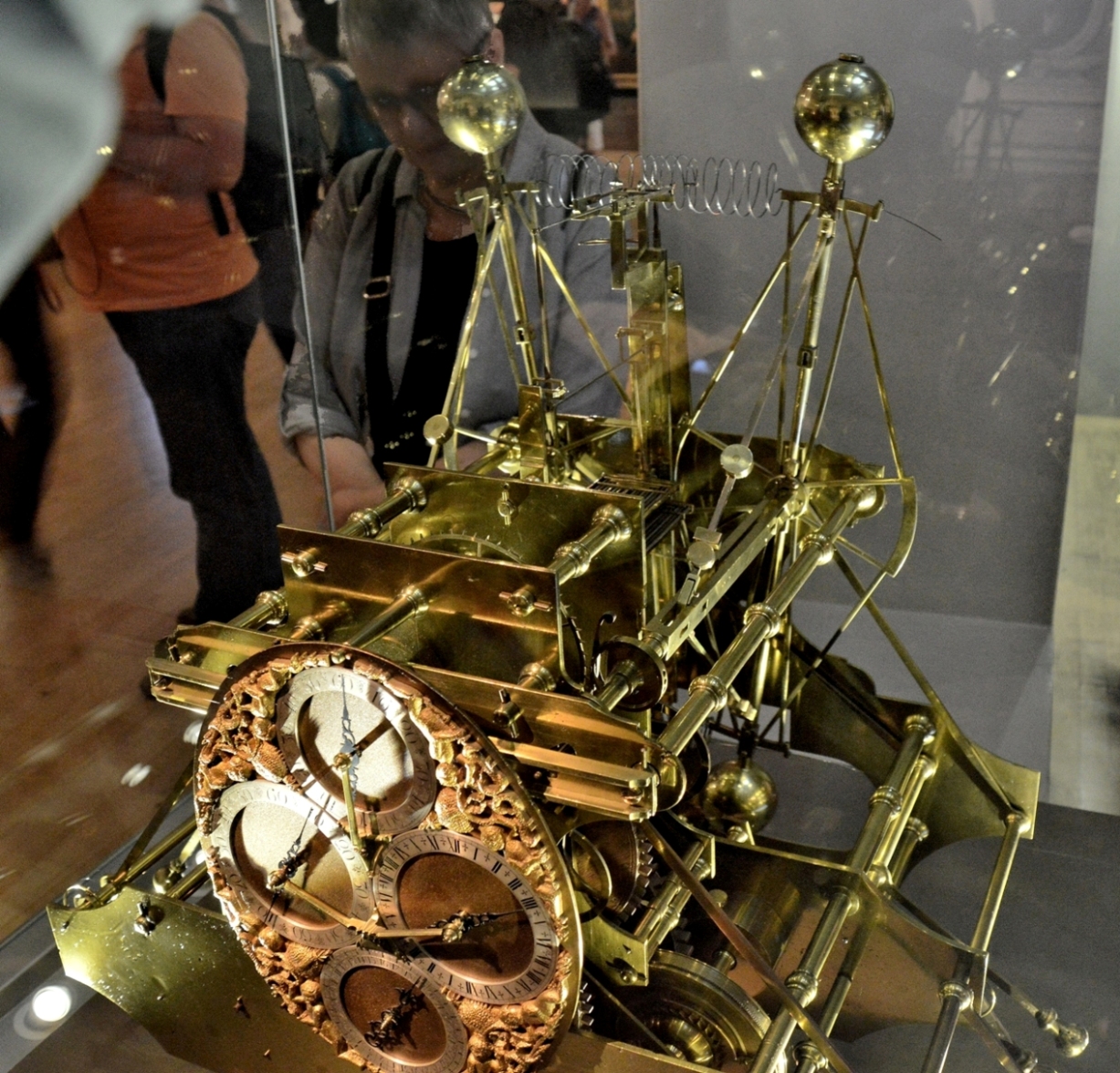
Harrison Timekeeper H1
The project began with H1 which was not accurate enough.

Harrison Timekeeper H2
Neither was H2.
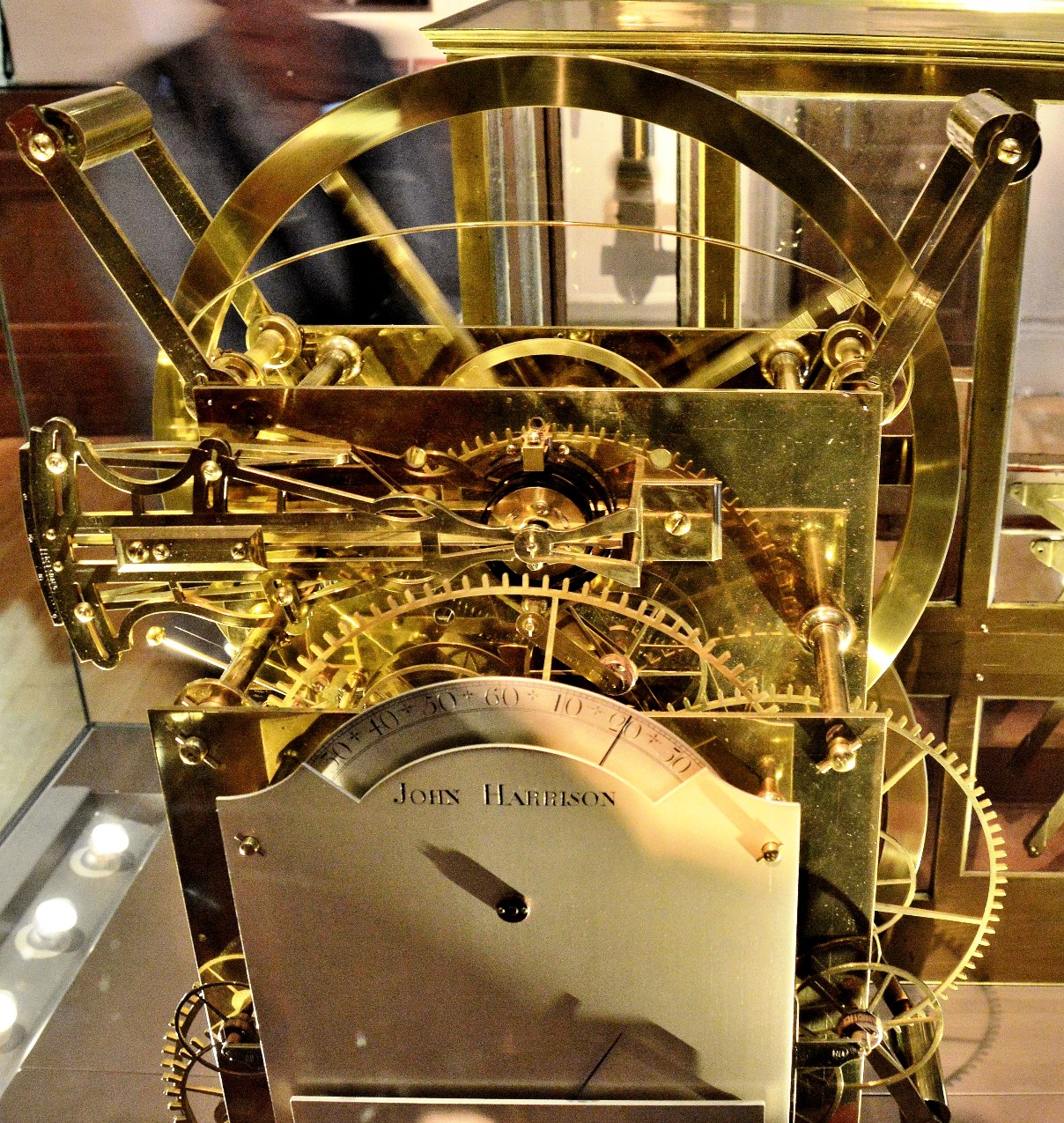
Harrison Timekeeper H3
Neither was H3.

Harrison Timekeeper H4
In 1759, after near 30 years of effort, Harrison created H4. This device had the advantage of advances in metallurgy, temperature compensation and the important realisation that a smaller/faster movement would be less effected by a ships movement.
There are more Antique Timepieces at the London Science Museum⇐.
And then:-

Marine Chronometer
Mechanical Marine Chronometers can be as accurate as 5 secs gain or loss in fifteen days.

Electric Clock
.

Early Quartz Clock
The first quartz clock was created in 1927 and worked by counting the electrically induced vibration of a piece of quartz. By 1969 a miniature version could be worn on ones wrist. Quartz chronometers can be as accurate as 0.7 seconds gain of or loss in 15 days.
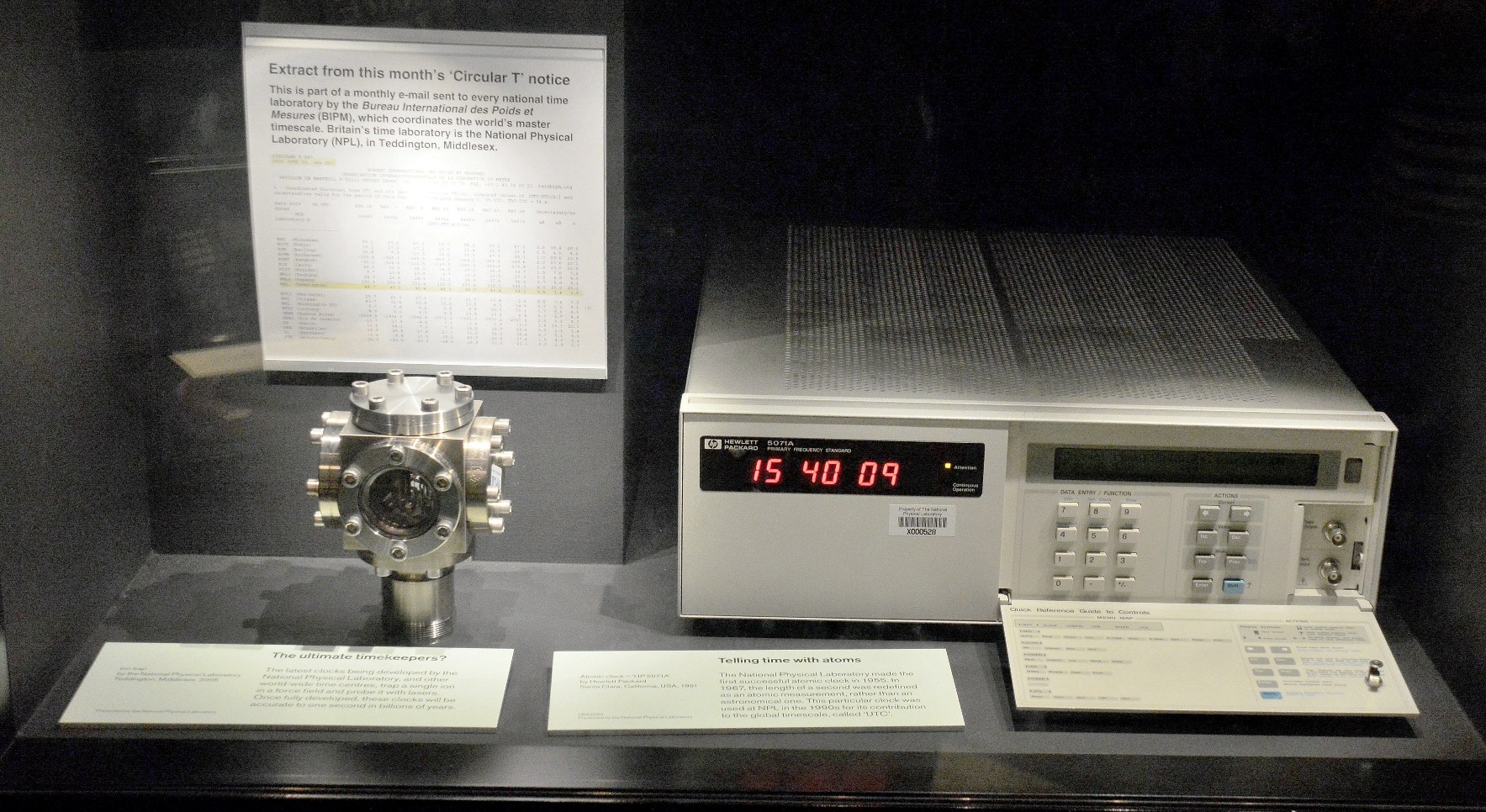
Atomic Clock
A cesium (atomic) clock operates by exposing cesium atoms to microwaves until they vibrate at one of their resonant frequencies. They are accurate to within one second in 1,400,000 years.
The next generation of atomic clocks will keep time to one second in 15 billion years. At last the perfect boiled egg.
Back to some of the artifacts in Flamsteed House.
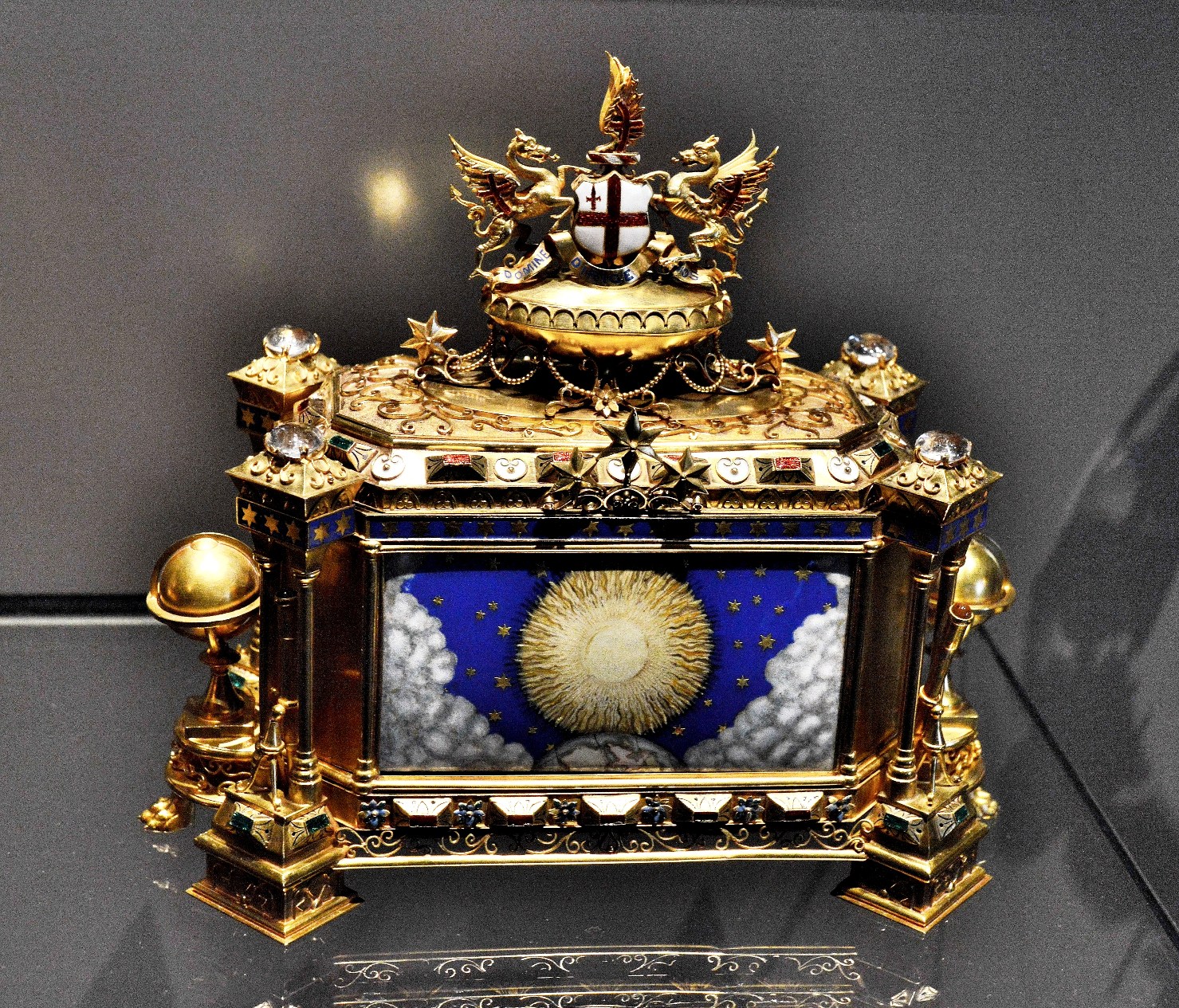
Freedom casket (contains the Freedom of London Scroll) presented to Sir George Biddell Airy (1801-92) Astronomer Royal, by the City of London in 1875
.
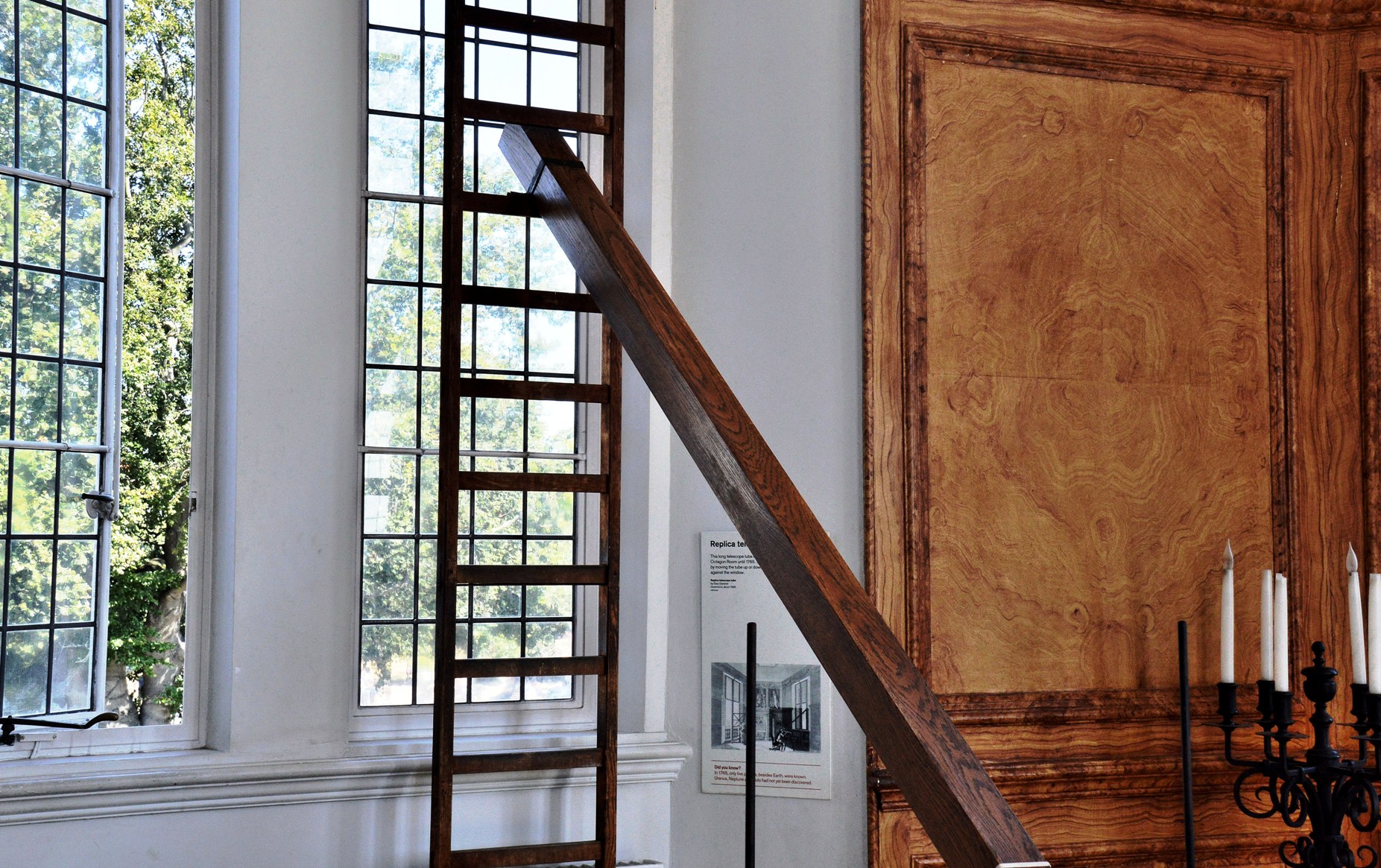
A Wooden Telescope
If you would like to know more about the development of navigation and its importance to our evolution it is here ⇐.
And, thank you for visiting Freed From Time (which isn’t as much of an anomaly as it sounds, probably 🙂 ).
Farmopolis

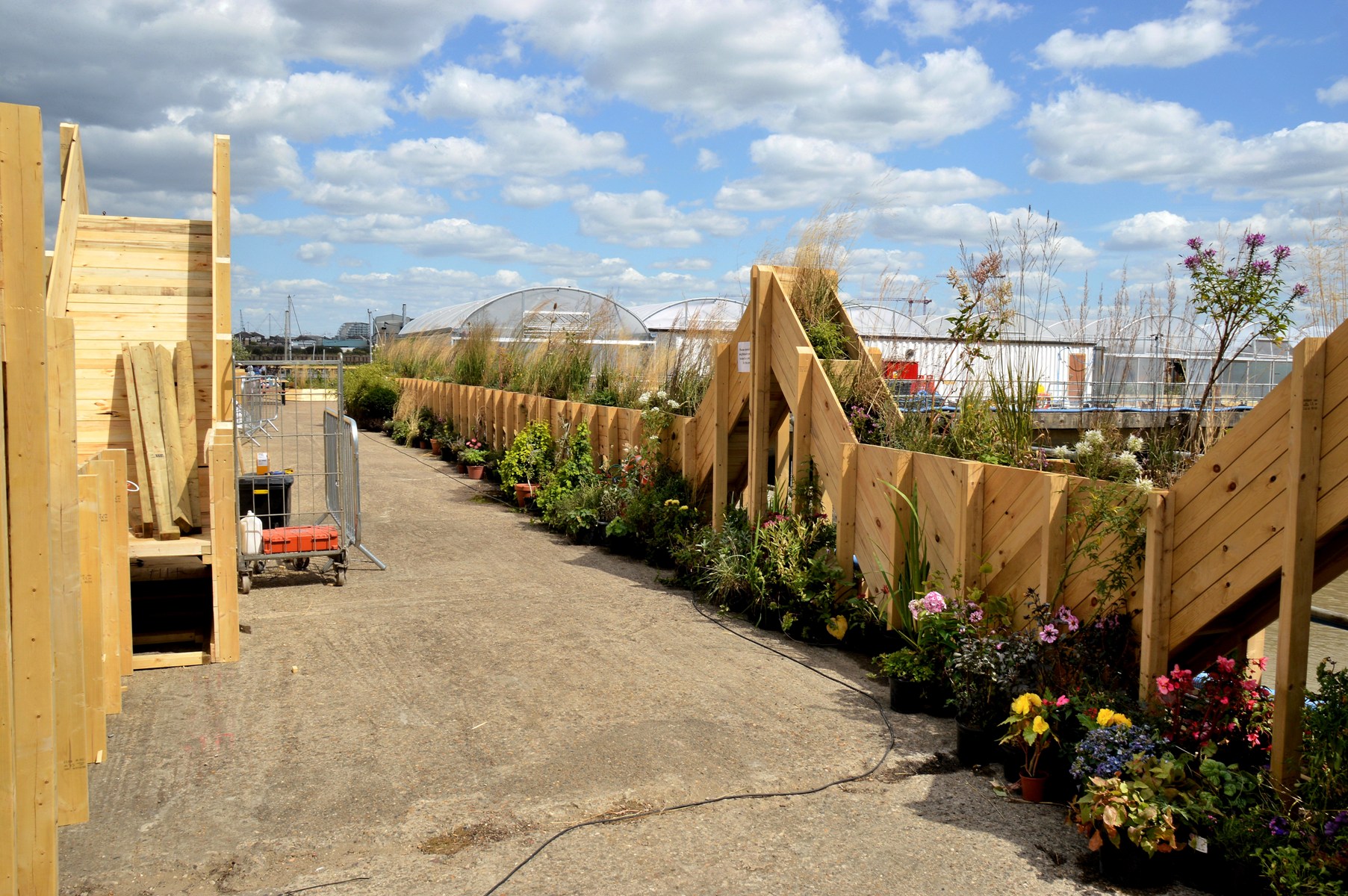
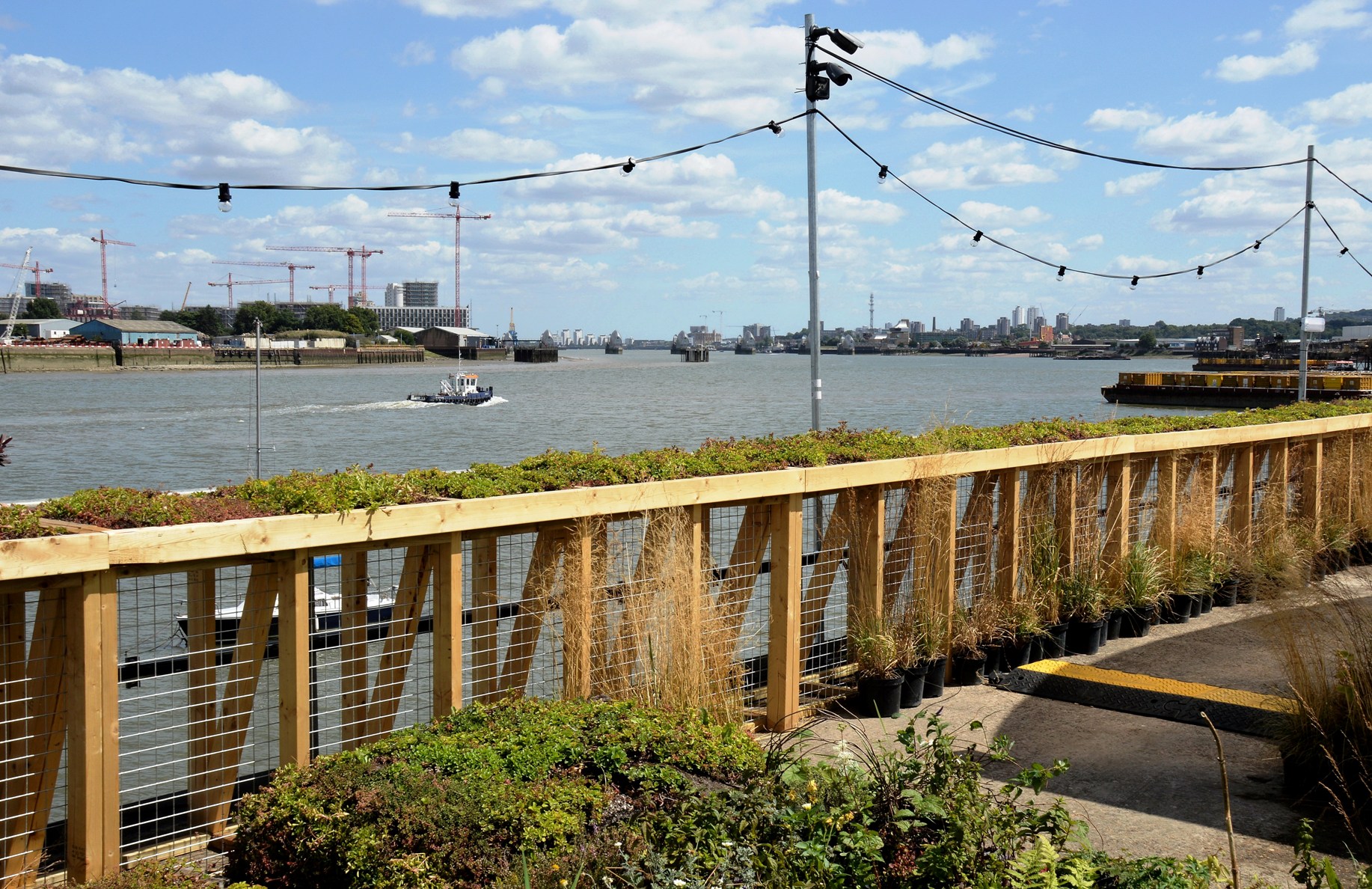
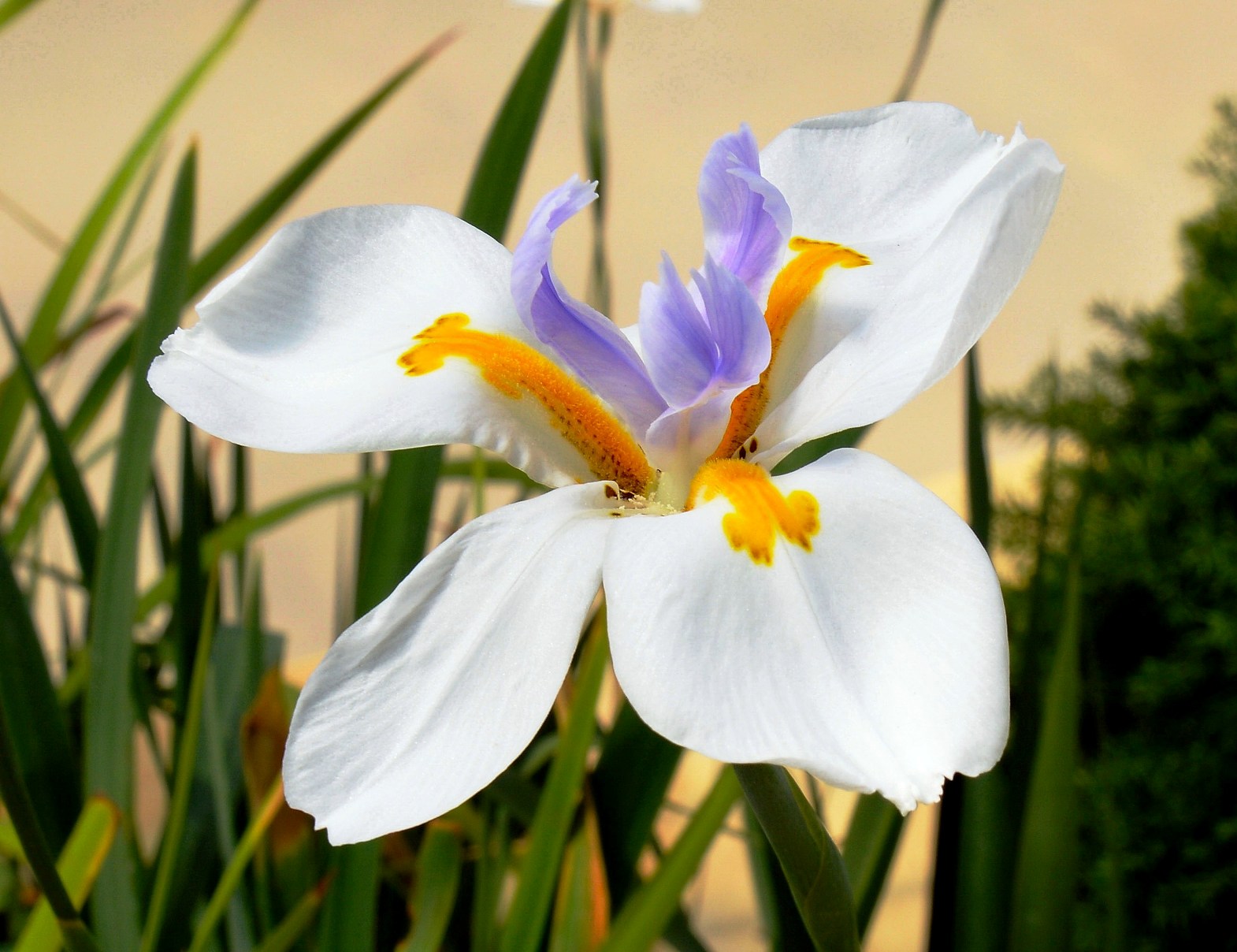
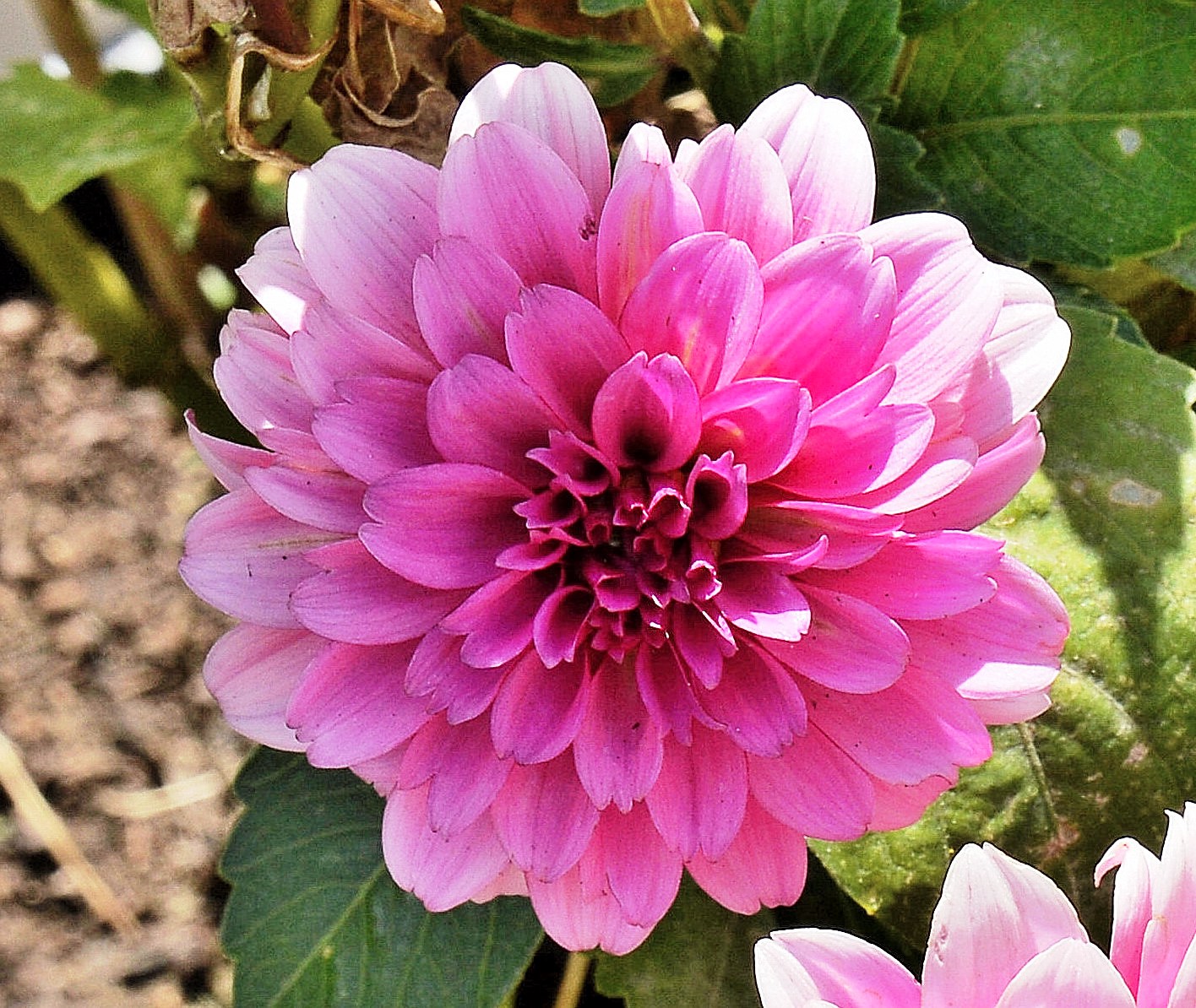
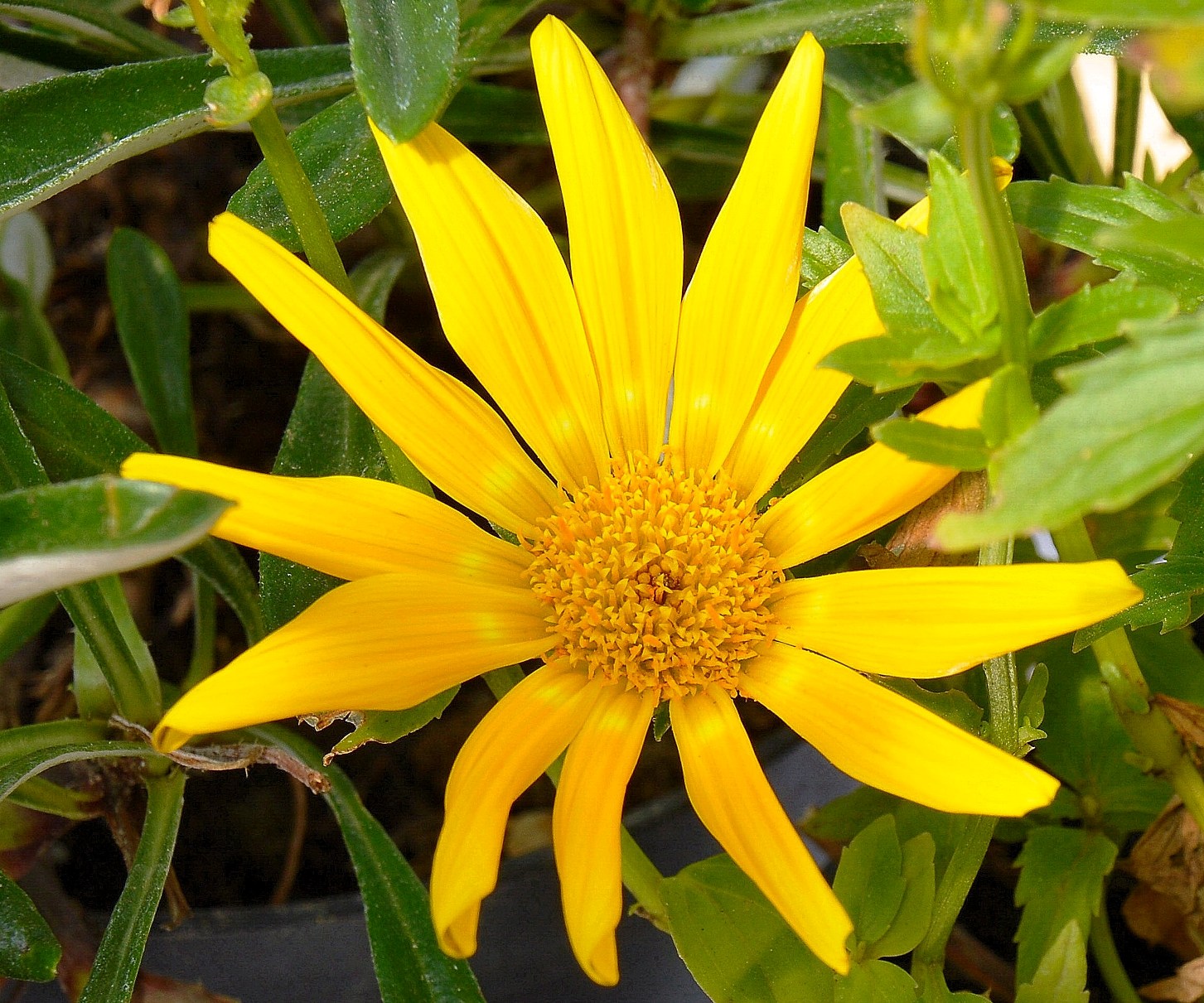
Farmopolis ⇒ is an ambitious project very near to the O2 arena on the Greenwich Peninsula. At present only a very small part has been built and is still a work in progress. It consists of a small café/restaurant with some indoor and outdoor seating and surrounded by plants rescued from the Chelsea Flower Show. These plantings should be complete by the end of August 2016.
Like many such venues I found the food and drink rather pricey and pretentious, but there are plenty of places nearby where a picnic can be enjoyed. There are events ⇒ at the site and the flowers are worth seeing.
Below is a view from the United Emirates Cable Car ⇐.

.
.
.

.
.

.

.
.

.

.

.
.

London Water and Steam Museum, Express Tavern and Kew

London Water and Steam Museum Garden
14 pics. Cities could not grow beyond a few tens of thousands and civilisation could not flourish without a plentiful supply of clean water. Otherwise epidemics of water-borne diseases such as cholera and typhoid would devastate the population. The development of filtration and pumping by steam engine was vital to progress.
The London Water and Steam Museum ⇒ (there is an entrance fee) explains the advances in water cleanliness and houses a number of steam-driven pumps, including some truly massive devices. On designated days some of the engines can be seen working.
The other essential was the disposal of waste and an ornate example of this can be found in east London at the renovated Crossness Pumping Station ⇐.
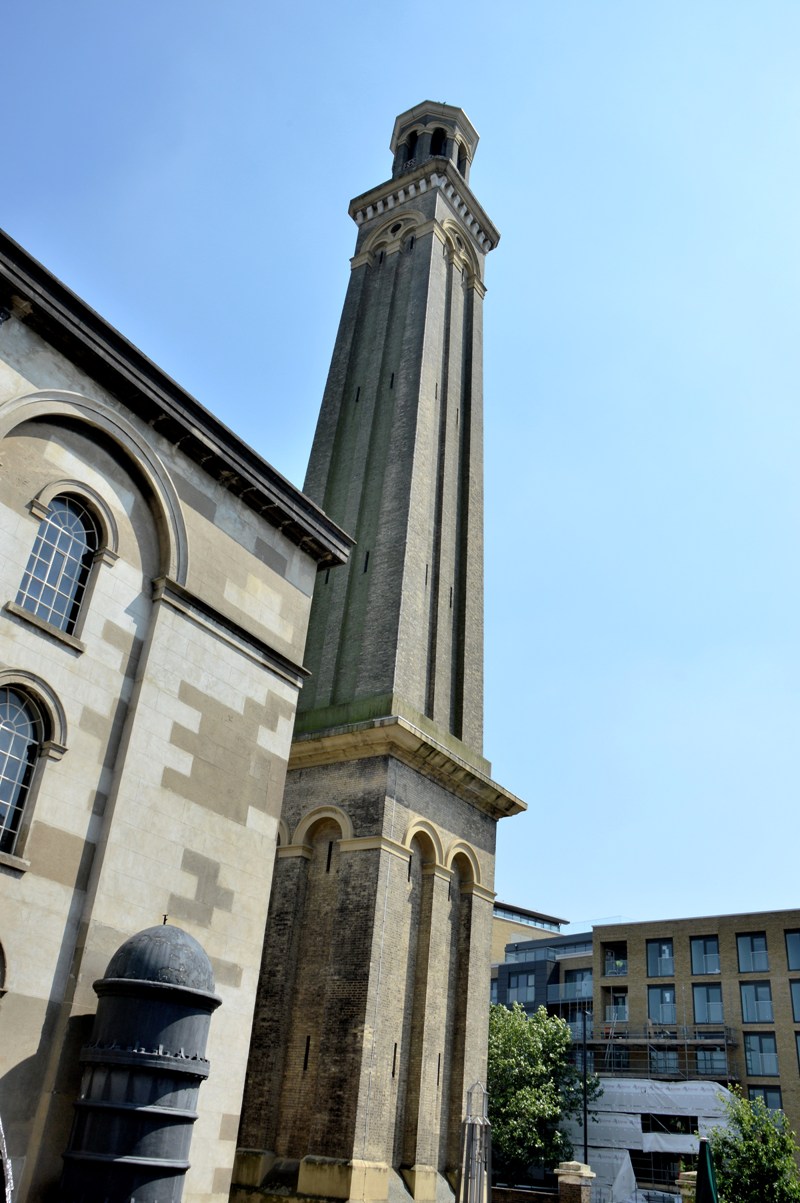
To get to the Water and Steam Museum: On Leaving Kew Bridge station, turn right, pass the very pleasant Express Tavern ⇒, and turn into Green Dragon Lane. The tall chimney is an easy landmark.
Alternatively Kew Gardens ⇐ which includes Kew Palace is just over the nearby bridge..
There is more about our use of steam and the role of fossil fuels at the Science Museum ⇐.
.
.
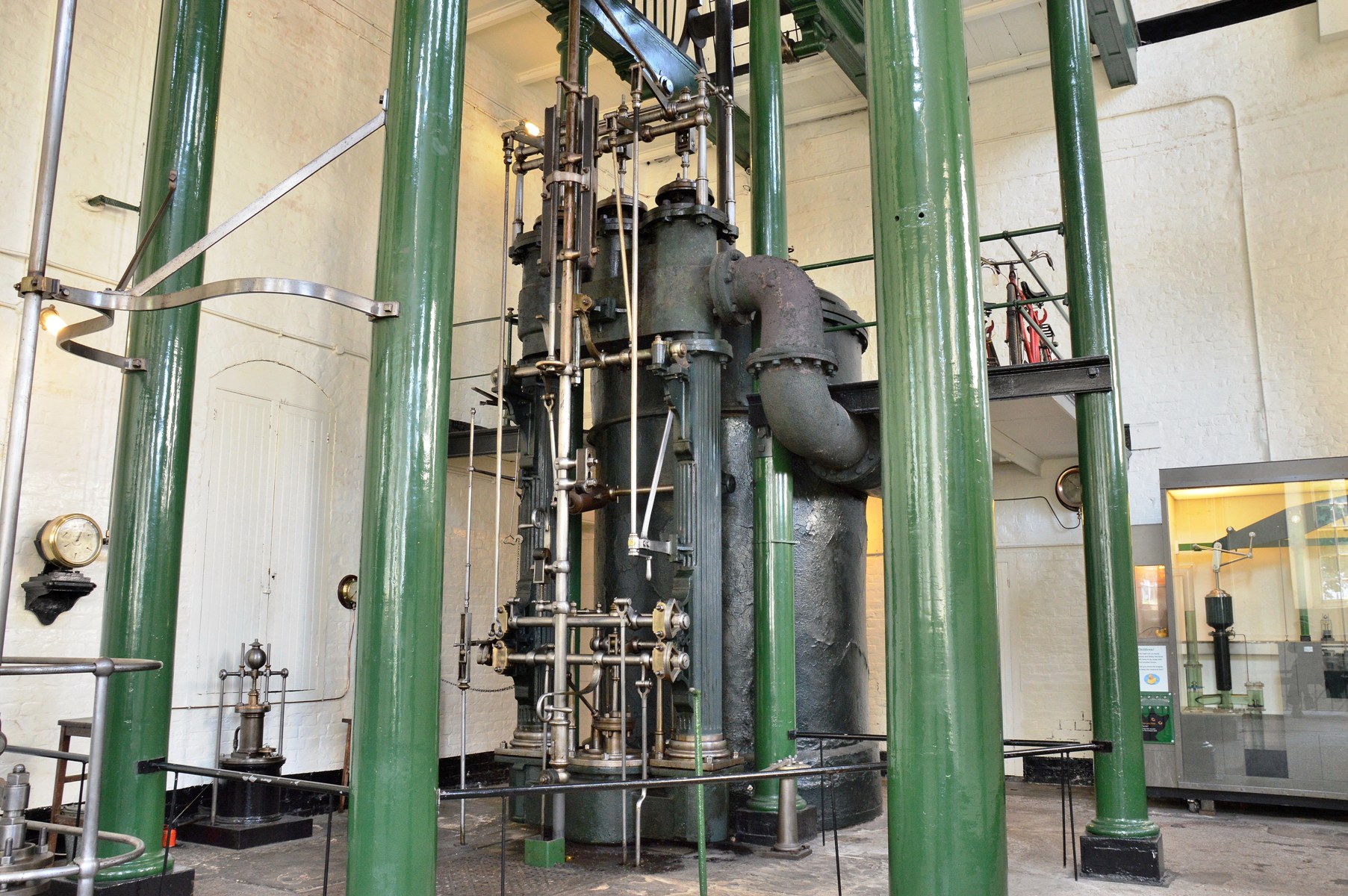
The above Boulton and Watt 64 inch (piston/cylinder diameter of 64 inches) has a beam weighing 15 tons and delivered 2.5 million gallons of water per day and was last used in 1944.

This is the 90 inch Cornish engine with a beam weighing 32 tons and delivered 6.4 million gallons of water per day. It was last used in 1943. The steam cylinder is the massive dark object at the far end. The nearer cylinder is the water pump.
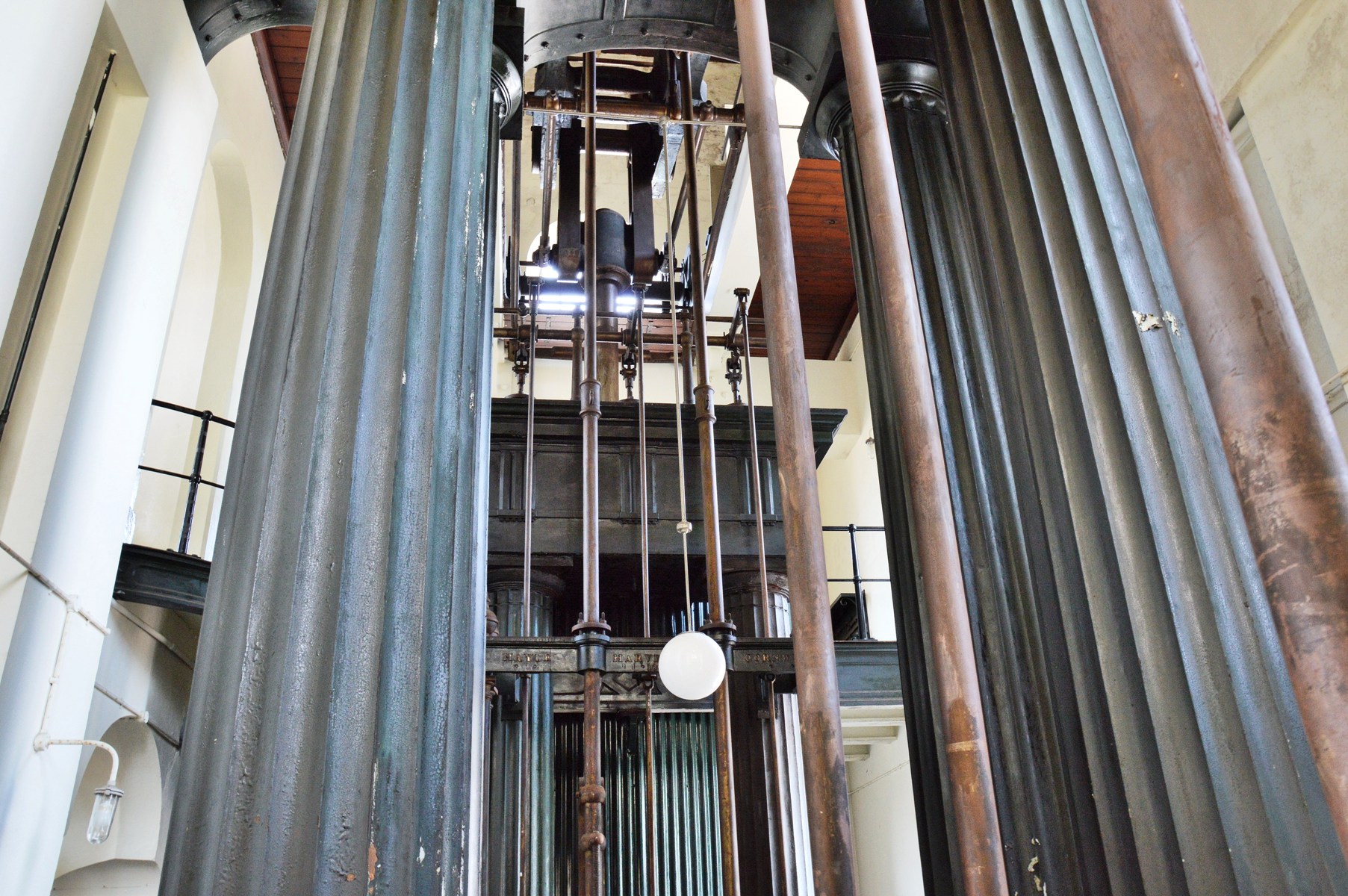
This monster is the 100 inch Cornish engine. The 100 inch (8 foot and 4 inches wide) steam cylinder is the dark object the distance. The beam weighs a staggering 54 tons and it once delivered 7.5 million gallons of water per day. Built in 1869 it remained in service until 1958.

More :-

.
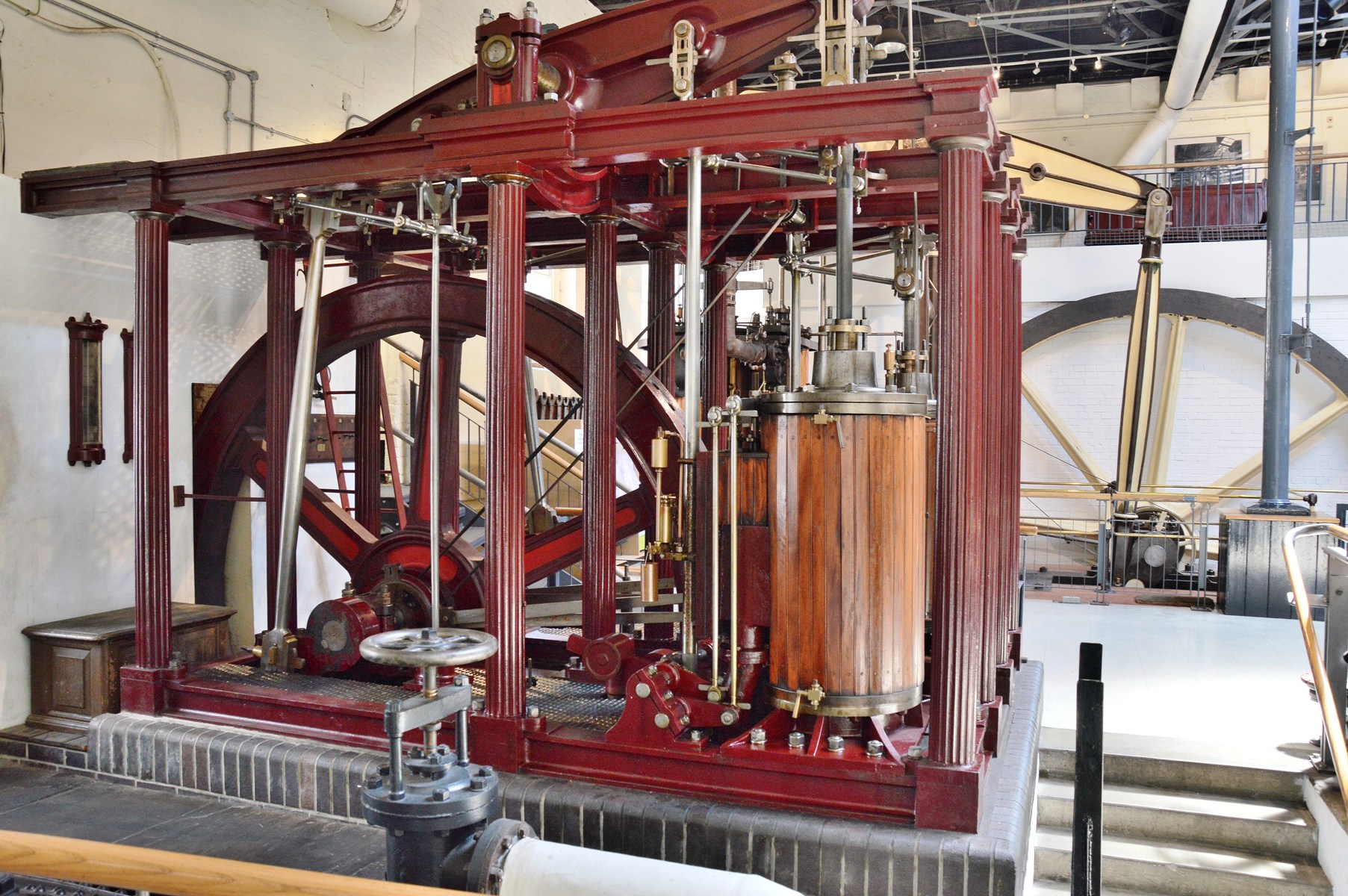
.
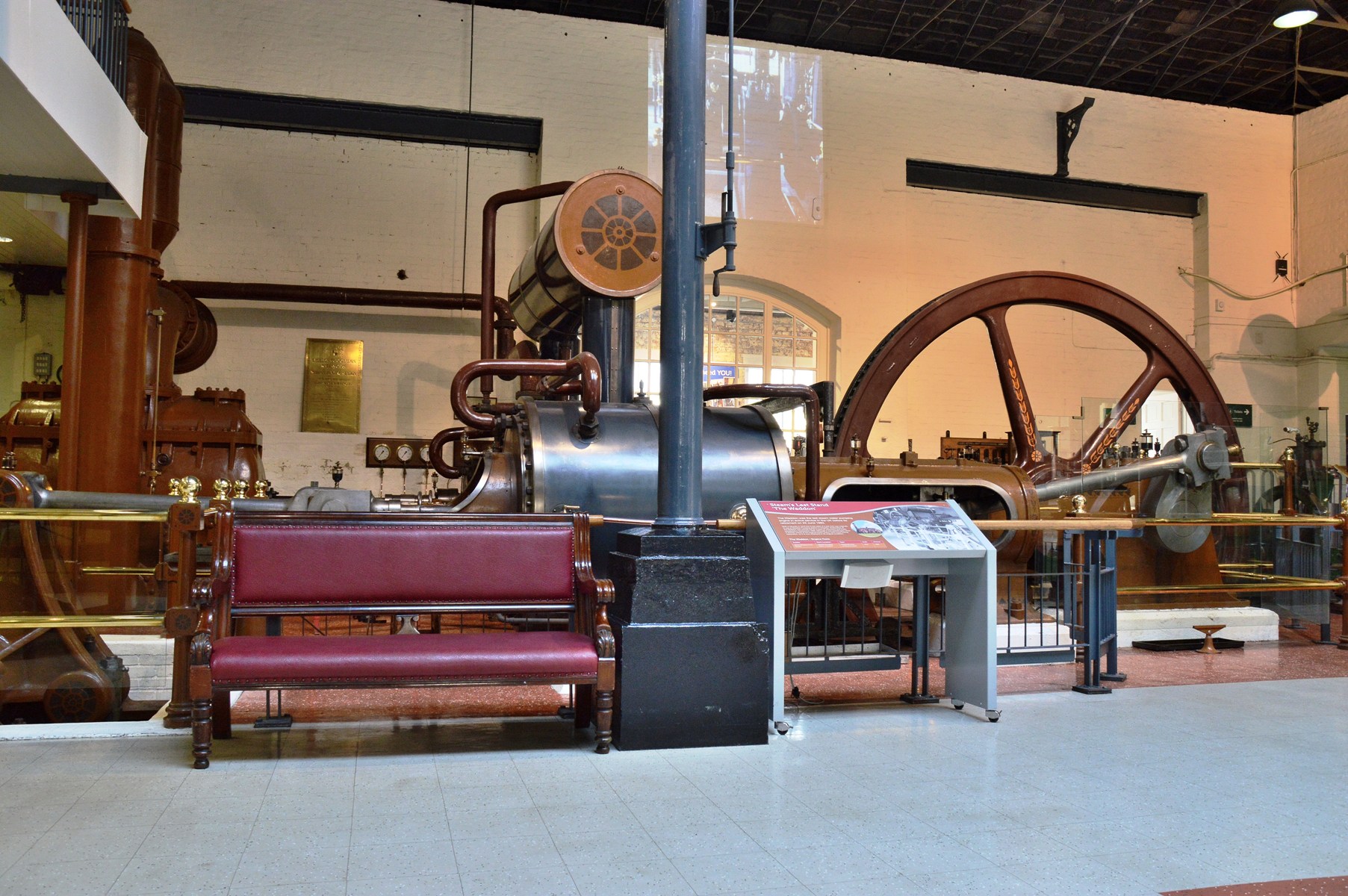
The above is the Waddon steam pumping engine. It was the last steam driven water pump used in the UK and remained in service until 1983.

.

Above is a triple expansion engine. Designed to be more efficient as most of the steam pressure is used by passing the output of one cylinder to the next.
.

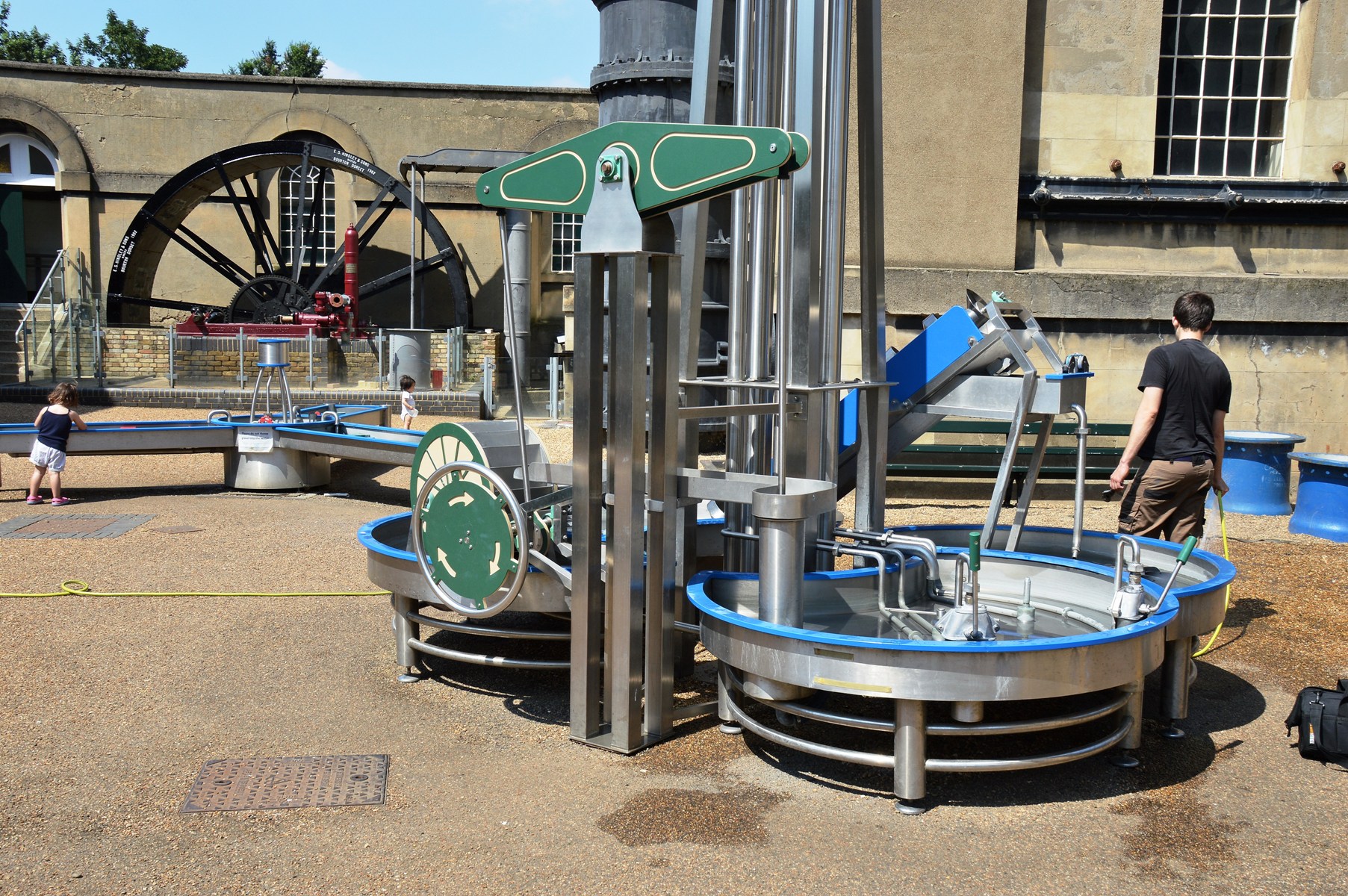
On designated days (website ⇒) a small steam locomotive provides rides, although the track is very short.

On the way back is the Express Tavern ⇒ which has a very pleasant menu and a broad range of beers. Across the nearby bridge is Kew Gardens ⇐.
There Is Nothing You Can Sing That Can’t Be Sung

“There’s nothing you can do that can’t be done
Nothing you can sing that can’t be sung
Nothing you can say but you can learn how to play the game
It’s easy
Nothing you can make that can’t be made
No one you can save that can’t be saved
Nothing you can do but you can learn how to be you in time
It’s easy
All you need is love
All you need is love
All you need is love, love
Love is all you need”.
.
LOUDER ⇓.
St Dunstans in the East

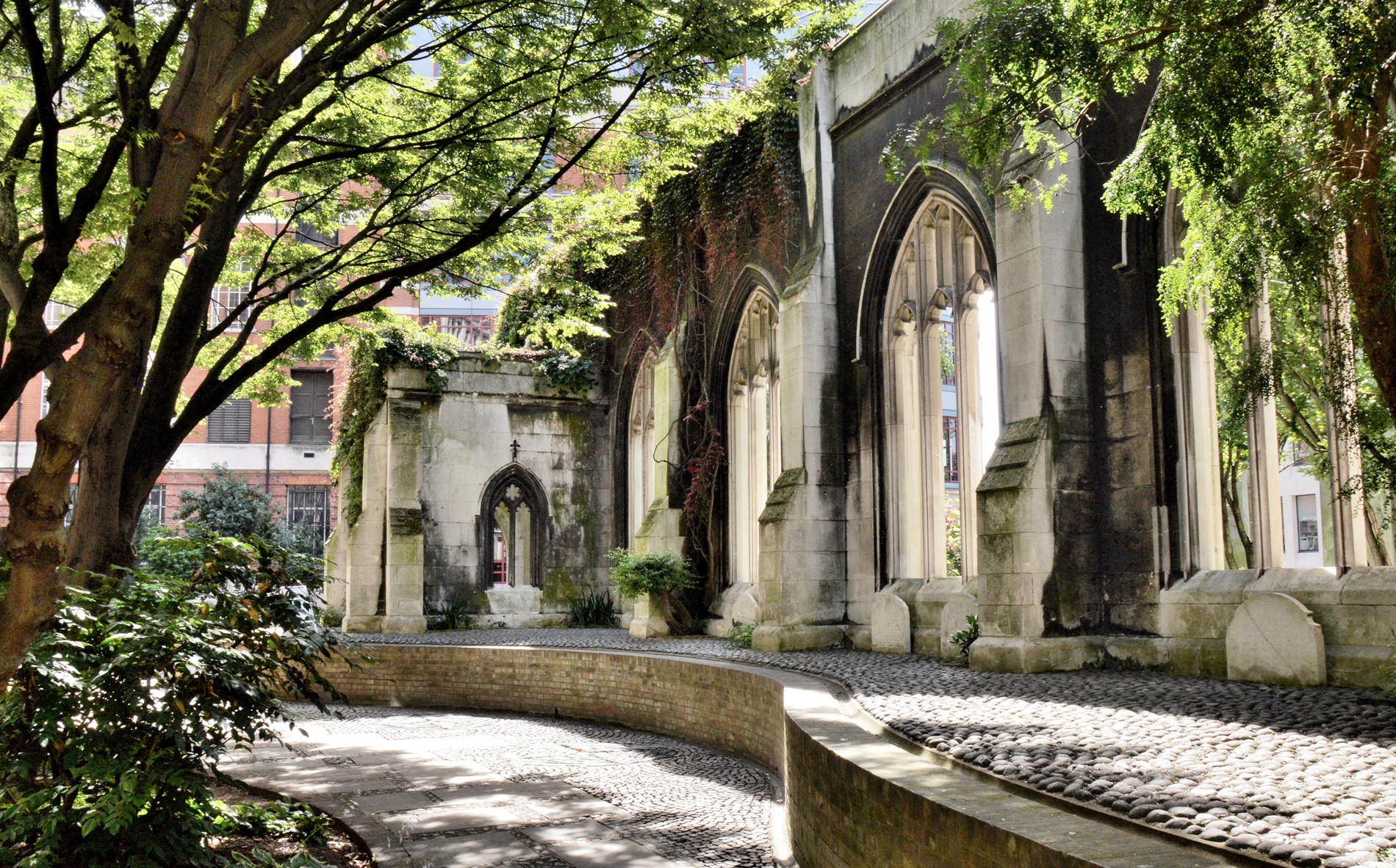
Along Great Tower Street, west of the Tower of London ⇐, past All Hallows by the Tower (AD 675)⇐, there is St Dunstans Hill and the church garden. The church was Originally built around 1100 AD, destroyed by the Great Fire of London (AD 1666) ⇒, rebuilt and then severely damaged during WWII. The garden is now a quiet oasis in a busy part of London.
More ⇒ and more (wiki) ⇒.

.
.

.

.
.

The Blackfriars Pub

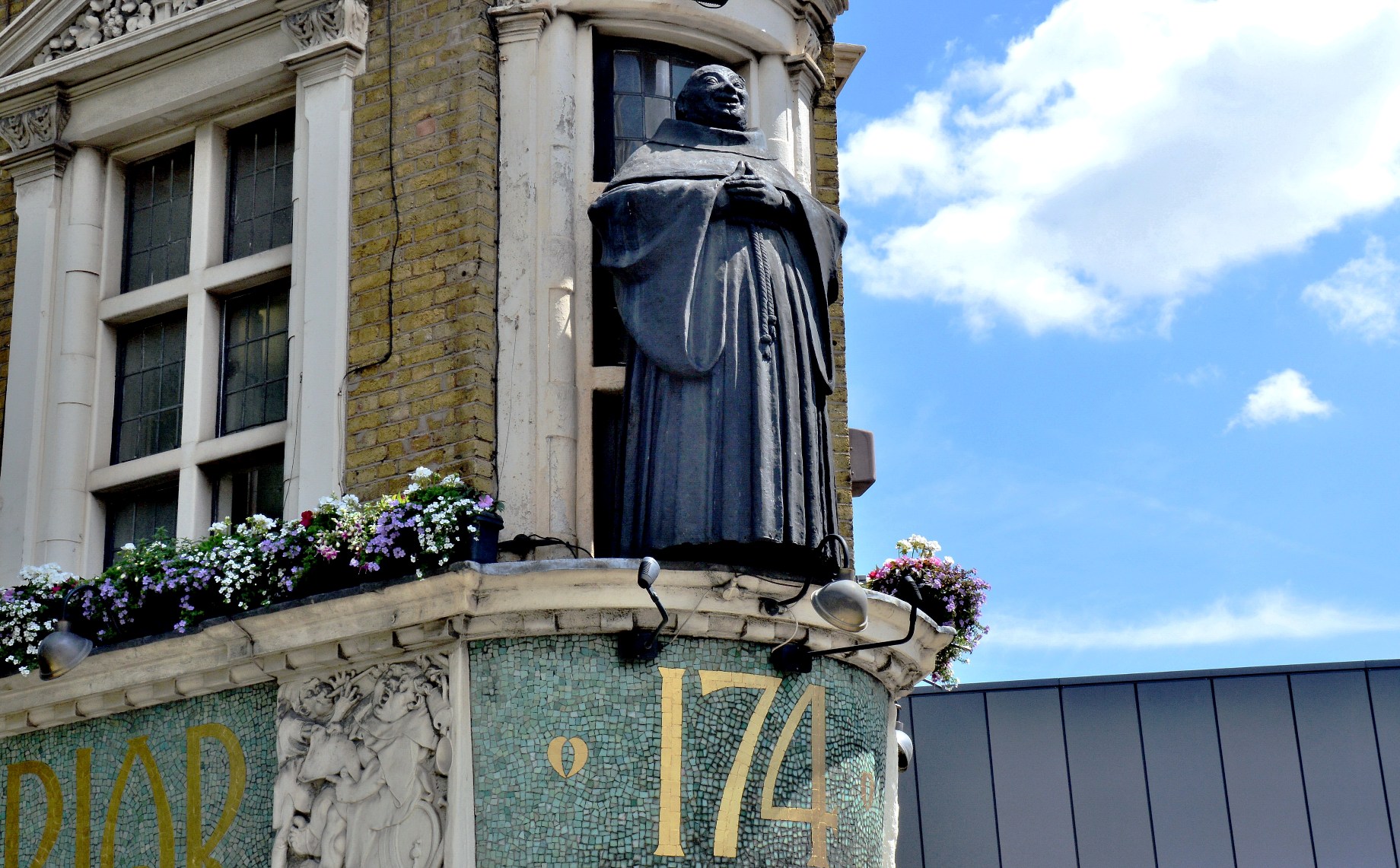
The Blackfriars Public House is where Queen Victoria Street meets the northern approach to Blackfriars Bridge and is very near to Blackfriars underground rail station in central London.
The bridge has recently been covered with solar panels. This makes it the largest solar power providing bridge in the world. Across the bridge is the South Bank ⇐ with its many attractions.
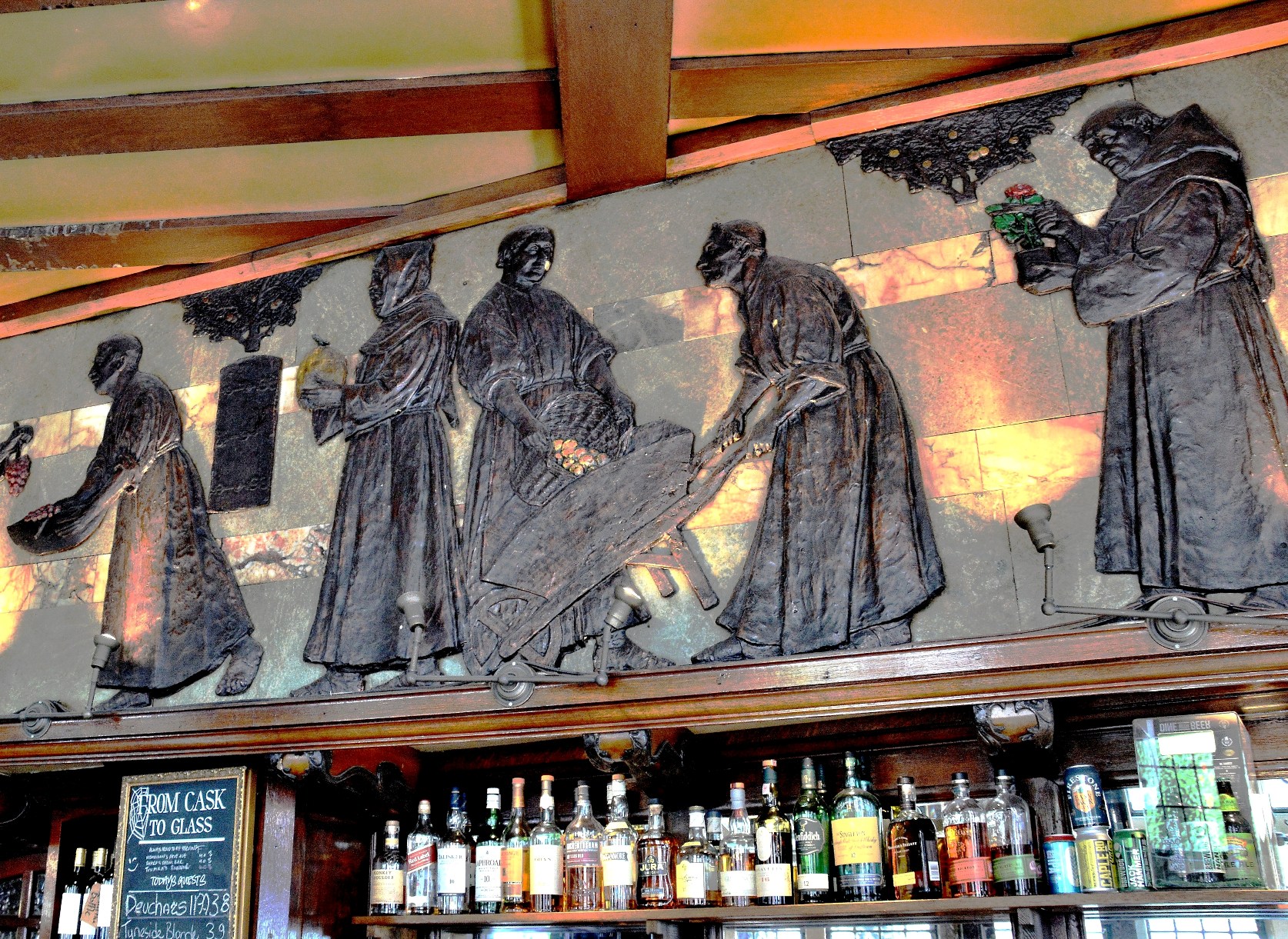
The Blackfriars region of London gained its name in 1317 from the black capes (capa) used by the brothers (frere) of the priory. More ⇒.
The public house was built in 1905 on the site of an old Dominican Friary. More and menus ⇒.

.

Don’t Advertise It. Tell A Gossip. By Henry Poole
.
.

.
Ham House and the Oak Tree with an Eye

If you got redirected by Google Images, Kew Place is here ⇐
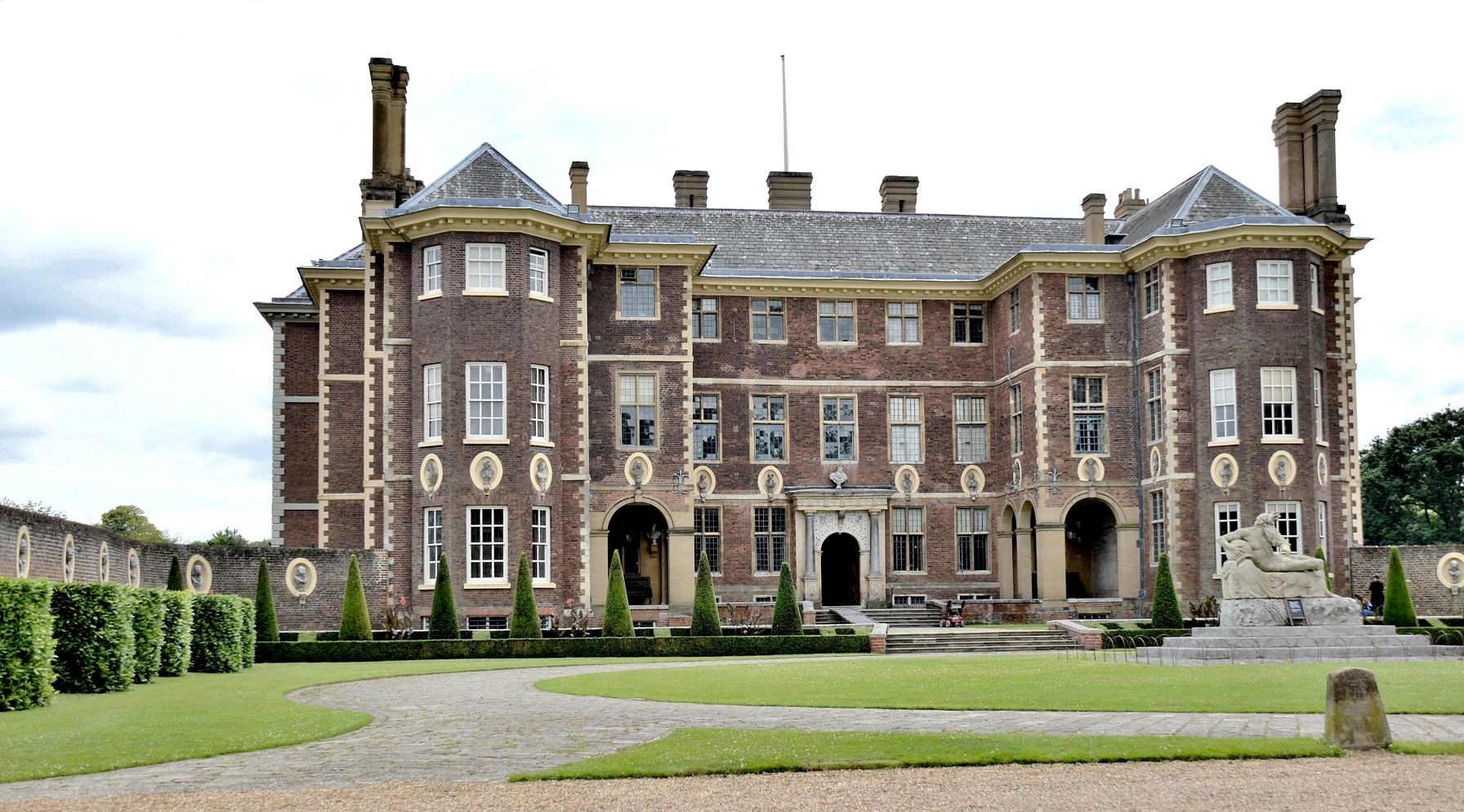
19 pics. I didn’t notice the eye (right in the middle) whilst I was taking the photograph at the back of Ham House. It hasn’t been meddled with and probably has a rational explanation. There is probably a rational response like aaaargh.
The Ham House website ⇒ and about haunted Ham House ⇒.
You can get to Ham House using the 371 bus to Sandy Lane from near Richmond rail station or via York Gardens ⇐ (please check the post for bus and ferry travel) and then visit Ham House and return to Richmond rail using the 371 from Sandy Lane.
Ham House
.

Charlotte Countess of Dysart by Joshua Reynolds 1775
.

.

.

.

.

.
.

.

.

.
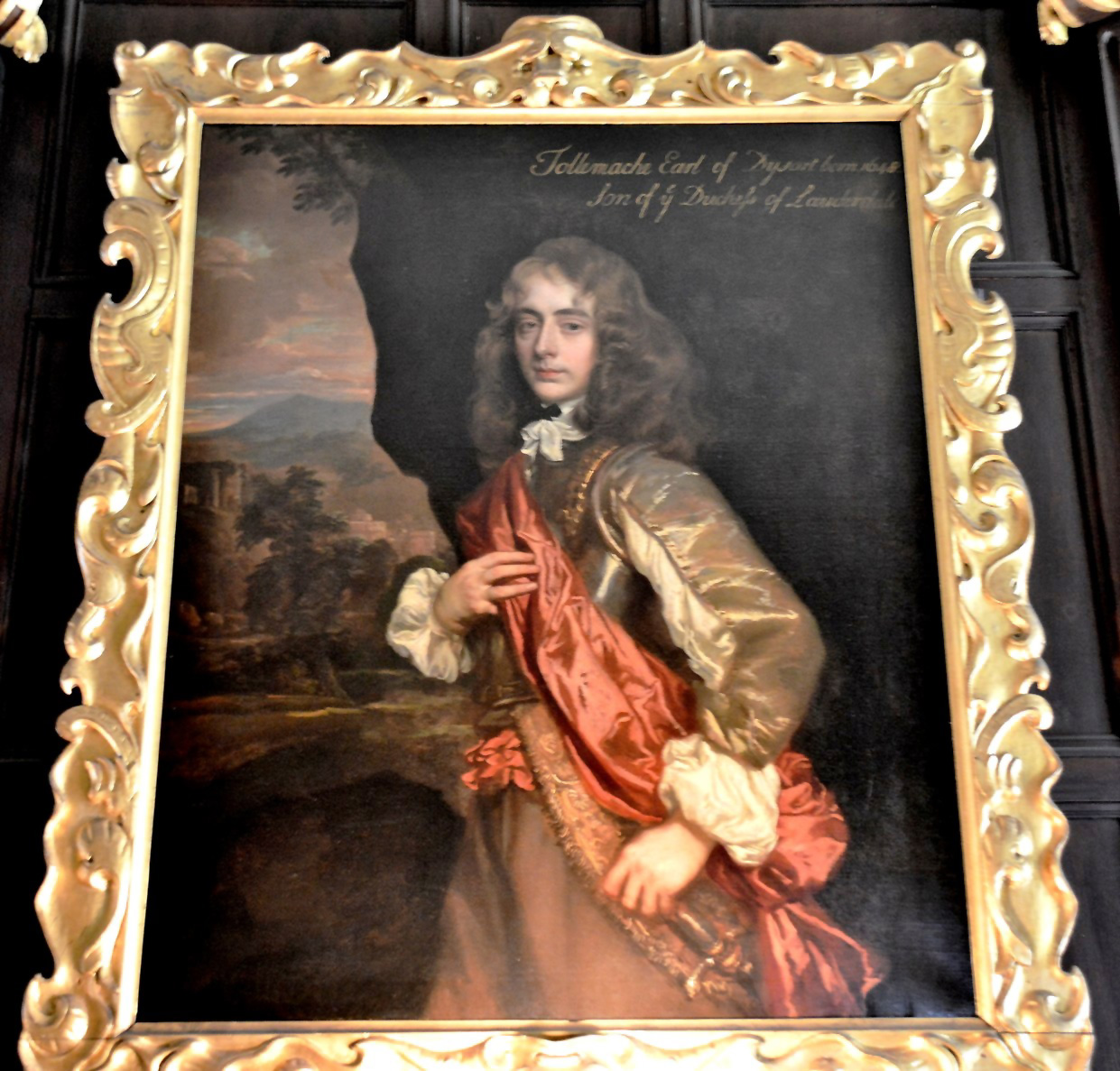
Tollemache Earl of Dysart
.
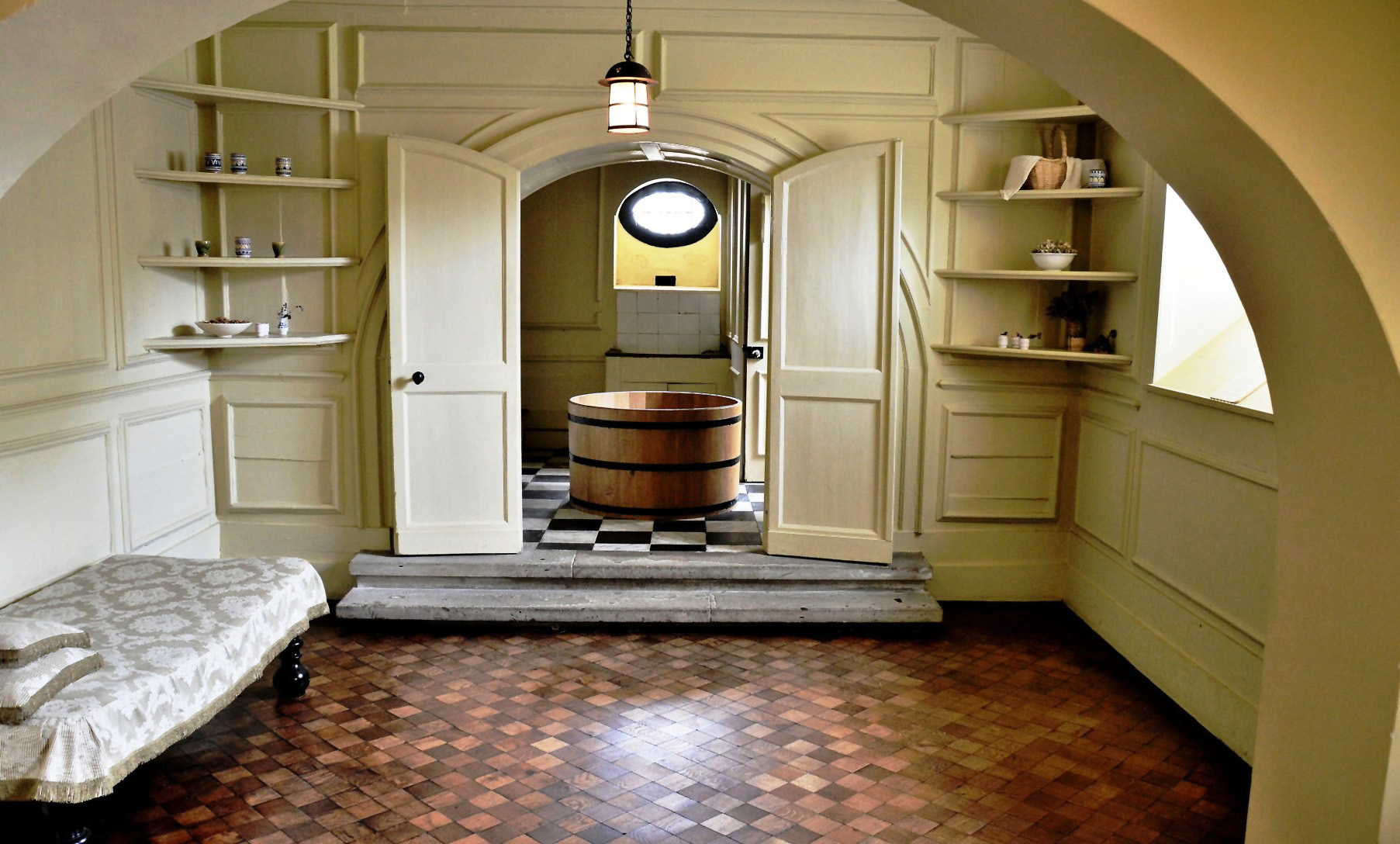
The above is a bath. It has a stool inside to sit on and get bathed.
.

.

Cafe Garden
.

Whimsical Dairy
The peeping Oak tree is just outside the dairy.
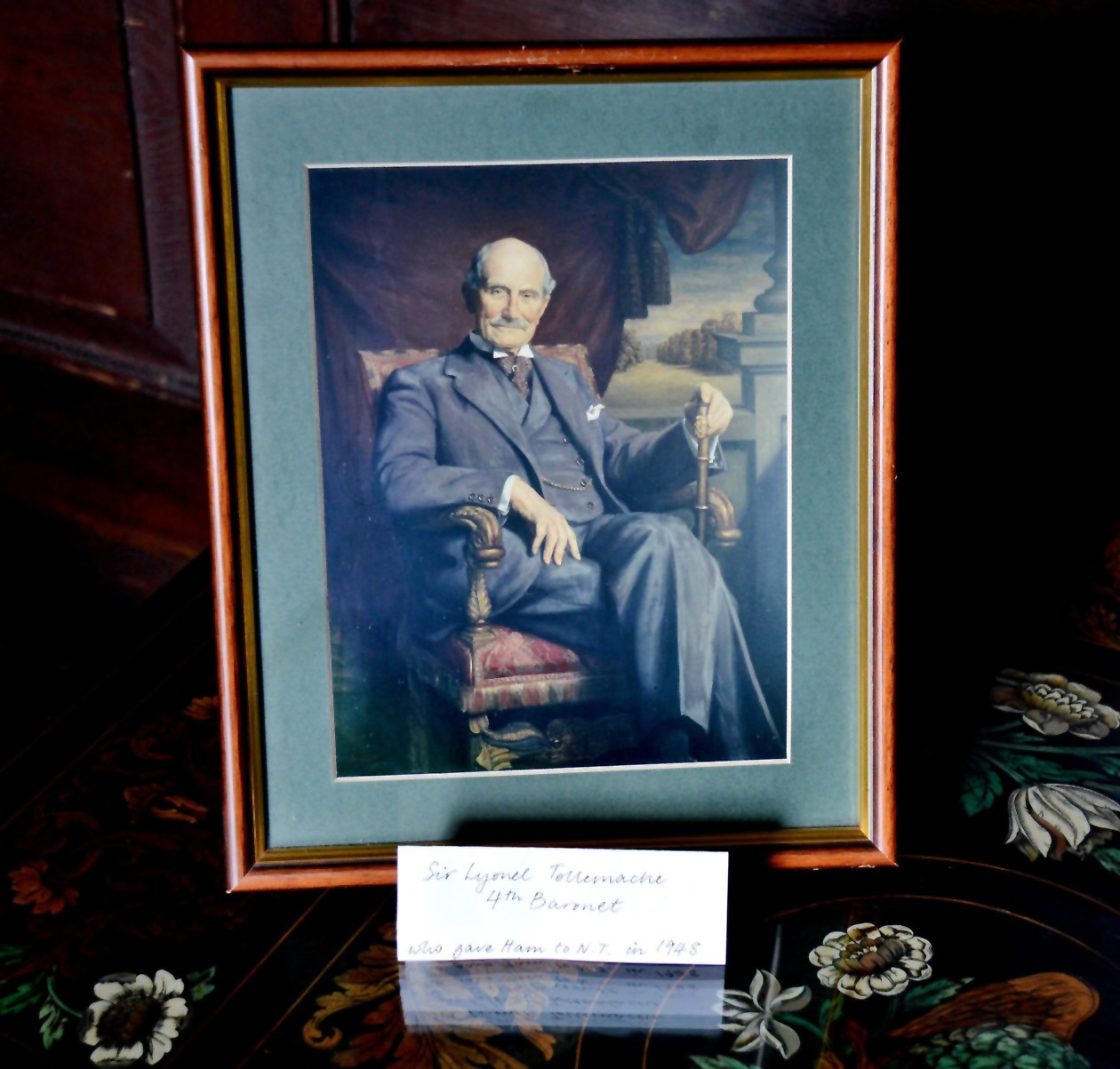
Sir Lionel Tollemache
The 4th Baronet, Sir Lyonel Tollemache, who kindly gave Ham House to the National Trust in 1948.


 Freed From Time